The Road Home

The Road Home
There is no place like home.

Saturday, March 22, 2014

Researching a New Feed Ration

The more I read about and learn about GMO corn, the more I wish we could totally eliminate it from our diet, even though I know that's close to impossible. We do have a few cans of store bought corn in the pantry, which I don't even like to eat anymore. But, for me, the biggest stumbling block we have is the feed we give our animals. So, more research and more reading.


We used to have our goat and chicken feed mixed according to our own recipe at a small, family owned feed mill. This location does not have that option, so we have been mixing our own. Wheat was one of the ingredients we used to include that has not been available here. A few days ago when we were at the feed store, I noticed a bag of wheat bran that I didn't remember seeing before. I didn't know what the nutritional value of wheat bran would be for goats, so I came home and looked it up. According to Storey's Guide to Raising Dairy Goats, wheat bran has 13.3% digestible protein and rolled oats have 10% . Hmmm....okay. The alfalfa pellets we use have 17% protein and the sweet feed has 10%. 
Summer 2013
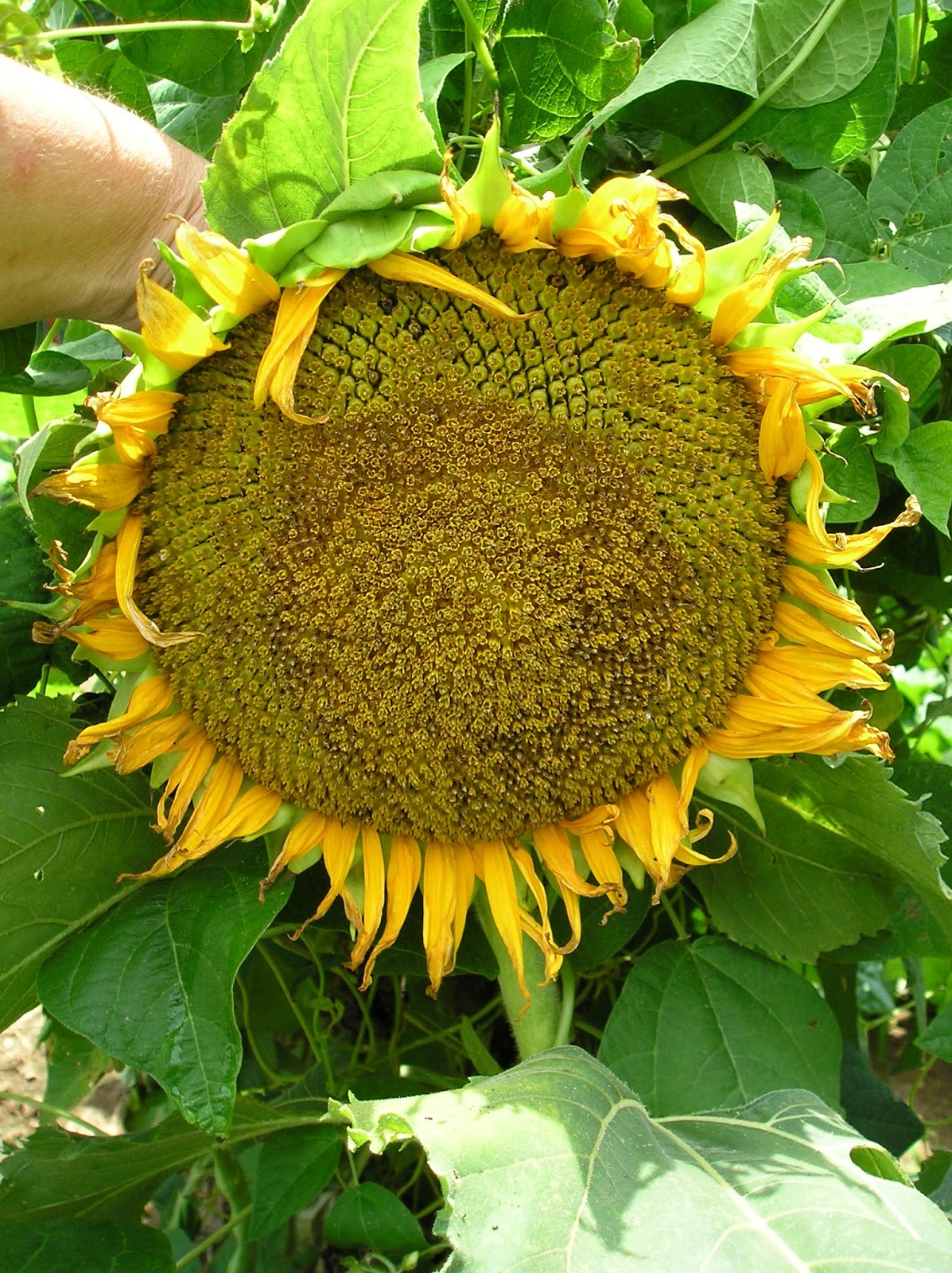
The ideal protein ratio for milking does is around 12%. So, what I am trying to figure out is a mix of these grains, minus the GMO corn chops we are currently feeding, that would give me about a 12% feed combination. Another thought I have had is sunflower seeds. Black oil sunflower seeds are very nutritious for both goats and chickens. We grew our first ever sunflowers last summer and actually had seeds to harvest. This summer I hope to grow hundreds of sunflowers all around our place with the plan to harvest them for animal feed.

So, the new feed ration we are going to try is:
  • 6 parts rolled oats
  • 4 parts sweet feed
  • 1 part alfalfa pellets
  • 1 part wheat bran
  • 1 part sunflower seeds
For now, all of these ingredients will come from the feed store. This combination will give me a feed ration of about 11.5% protein. Of course, the protein content is always dependent upon growing conditions.

Summer 2013
I am also going to start several patches of comfrey this summer. Right now I have one plant in my herb bed. I have ordered and received 5 more roots which will begin bed number two. Then the next step will be to start comfrey seedlings. 
Once I have them up and established, I will plant bed number three. Comfrey, also called knitbone, has long been used as a medicinal herb and as a supplement for livestock feed. It is very high in protein and vitamin B12.


Another crop I am going to try to get established for supplemental livestock feed is plantain. I have read about it for a number of years, but didn't really pay much attention to it. When I was ordering some more herb plants from Crimson Sage, I ran across plantain again, right after I had read another article about feeding it to chickens. I have been wondering what I could grow that would supplement our chicken's diet more naturally than grains. It would have to be something that is easy to grow, pick and dry for winter use. So I ordered some. I will let you know how it grows and how the animals like it.

Fall 2013
The third thing I am going to grow more of this summer is kale. I have a few rather sad looking plants that made it through our cold winter. After reading this article, I started picking off some of the bottom leaves and feeding them to the chickens. They took to them right away, but the goats didn't seem to care for them. I will try feeding them to the goats again after they have started producing newer leaves.

Summer 2013

We will try our hand once again at growing carrots, sugar beets and turnips for the animals. Last summer, our fall garden didn't produce much of anything. I got started late and the weather didn't cooperate very well either. If we are really going into another Maunder Minimum, we will see how that affects our ability to produce plentiful gardens like we have in the past.


We may all be learning to garden a little differently if the quality of our sunlight and warmth are affected by decreasing solar activity. Another thing to learn more about so that I can adjust our growing habits to match what nature is providing.


There are many things to take into account when pondering feed rations for both animals and humans. Learn all you can, put it to good use, and hold your family close. They are the most important thing there is in your life. Don't let anyone, or anything, convince you otherwise.


Until next time - Fern


Friday, March 21, 2014

Let the Planting Begin

As I breathe a big sigh of relief that the deep cold of winter is coming to a close, I put on my work gloves and start tackling the garden. This time of year it feels like the dirt and plants are starting to come back to life in fits and starts. We had another frost a few nights ago, but a 75 degree afternoon with warm south winds. It's like the life of spring is right on the edge of blooming. The song birds are nesting, the fruit trees are starting to bloom and the grass is greening up.


I love dirt and I can't stay clean this time of year. There is just too much wonderful dirt to play in, whether it is filling up my little paper pots for seedlings or beginning to plant the garden. Even though I am behind my plan for the year, we still have a fair start on the planting. Our last average frost date is April 1st, so the only things I am planting now are able to withstand a few frosts.


The potatoes were in the ground by March 15th, and it was a race to get them in before an evening rain, but we made it.


The peas went in the same day, but the trellis wasn't put in place until a few days later. They have experienced a frost, but don't seem to be any worse for the wear. The wind has had a bigger impact on them than anything, well, almost anything. I think something like a rabbit is chewing on a few of them. We'll have to keep an eye out for critters.


Next came the beets. I thinned the extra plants from each pot before planting. They are more spindley this year than I remember last year's crop. I wonder if that has anything to do with the Maunder Minimum and a decrease in solar activity? We planted them deep enough to give the plants some support, so I hope they do well. Depending on how they manage the next few days, I may poke a few seeds in the ground as well.


The carrots have been slow growing. They have been outside on the west porch for a week or so and have had to deal with some cold weather at night, so they aren't coming along as quickly as I would like, but that's okay. I will wait a while longer to plant them in the garden. They also needed thinning, so I used scissors to cut away the extra plants. 


We fed the beet and carrots thinnings to the baby chickens. At first they were afraid of them, but when we went back to check on them, the plants were all gone.


The tomatoes and peppers are up and look great. The seeds were very viable and I planted too many in each hole. This necessitated some thinning which I did with scissors instead of pulling up the extras. This prevents damage to the roots of the plants that are being kept. I will wait until about April 15th before I plant them out in the garden since they don't like cold weather.


I put the cabbage, broccoli, spinach and kale out on the west porch a while back to harden them off in preparation for planting. The problem with that is that one night they got more hardening than I planned on when the temperatures got down to around 20. They died, and I just got around to replanting them. These crops will be much later than I originally planned.


I still need to start my celery, celeriac and lettuce seedlings and plant more onions. The onions I started in the house, that were doing so well, were dug up by one of the cats when I put them out on the porch to harden them off. I was not happy with losing most of my crop. Luckily, Grace had given me her extras she wasn't going to use, so I still have some to plant.


So starts another season of growing some of our food. We are trying to simplify the number of things we are growing. Instead of doing as much experimenting with different crops as we have in the past few years, we
are going to concentrate on the things we know we like, and try to  
preserve as much of them as we can. I hope this year we will be able to put up enough of some vegetables to last at least two years. This will help give us a deeper cushion in case something happens that causes a crop failure one year, or if we were injured or unable to work the garden as much, or if we were having to spend more time on security concerns. You never know what may impact your ability to grow and preserve your food. Plan ahead for interruptions and interference in your food production goals. Put up as much as you can, while you can. It may be a choice blessing for you and yours, or for another family. You never know.


Until next time - Fern


Thursday, March 20, 2014

Ivory's Kids & More Goat Lore

Ivory had her babies the day after Copper. She is continuing in her mother's footsteps of waiting until the 155th day after breeding before she kids. It is interesting to know some of the patterns of our animals. It makes our stewardship more effective and informed.

Ivory, March 6th, 153 days

One Stripe typically has her babies 150 days after breeding, which is the average gestation for goats. This year when Copper, One Stripe's daughter, had her first kids, she freshened at 150 days on the nose. Ivory's mother, Katy, typically freshened at 155 days except for the year she had quadruplets, then she gave birth at 153 days. Now, Ivory has had her second set of kids and both years she freshened at 155 days. I find this to be very interesting, useful information.
 
Ivory's mom, Katy, March 2013

Last year Ivory had twins, a buck and a doe, with no problems and was an excellent mom, so I wasn't real worried about her performance this year. She lived up to my expectations, had her babies without any assistance or trouble, cleaned them up, talked to them constantly and made sure they were well fed. She is a very productive doe. Her only flaws are yelling at the top of her lungs when we walk in the barn and butting the other does on occasion. We have debated off and on about selling her.
 
March 8th


This year Ivory has given us two beautiful replacement does. This may make it easier to sell her come fall. We will use her milk, along with One Stripe's and Copper's to make our supply of cheese this summer. After we have all we need for the year, we may go ahead and sell Ivory around August. This will give us five does since we are keeping Copper's doe, Penny, and Ivory's girls, Cricket and Lady Bug. This will be plenty of breeding stock for us and more than enough milk production for next year.

Ivory, Lady Bug, Pearl and Cricket

Next year there will be three young does to to train to milk. This year Copper was the only doe that I needed to train and, thanks to how tame she was to begin with, this has not taken hardly any work at all. I will do another post on milking a newly trained goat before long. Over time, if you ever get this opportunity, you will learn little tricks that can make a big difference, kind of like the hints Frank has given about hatching and raising baby chicks. Experience really is the best teacher and I learn more everyday. I will never be through learning or know everything there is about anything. Take your comments, for instance. This is a new source of information that I have found to be very valuable.


Right after the baby goats are born, they will walk right up to you with no fear. When they approach about a four to five days old, they develop the instinct to be afraid of things that are bigger or above them and will flinch or try to get away from you. After they reach about ten days to two weeks old and are more steady on their feet and more confident in their ability to move around and get away, they become curious. It really helps to have tame, manageable does. This is the best way to have easy to handle kids. Velvet's boys now run around us and try to jump up on our legs. They are very tame and easy to handle. Copper and Ivory's kids are just now starting to come up and smell our legs or hands, but if we bend over too quickly to pet them, they are off and running. It won't be long before they will be tame and easy to pet and work with as well.
 
One Stripe and one of her adopted boys

Pearl, our Great Pyrenees livestock guardian, is the greatest babysitter we have. She has the patience of Job when it comes to these baby goats. And they just love her. Her laid back, gentle nature also contributes to the overall calm atmosphere at the barn with our goats.


Time is the best teacher when it comes to raising livestock. We have researched and read for many, many years. Working with, raising, butchering and learning to cull according to our long term goals are all things that have come with time. When we first began raising goats, I didn't know much about udders - which ones were good, which ones were bad, what is a good attachment and shape, which ones produces more milk or were easier to milk. There was so much to know and I could only learn so much from reading. The real learning came when I started milking every day and trying to train goats to be milked. I have made my fair share of mistakes,  and will make more in the future, but I have learned in the process. 


Stay tuned. There is more lore to explore. 


Until next time - Fern