The Road Home

The Road Home
There is no place like home.
Showing posts with label day old chicks. Show all posts

Saturday, June 21, 2014

The More or Less of Chickens

Hello, Frank here.

Hi Everybody. I have some positive chicken news and some negative chicken news. But first, the general chicken news. Last time I posted I was having a cannibalism problem, the chickens, not me. My plan was to butcher all of the young male birds. Well, things don't always work out the way you plan. I am currently having some health issues, and some days I get things done and some days I don't. 

I didn't get the young roosters butchered and put in the freezer. I was never able to get the cannibalism problem under control. Let me give you an update. When the cannibalism problem started, I separated the males from the females. This was part of my isolation strategy to narrow down the problem, and that part worked. There was no pecking among the females, besides normal, "Hi, how are you?" pecking. But as I said earlier, the butchering never occurred. The cannibalism among the males continued, so one day we got rid of all of the males. Pick any scenario that works for you, and use that to suffice, the birds are gone.

Barred Rock roosters and Australorp hens

So, now I have 15 young Australorp hens. I traded three hens for two Barred Rock roosters that are the same age, and everybody is happy. But, going back a few days, I didn't know if everybody was going to be happy, and I ordered 25 mixed heavy, day old, brown egg layers. A little quiz here. "But you didn't tell us whether you ordered male or female." But, I did tell you that they are brown egg layers. The reason I pose this quiz is because I asked Fern that same question. And she gave me the same answer. "Brown EGG layers." Okay, our lesson in humble pie for the day.


Well, the 25 little girls arrived. After 10 days, all survived but one. We did the usual, beak dipping in water, and had chick starter on hand. But this time they're not going to stay inside the brooder near as long. The outside temperature during the day is around 90 degrees, as is the humidity.


Different topic. I love where I live. The winters are mild, but a certain part of summer is hot and humid. If you are not sweating, it's because you are seriously dehydrated. I haven't lived in other parts of the deep south, and I can only imagine what it's like in other parts where it's hot and has the advantages of the moisture from the Gulf Stream. But, this time of year, I seriously think about shoveling snow again.


Okay, back to reality. Here in a couple of days the little girls will be going out to the chicken house, to their own little caged apartment. 


I'll be turning the former baby birds, which I'll now call teenagers, in with the adult birds. This is a slow process. I will open up the teenagers cage door, and just leave it open. I will continue to provide food and water in their part of the pen, that is now open. There will be some serious pecking order issues, but everybody will survive. This is just normal, social pecking order. The teenage hens will be terrorized for a few days. But now we have the young roosters and the old rooster issue. The old hens will also terrorize the young roosters, too. But the relationship between the old hens and the young roosters is mostly just a matter of 'get out of my way.' 


The old rooster is a different issue, though. Sometimes, but not often, you can introduce new roosters to an old rooster. But you don't want blood in your chicken house. As a general rule, but not always, an old rooster will not tolerate a young rooster, it's just simply a male thing. So the old rooster is going to have to go. I have found that roosters raised together are generally tolerant of one another, even though one is the obvious dominant rooster. But these birds weren't raised together and the old rooster just will not tolerate a young rooster in his chicken house. Again, use your imagination as to where the rooster goes. He's too old to fry, he's too old to bake, so he's just going to go.


So, now, in the chicken house, I'll have 25 ten day old baby chicks in their own pen, a mixture of 15 fifteen week old teenage hens, 2 fifteen week old teenage roosters and 19 fifteen month old adult hens. In about five or six weeks, the teenage hens will start laying. They will lay brown eggs. The current adult hens lay green eggs. When the teenage hens' egg production reaches an acceptable number, then the green egg hens will need to move on to a new home. It's a whole lot easier to get rid of laying hens than it is an old rooster. You can either take them to a chicken sale, sell them very cheaply to someone wanting to start up a chicken flock, or you can give them away. They will still lay good for another year or two.


So, this is where we are. Some people would say that my chicken plans are not stable, and they're right. I tried the Easter Egg chickens, and I was just not happy with the bird. Now I'm going to try a new bird. You might be asking, "What about the baby birds?" When they are about 12 weeks old, just about the time the adult birds will be leaving, I will introduce them to the rest of the flock. When the time comes, I will decide which 20 or so hens I will keep. I will find a good home for the remaining birds. Then maybe life will settle down in the chicken house.


It's been a roller coaster ride for the last couple of years. When the brown egg layers start producing, I will let you know how things are going. But, in the meantime, I'm going to have my lower back opened up, and we'll see how that goes. Take care, and may God be with you.

We'll talk more later. Frank

Tuesday, November 26, 2013

Chickens by the Numbers

Hi All, Frank here.

The title implies we're going to talk about numbers. I can tell you what we're not going to talk about this time. We're not going to talk about breeds, who is the best, who is not, who lays the most or grows up the quickest. We'll do that later.

But I want to introduce you to a cycle. I use 6, 12 and 18. Now these numbers are not cast in stone and they are just for reference.You will need to shift them for your climate. I like to follow Mother Nature's cycle. If you
have already gone to some chicken hatcheries and looked around, then you know that there are some birds or some breeds that you can buy year round. And if that meets your need, great. But most birds in the wild have their babies when it starts to warm up, sometime in the spring. So this is where I will start the cycle.

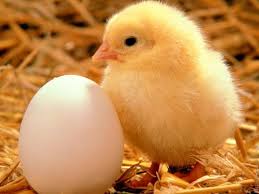
The first six equals June. Remember, this is just for reference. If you buy DAY OLD CHICKENS from a hatchery or from your local feed store or co-op, then we're going to call them zero days old. In actuality they're 
going to be three to six days old, and I'll tell you how they do that in just a minute. Let's say it's June 1, zero day for the baby chicken. Most chickens start to lay eggs in about 4 1/2 to 5 1/2 months. Okay for math purposes, I'm going to call this six months. Now December 1, your birds are six months old and they are starting to lay. Remember, these numbers are just for math purposes and you will need to shift them forwards or backwards, more than likely forward for your region.

Now, you're all happy, your birds are starting to lay, but these are teenager eggs, or pullet eggs. It is not recommended that you try to hatch eggs from a hen this young. It is recommended that your hens be about twelve months old before you consider hatching their eggs. Eat all of them you want, they are excellent eggs. Now, we're back around to June 1st again. Your birds are one year old, they have been laying eggs for six months or more. Now your eggs are hatchable. 

So, let's back up three weeks and you have saved up some eggs and you want to hatch a batch of baby chickens. It takes a chicken egg 21 days to hatch, give or take a day. So, you start around May the 7th. You can hatch eggs in an incubator or let one of the hens do it. You start May 7th, 21 days later it's June 1 and you have a bunch of day old chickens. Now think about it. You started one year ago with day old chickens and now you are producing your own day old chickens.

Follow me here now. Those day old chickens that you just hatched will start laying around December 1st. Now you have 18 month old adult chickens and 6 month old pullets starting to lay. The cycle continues.
You have more eggs than you know what to do with. Your adult chickens production will start to drop somewhere in the next few months. If you choose, you can get rid of the adults at this stage. The older hens will be 18 months old. You can sell them at a swap. Give or sell them for about nothing to help a family starting out with chickens. You can butcher them even though they will be a little tough at this stage, but there are things you can do with the meat. These numbers are where 6, 12, and 18 come from. Shift the numbers around to fit your circumstances. This is a great system for sustainability. 

A story about day old chickens. Let's say that you decide to buy them from a hatchery and they come via U.S. mail. You think the poor babies will starve to death in route. No, not the case. Right before a baby chick hatches, it absorbs the yolk into it's body, therefore, it can live comfortably around three days without food or water. These hatcheries have been shipping chicks via U.S. mail for many, many years. So, that's how they do it.

Okay, we're just going to talk about numbers this time. How many chickens do I need? It depends on the reason you're raising them. If you have
eight growing kids, then you might eat a couple of dozen eggs a day. If you are an eighty year old couple, you might want two eggs a day. If you want chicken meat, and you're going to raise an exclusive meat bird, then you can buy a special meat bird, feed it a special diet, and at about eight weeks old you put them in the freezer. If you're a homestead, let's say you eat a dozen eggs a day forwhatever reason. Here is where keeping younger hens will give you a more reliable number of eggs per day. 

An example: A Barred Rock is a good laying bird and also grows to be a nice sized meat bird. Let's say you have 20 hens, one rooster and you're
getting about 16 eggs a day on average. Come spring time you hatch using an incubator, and you get about a hatch rate of 40 chicks. As a general rule, they will be half and half, males and females. Here's your 20 replacement hens and 20 roosters to put in the freezer. This is how the system works. A valid question: Can you mix young birds with older birds? Not for a while. You will need to have separate accommodations for the young birds for eight to ten weeks. That's where the term pecking order comes from. At about 10 to 12 weeks you will be butchering the young roosters anyway. We'll talk more later about how to separate the birds. The Barred Rock, as mentioned earlier, for all practical purposes is a non-setting bird, which has it positives and negatives. If you want a bird to raise it's own babies it is a poor choice. When a bird is setting, after a point it quits laying eggs and becomes a mommy. Other birds will give you the same egg production and same meat production and are setters. It just depends on what you want. 


By the way, I have found a website that sells 12 volt VDC incubators. Cool, eh? What Fern and I do is set up two incubators at the same time and hatch as many birds as we can at one time so they are the same age. 


Back to numbers. Let's say you have 20 hens and one rooster. In the warm months, the chickens lay better. There are reasons for this that we will
discuss later. How much room do I need inside a chicken house? Well, if the birds are adults, it is recommended you have four to five square feet per bird. So, therefore, with 20 hens and one rooster, you will need about 100 square feet. Okay, so that's a building       10' x 10'. That's not very big, is it? Now there are all different ways to build chicken houses and chicken pens. There are climates where birds never see outside unless they are looking through a window. In that case, I would want a little more space. Just like people, you get too many people in a small house on Thanksgiving and somebody is going to want to peck at somebody else. Birds need their space too. I have raised birds that never left the chicken house. I have raised birds that have a chicken house connected to an outside run. I have raised birds with a three sided lofting shed built inside a larger enclosed pen. So. There are as many ways to build a chicken house as there are people that build them, depending on where you live, and what you want. 

Okay let's go back to the 20 Barred Rock hens and about 16 eggs a day. If you need more eggs, then you need more hens. If you need more hens, then you need more square footage per bird. It's that simple. Numbers. Another little tidbit here. We don't pluck our chickens. We skin them. It has nothing to do with that nasty skin on a chicken being bad for my health, actually I love fried chicken with skin on it. It has to do with the ease and convenience of butchering and processing a bird. Okay? Okay.

We'll talk more in the future about number of nest boxes per number of laying hens. We'll also talk more later about feed conversion, setters vs. non-setters, meat birds, laying hens and dual purpose breeds. This is what the majority of what I discuss will be about - the good, ole' dual purpose
breeds. There are probably local hatcheries in your area. Their prices may be a little bit less expensive. I'm only going to recommend one commercial hatchery that I have used for years. I am more than happy with their service before the sale and after the sale. Their website is filled with information about birds, all kinds of birds. Their prices are a little more expensive, but this year, when I buy some replacement chickens to go along with the ones that I hatch, I will buy them from Murray McMurray Hatcheries. As always, with anything that I recommend, I have no affiliation with these folks. Go to their website and look around. They have a tremendous amount of information about how to raise birds.


Okay, on a personal note. This year I decided to try a different breed of chickens entirely and have gone with the Aracanna breed, or commonly called Easter Egg Chicken, that I bought from Murray McMurray. This has nothing to do with the hatchery, it's just that I don't care much for the breed. So, I will be replacing them with another breed. I don't know exactly what yet. So we will get to choose together. 


If I can be of any help, please comment. I hope the numbers help. If you read my radio posts, then you know that I encourage people to think for themselves. There is no perfect chicken, no perfect radio, no perfect gun, you're going to have to think and choose for yourself.

We'll talk more later. Frank