The Road Home

The Road Home
There is no place like home.
Showing posts with label seeds. Show all posts

Friday, May 15, 2020

Got Seeds?

Grow them. Grow your own. One tiny seed can produce more food than you can imagine.

One tough Swiss Chard that keeps coming back every year.

It's not easy and includes a big learning curve. Sometimes it works, sometimes it doesn't. Sometimes they are viable, sometimes they aren't. Guaranteed germination rate like store bought? No. But it can be done. Even by accident. That is how much of our learning takes place. We find there are times we learn more from our failures than our successes.

The small salad bed on the east side of the house.

Spinach going to seed.
Around here in the late spring spinach and lettuce go to seed. I will let the spinach seeds drop right in the bed where they are growing. I will harvest the lettuce seeds from the pot on the front porch and broadcast them into the "salad bed" where the spinach is growing. 
Back in February I spread some old spinach and lettuce seeds in this bed not expecting anything to grow since they were older. We received a nice surprise of an extended 'salad' season. I will remember this and broadcast seeds next February in hopes this will replicate.

 
This lettuce is growing on the porch in the same pot as some sweet potatoes.
Surprise spinach
Surprise lettuce and parsley

 
Last years sunflowers seeds have germinated very well and are growing great.

Turnips planted last fall went to seed and provided this seed harvest. We dried them in the greenhouse.


Last year's sweet potato plants probably aren't considered seeds, but we're hoping this experiment, planting them in a large pot, having them in the greenhouse all winter, and now on the porch, will show us if they will continue growing potatoes. The few potatoes we harvested last year gave us half a dozen sprouts that have been planted in the garden. They are growing well, so we hope to have replacement plants from year to year. Kind of like seeds, right?

You can grow some type of food almost anywhere with a sunny window, a porch, a sidewalk, with a bucket, a large tub or other container, a flower bed, the edge of a yard along the fence. You can plant nutritious, calorie rich foods just about anywhere, like potatoes, sweet potatoes, any type of cowpea (purple hull peas, black-eyed peas, etc.), to name just a few. If you can find them, buy a bag of pinto beans at the store, they will grow vines you can train on a fence or trellis. The potatoes you can store and eat over the winter, the beans and peas you can dry for cooking later. Neither has to be canned, so no need for canners, jars, shelf space, etc.


The Seed Starters Handbook is a great resource. I bought our copy back in the 1980's and still use it regularly. It's part of our resource library.


Got seeds? Got food? Grow some. Any amount you can provide for yourself will decrease your dependence on others, be it the grocery store or the government. It will increase your self confidence and determination to maintain or regain a small portion of independence for you and those you love.


Until next time - Fern

Sunday, July 14, 2019

What's Growin' in the Garden 3

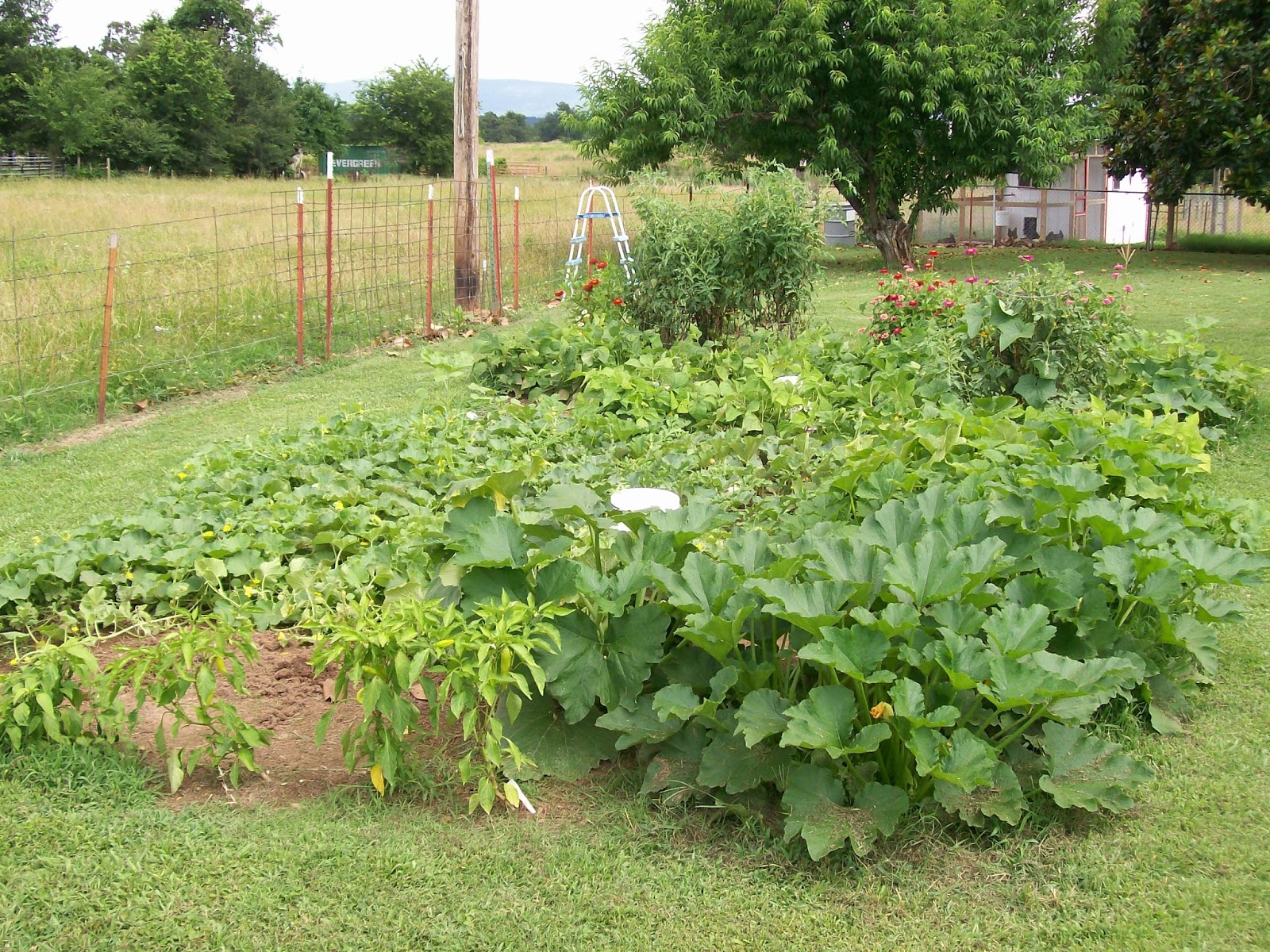
I looked back at the pictures from the previous garden update and realized what a difference a month makes. We have had a few more storms and wind, but the plants are much larger and there was not much negative affect from the weather. This article is long on pictures, so grab a cup of coffee and enjoy. 

June 22nd

July 13th
The rest of these pictures are from July unless otherwise indicated.

Pinto bean weed patch, July 13th

This looks like overgrown weeds, doesn't it? This is the pinto bean patch interspersed with crabgrass and other delectable weeds.... I have begun to slowly pull the plants and harvest what I can. Next year I will know these need a trellis. An error on my part not knowing pintos are a vine like pole beans. I just made the assumption they were a bush variety like the Jacob's Cattle beans I have been growing for the last few years.

Once the pinto beans are harvested, this area will receive carrot and beet seedlings. I will probably plant a couple of hills of yellow squash and see if we can have a fall crop for fresh eating.

The trellis next to the pintos has the peppers and Missouri Wonder pole beans. The peppers are just starting to produce well. I will be freezing some of them soon. We have found that frozen, chopped peppers come in handy cooking through the off season.


The yellow squash is finished thanks to the annual squash bug invasion. These will be pulled up and replaced by another cowpea patch.


The tomatoes are starting to ripen and we have begun to freeze them. We have two gallons in the freezer so far. Last summer we froze 20 gallon of tomatoes that we turned into tomato sauce. They seem to be ripening late again this year. Last summer many people in our area barely got any tomatoes and most folks we talked to indicated their gardens didn't do well at all. We'll see how this year turns out.


We tilled between these tomato trellises about a month ago with the new electric tiller and this is all that has grown there. Without the tilling it would have the same crabgrass overgrowth you see at the opening of the row. I remain very impressed with how this new tiller helps to eliminate grass and weeds compared to the Mantis that I used and liked for years. These amaranth seedlings will be planted between the tomato trellises and in the now harvested corn patch which I'll show you in a minute.

Amaranth seedlings

Speaking of amaranth, we have harvested some of the heads and are drying them in the greenhouse. I probably picked the first few before they were quite ready, but this is a new learning process for us. There are more heads to harvest from the original growth and we hope the side shoots will now continue to grow and produce more grain. For now we are not harvesting the entire plant, only the top most portion of the main grain head.


How are we going to winnow and clean the grain? Well, we have yet to figure that out. We have some fine strainers that may work and will cross that bridge once the seed heads are dry and ready to work.
The cowpeas we planted right before the last garden article are growing well. They will soon fill in this area between the tomatoes and okra. For now the zinnias are taller, but that won't last much longer.
Purple hull cowpeas


The okra has been slow to grow and produce this year. It just hasn't liked the cool, wet spring and the lack of sunshine. One of the nice things about this patch is that it was grown from seed that we saved last year.

And speaking of seeds, much of the garden this year was grown from our seeds. This has been a goal for many, many years, one that we are starting to make some progress on. From our own seeds this year we planted green beans, okra, tomatoes, peppers, carrots, winter squash, turnips, zinnias and marigolds. And yes, you read that right, carrots. As you know, carrots don't seed the first year, so I had to plant them in a separate part of the garden two years ago. We harvested these seeds last year.


The last of the corn has been harvested and I have a question. I didn't realize that corn grows suckers similar to tomatoes. I broke them off thinking they would prevent the stalk from producing good ears, but I think some of those plants didn't produce any ears. Would someone increase my knowledge about the growth and production of corn? We haven't grown any in a number of years and have never been tremendously successful.


The strawberries have died. Last year after we planted them they grew very well. Then toward the end of summer, some of the leaves started getting brown spots, curling and dying. The only information I could find was that a virus in the soil causes this problem. The solution? Kill the plants and start over somewhere else. I tried inoculating with nematodes to see if that would have any impact, but it didn't. The plants started growing this year and trying to produce in the wet, cloudy spring, but most of the berries rotted from the excessive moisture. Now, the virus has wiped out the rest of the plants.


We had a plum harvest this year. Here is half of it. Tasted great!


We have some lettuce coming up in the small bed by the back porch. I'm not sure how well it will do in the heat of summer, but fresh salad greens do sound good.


We are blessed to be able to live where and how we wish, and we certainly hope this continues as long as possible. There seriously appears to be very troubled times coming. Plan and plant ahead.

Until next time - Fern

Monday, January 11, 2016

What Seeds Have Taught Me

Seeds. I love seeds and the potential nourishment they represent. If the truth were to be told, I have too many seeds, so some of them age past their prime and lose viability before they have the opportunity to grow. A waste? Yes, could be, but like our preparations, I would rather have too many, than wish I had something grow because we were hungry. Frank has heard me say many times that seeds are worth more than gold. The food that seeds provide can keep us alive. If there are no seeds to be had, all the gold in the world is worthless.


I am grateful that we have had the last seven years here to learn the climate, soil conditions, pests and temperature variations. No two years have had the same weather conditions, which has offered even more to learn. Our first two gardens were grown under extreme drought conditions. This past year we lost some of our hard earned topsoil to flooding, and it was so wet that seeds rotted in the ground.

During the first few years we tried growing the same varieties of vegetables we had grown else where, some did well and some did not. We experimented one year with about six or eight types of peppers, tomatoes and winter squashes. That gave us a very good idea of which ones would produce well here. Some of our favorites made the cut and some did not, fortunately we found better producing varieties that have now become our new favorites.

It took me three years to figure out how to grow lima beans only to discover we really didn't like them. Until two years ago, I didn't like fresh tomatoes. We started growing two old heirloom varieties, and surprisingly, I liked them. Frank has always liked tomatoes and he describes them as more acidic than many of the newer varieties. I have also discovered that my back cannot pick a row of bush beans. I just can't do it. This has led to experiments with several types of pole beans until we found one that we really enjoy, that produces well into the fall.

I wish I could figure out how to grow a head of cabbage. I even wrote an article about it. And onions. Those are things I will continue to work on because we eat a lot of both. I also need to be more diligent at saving our seeds. It has always been easier for me to order seeds instead of planning ahead for seed saving. There will come a time when the only seeds we have will be the ones we save, so this is not a skill for me to continue avoiding or neglecting. 


The greenhouse has given us a whole new learning experience in growing food. As would be expected, the cool weather crops are happier than those that like the heat of summer. We have picked one yellow squash and the tomatoes are blooming, but with 38* lows at night, I don't expect much from them. I will soon be planting seedlings in the greenhouse. The window I've used for the past few years has now been replaced by the greenhouse entrance and I find that to be very comforting. I'm excited about the greatly expanded room to grow many more seedlings that won't be leggy and leaning over sideways in an attempt to reach the sunlight. I'll be learning much more about the timing for growing, hardening off and planting these seedlings.


There are many beautiful seed catalogs arriving in the mail now days. They all have something to offer that is new, different or interesting, but I have found a company that has a very wide variety of quality products for a fraction of the cost. With few exceptions, we order our seeds from R.H. Shumway's, which I have no affiliation with, except as a very satisfied customer. Their catalog is not shiny and showy, but it is packed full of seeds and information.  I would highly recommend them.


So, what have the seeds taught me? Patience, diligence, responsibility, the power of observation and learning, conditions for success, hard work usually pays off, and that hope springs eternal in the miracle of germination and growth. In a recent article I said, "Our future will be one of incredibly hard work, grubbing in the dirt for our survival." That's what seeds mean to me. Life. Survival. I am continually fascinated that one tiny little seed can produce so much food. In the coming days if you have a few seeds and a shovel to spare, a man could help feed his family. Do you have enough seeds for this year, and the next, and the next?


If you are new to your area, or plan to go somewhere else when the SHTF, do you know someone that can help you with invaluable information about local growing conditions and varieties that produce? When is the average first and last frost date? What insect pests cause the most destruction? Do you know how to deal with them without running down to the local garden center for a fix? Has the soil been turned and worked? Is it fertile enough to support the production you need? There are so many things to learn and know before those seeds will turn into food. I have read many places that people feel prepared to replenish their food supply because they have a can of survival seeds. Unless these people have figured out, and made accommodations for many of the things I have mentioned, they will starve. Not that these cans of seeds are a bad idea or contain inferior products, but the conditions necessary for adequate food production are dependent upon so many factors that the odds are stacked against them. 
 
Grace's garden

We have a friend, Grace, that gardens just a few miles down the road. She can grow things we cannot. We have pests she doesn't, and she has some we don't. Conditions can change quickly, from location to location, as well as year to year..


What have you learned from your seeds? Please share with us because we are all in this together. Any knowledge we can glean now, before it is a vital means of survival will be of great benefit. As soon as I get back the use of these two hands I will be rolling up a new batch of pot makers and planting them in the greenhouse. I can't wait.

Until next time - Fern