The Road Home

The Road Home
There is no place like home.
Showing posts with label food supply. Show all posts

Saturday, June 27, 2020

The Incredible Pinto Bean

In these times of food uncertainty, nutrition and calories are paramount in my books. What I am going to write about pinto beans could generally apply to most shell beans, such as lima or navy. I have had some questions about canning pinto beans so I will include what I know and have experienced here.

First off, if you can find dry beans, I would recommend you buy them. As many as you can afford and find available. I tried to look up bulk pinto beans in preparation to write this article and find that many bulk providers are out, or only have one pound bags or like Amazon, who has a 24 pound bucket for $63.92!! or a 25 pound box for $57.69 or a 20 pound bag for $54.25. I am afraid most people cannot afford these prices. If you have waited this long to try to stock up some long term nutrition, I am afraid you probably waited too long.

We received an email with some information about bulk food items that may be useful to you. We appreciate the effort this person made in sharing a resource with all of us. Here is the email in part:

You mentioned, however, that bulk foods are getting difficult to find. I am LDS and have used the LDS Home Storage Centers for years. You may know all about them. But in case you don't, they are open to everyone and carry bulk items. You can choose to buy 25 pound sacks of wheat or you can buy #10 cans of wheat in cases. You can buy it In a home storage center or you can buy it online and have it shipped to your home. They just want people to have food storage, so there is not a huge markup. Most of the packaging is done in Salt Lake by missionaries who are donating their labor. The older couples who run the centers are also donating their labor.

All of their locations are listed here:

Here is their product and price list:

Many of their items are out of stock with all of the crazy buying that has been happening over the last few months, but my local center has restocked many of the products that I use and my brother, who uses a center close to his home in Virginia, tells me they have many items back in stock as well. I just bought more white wheat, red wheat, elbow macaroni noodles, and spaghetti. So if you are interested, it is worth calling the center nearest to you and asking what they have in stock.

I don't know if this is of any interest to you, but in times like this we should help each other however we can. 

Nutrition. Everyday, but now more than ever, I turn to foods I know will provide good nutrition. This will be crucial as food supplies continue to be impacted by the Plandemic and resulting economic disruptions. I use this website for comparing nutritional values on many foods.

As you can see, one cup of cooked pinto beans with water and salt packs a powerful punch, thus our preference for it. It is often said that beans and rice make the perfect protein. We don't eat rice, but we do eat wheat in the form of sourdough bread or tortillas. We prefer wheat to rice for the comparative nutritional value the wheat provides.

We have a number of buckets of pinto beans that we have had for at least 10 years, which by the way, came from the LDS Home Storage Center in Oklahoma City. We bought in bulk and stored in our own buckets with Gamma Seal lids. If you're not aware, LDS stands for The Church of Jesus Christ of Latter Day Saints, or commonly called Mormons. I have long thought theses beans would be too hard to cook and eat, and that is true. I also thought they would be too hard to can. This is one of those instances that I was more than happy to be wrong.

Last winter I wanted to get more pintos canned and on the shelf for everyday eating, and to have if the country and world went south. I bought several four pound bags from Wal-Mart, before the virus when they were still available, and we canned a batch of 32 pints. Then recently, we decided to find out if those old beans were still usable. We put three pounds of beans in eight quarts of water and brought them to a boil in the late afternoon. Let them boil for five minutes, then let them sit until morning. I turned the fire on low when I got up around 6:00am and let them simmer until morning chores were done and we were ready to fire up the canner. Here are both types of beans. Both great, on the shelf and ready to eat. The 2010 beans turned out great, good texture and flavor. The older beans are on the left and the Wal-Mart beans are on the right in this picture. Some of the benefits of having beans canned and ready to go is that if you want a quick meal, or the world doesn't allow time to cook a pot of beans, you have nutrition, water and salt ready to nurture your body.

This summer one of my goals is to grow, harvest and can as many pinto beans as possible. In a survival scenario we need calories for energy and adequate protein. Pinto beans provide 245 calories per cup, a healthy form of carbohydrates that does not cause an insulin spike with a quick drop off in energy, and a good level of protein. In my books, an excellent form of nutrition any time.

Our first harvest of beans yielded 10 1/2 pounds from about two 30 foot rows of plants. Now this is not equivalent to the same weight of dry beans because they were fresh. Some were partially dried, but most still retained a lot of moisture. We canned 32 pints with enough beans left over for another 3 pints. I was very pleased with the yield and hope the plants will continue to bloom and provide another harvest or two before fall.

To can fresh or dried beans, we bring them to a boil the evening before, then let them sit overnight. In the morning, simmer until ready to can. We use the liquid from the pot to fill the jars. In pint jars, fill with beans about 2/3 full, add 1/2 tsp. non-iodized salt, fill to within 1/2" of the top with bean liquid, then pressure can at 10 pounds for 40 minutes. This timing comes from our Stocking Up canning book.


Jacob's Cattle Beans
Something I learned about canning fresh beans as opposed to dried beans. Fresh beans tend to be much softer when you cook or can them. I prefer a bean with a more firm texture, like the old beans and the Wal-Mart beans. We grew Jacob's Cattle beans a few years back. It's another shell bean very similar to a pinto. We also canned them fresh and they were much softer, just like the pintos we just harvested and canned. I always thought the softness was just the nature of the Jacob's bean and never thought about the difference in canning fresh instead of dried. Accidental learning can be a very interesting teacher. Now, instead of canning our next harvest fresh, I will dry them first and see if I can get the type of canned bean I prefer instead of the softer variety. One benefit of the soft beans is the ease at making a type of refried bean for tortillas. By the way, if you have trouble finding pinto bean seed to plant, the ones from Wal-Mart work just fine.

A few years back we tried a different method of canning beans we had read somewhere. In quart jars we added dried pinto beans to half of the jar, filled with boiling water and 1 tsp. salt, then canned according to recommended time (I don't remember now how long.) They were tough and crunchy. I don't know how old the beans were or any other details, but we found out for us, this process didn't work.

Ground pork, pintos & salsa with sauteed cabbage
There are many different ways to add beans to a meal for a nutritional boost. I've already mentioned refried beans and a bowl of beans. You can add them to soup or to just about any dish. Like this. But folks, nutrition and energy is, and will be the name of the game as our future continues to unfold. I pray the day never comes that I can't sit in my comfortable, air conditioned home and type on a computer on the internet. Just how much infrastructure has to remain in place for me to continue doing this? How long will it last?

We will never forget someone asking us why we go to all this work to raise and preserve our harvest. Why do all that work when you can just buy it at the store, they asked. Because now you have a hard time finding or affording the humble pinto bean at the store. Grow it or buy it, food is of utmost importance right now for everyone. Like I've said before, regardless of the events surrounding us, peace or anarchy, without food, you are dead.

Until next time - Fern


Sunday, May 10, 2020

A New Era of Individual Responsibility?

COVID19 will be a part of the world's vocabulary for many years to come. Discussions of the impact it has had on countries, cities, towns, neighborhoods and families will be ongoing for many years. We don't even know what those impacts will be, for they have yet to play out in real time. History in the making, right in front of our eyes.

If you or yours have suffered a loss as a result of this virus, our hearts and prayers to out to you. There have been many difficult situations and fears that have been heart breaking. I look forward to the time that I can go into the nursing home to see my mother again. Visiting through the window with someone in the advance stages of dementia is very difficult. She doesn't understand and it just breaks my heart.

After the initial scare of a raging pandemic that was predicted to kill millions and millions of people, leading to shortages at the store, and overwhelming the ability of the medical industry to cope, we are now in the stage of trying to regroup and regain a sense of normalcy. The resulting stay-at-home/lock down orders have highlighted some of the tendencies of governments to initiate and strengthen their desire to control the lives of the people they 'govern', showing they aren't in the position to serve the people, but to control them. Some of the serfs are not happy with this. Most of us initially complied under the false narrative of the severity of the virus and pending threat of death by a virus - the invisible enemy, President Trump calls it. 

But this isn't an analysis of the advice given to the President by his task force members that are also trying to roll out their own agendas of control. Personally, I think this has been a bioweapon unleashed upon the world as a backlash for leaders and countries backtracking from the One World Government and attempt to control everyone and every country in it. Control. Ultimate control of everyone through the monetary system, the food supply, medical attention, the ability to work and provide for the family. All of it. The whole package deal. Life. And everything that it entails.

No, this article isn't about that. You can read many different articles and opinions about those topics. This is about the changes some people appear to be making in their lives. For instance. Why are the Mom & Pop mail order chicken hatcheries unable to fulfill orders until late summer now? Why are seed companies out of seeds? Why are gun and ammo suppliers seeing record all time sales and shortages? There are shortages of radios - alternate forms of communication. Why are the shelves at the store that hold beans, rice, pasta, flour and other staples mostly empty? Why are the news stories on the mainstream sites showing how to make bread, how to bake, how to cook?

Frank and I have discussed for years that if just a tiny percentage of the population of our country woke up one day and realized they would run out of food, went to the store and bought enough for a week that the shelves would be empty. Then along came COVID19. And it happened. And it continues to happen. And the prices of everything are going up, except for oil and gasoline. It appears they will continue to go up. Excuses for that? Supply chain disruption, it's China's fault, it's...... It really doesn't matter what caused "it" and what is going to continue causing our new normal to unfold. The fact of the matter is the future will unfold whether we like it or not, vote for it or not, or deal with it or not.

Frank and I chose our life style decades ago. We have worked toward this level of self-sufficiency for a long time and have realized many of our dreams. Now we are working on new dreams, how to maintain as much independence as we can, as long as we can, while we 'grow' into old age. We are in a time of change in our lives. The parallel is that now the whole world is in a time of change with no real sense of the direction it will take. A true time of cognitive dissonance where normal has flown out the window, never to be seen again. Where did it go? How did it leave so fast? Amazing, isn't it?

Now people are searching for ways to manage, ways to provide for their families, ways to continue to be independent without leaning on the government, food banks, or other means of income. Will this lead to a new era of individual responsibility or an ever growing population that expects everything to be provided? 

The few times we have been out and about in a very limited fashion over the last month or so, we have noticed more garden spots. Some large, some small, some in tubs or buckets. We find that to be very encouraging. We have heard of some folks that are focusing more on food and provisions, for the time being anyway. Will it continue? Will this be a wake up call for some that priorities need to be changed and focused on the real things in life? I think once the restrictions are lifted there will be a rush to regain the old normal, only to find it no longer exists. Some behaviors will be driven by fear of the virus and the effects it will have. Government overreach in it's many facets will be here to stay unless people stand up and install those that would reverse the heavy handedness that has shown up in some areas. At this point, I would say the future is an open book with blank pages. If things are allowed to continue the way they have been going it's just a matter of time before we are all locked down, tracked, banned and told to sit back and shut up. But that's not my focus here.

Take stock of your shelves. How long will your food last if you could never buy one more scrap of food? Without Food, You are Dead. I wrote about it not long ago. Control of the food supply can and will control you. Period.

What can you do to supplement, stretch, extend your food supply to the maximum extent possible? What do you need to learn to increase that supply even more? We have been writing here on and off for a number of years about our attempts to grow food and raise animals to increase our self-sufficiency. If you haven't been reading here very long, check the list of articles and pages that may lead you to some information that may benefit you. Frank has written extensive articles on radio communications that will explain how to set up a network of communication for your family or area in case cell phones are down. There are many articles on gardening, raising goats, chickens and pigs. We have written about reusable products you can make, like the masks that are being made around the world right now. If you have questions, ask. We and other readers are always ready to share our experiences in the hopes it may help another.

We're all in this together folks. Some days it looks like we have fallen over the cliff of no return to soon crash at the bottom with a resounding thud. Other days? It just looks real dicey. We have yet to see if more serious food shortages and economic calamities are right around the corner. At this point, I think the virus is the least of our worries. I can only hope it is a new era of individual responsibility which will lead more people to step up and take care of their own instead of holding out their hand for more while they scream about someone not wearing a mask.

Pay attention. Take notice and take stock of your shelves and yourself. No one is coming to save you. If They show up at all, don't get on the bus.

Until next time - Fern


By the way. Does anyone know why some of the pictures in our last few articles have disappeared? All of them were taken at the same time, none were downloaded from the internet. I haven't researched the problem, it just wasn't that important to me. It may be a simple fix.

Thursday, November 26, 2015

Got Food? For How Long?

If you don't know how to provide food for yourself and anyone else that is depending on you by now, it may be too late to learn. You may just starve. Cheery thought, isn't it?

What will millions of people do when the just-in-time deliveries of food stop? Stop as in never to be seen again? Seriously, what will happen? Right now there are so many trigger points leading to a collapse, the slightest wind could cause them to fall, and where they will land is anybody's guess. The destruction that will be left in the wake of that landing will change the face of the world, permanently.

Let's say you are preparing for disaster/collapse/anarchy/chaos and have a lot of food stored. That's great. What are you going to do when it's gone? We ask ourselves that. Regularly. So, what are you going to do when it's gone? Turn into one of those starving zombie people that will do anything to take the food that belongs to someone else? Go to any lengths to stay alive? Is that your plan? I truly hope not.

Do you have plans for replenishing your food supply as you eat it? How will you do that? What if the stores are all closed and there are no more seeds? What if the electricity is off forever? What if there is no gasoline or diesel for all of the gardening equipment you currently depend on? Do you have canning jars, lids, rings, canners and a way to use them minus electricity, propane or natural gas? Do you have a root cellar? A solar dehydrator? Think ways to produce and preserve food and add those to the list.

Now think of how many people you plan to feed. Can these people help with the work that will have to be done to replenish your food supply? Will they be productive members of the group? 

Do you have livestock or access to a meat supply? This is assuming you have been able to protect these animals from other folks that need food as well. Hunting by now will probably be out of the question. The sheer number of hungry people will have seen to that not long after the collapse. Remember, any food you cook, especially meat will draw people like flies if they are within smelling distance. Just how good did that Thanksgiving meal smell while it was cooking today? Makes your stomach growl, doesn't it? What if you and yours were starving and you smelled a meal cooking? The draw to that food would be irresistible, just like it would to others if you were the cook. Always remember that.

There will be many articles posted today about ways to use leftovers from Thanksgiving meals. Some of them will talk about making turkey broth from the carcass or other ways to extend the food supply from existing 'leftovers'. Read them, ponder them, then try to apply them to a collapse situation. How many more meals can you get from the things you cook besides the original? Now think about the ingredients. Do you have plenty? Can you replenish those ingredients? How? How long will it take to grow that stalk of celery you want to put in your turkey soup? You want carrots, too? Do you have a place to grow them in abundance? Can you store them, can them, dehydrate them or preserve them in a ready made soup? What else to you need to provide adequate nutrition to live and work in a collapsed society? 

Lately I have been pondering how to provide food for the men that will be out hunting or patrolling for protection and security. What is an efficient, reusable, durable means of sending food? What kind of food? How much? Who will provide it? What about water? We used to put maple syrup in our coffee. What does that have to do with this conversation? Well, I kept the little jugs the syrup came in because they are very sturdy. They are big enough to hold a small meal of soup or dehydrated food and water. These jugs would be relatively easy to transport, clean up and reuse. 

Where would the water come from? That's another thing to think about, a source of water that is easily accessible and potable. Are you going to need to filter your water? If so, can you for the long haul? 

I know that regardless of how much thought and preparation we put into being able to produce a food supply that is independently sustainable, there are things we will not be prepared for. There just will be. There will be times when we want to kick ourselves for not thinking of something that would make that work more manageable and productive. We have some friends that have had to face forced evacuation from wildfires and extended power outages this year. They took it in stride and learned from the experiences and the opportunity to practice and test their preparedness. It's a great time to learn when failure is still an option.

As we give thanks for our many blessings, we continue to study what is approaching over the horizon. We enjoy this time in the sunshine, but can see the approaching darkness, thick with evil intent. The difficulty is in not knowing what shape or form it will take when it arrives at our door. This evil is a changeling and will manifest itself differently at different locations, for what will work in the country will not work in the cities and suburbs, and vice versa. Study, ponder, pray and pay attention. Do everything you can to be ready, for keeper of the gate has welcomed the invasion of those that will help take your freedoms, which is another topic in itself.

Until next time - Fern

Friday, January 16, 2015

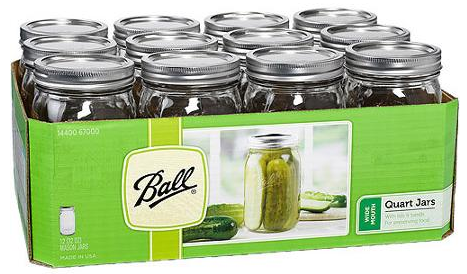
Do You Have Enough Jars & Canning Lids?

We are spending some time organizing, discarding, giving away & figuring. This morning I was going through our canning jars, regular canning lids, Tattler lids, and rings. As I did so, I pondered the possibilities. If these were the only jars, lids and rings I would ever have. Do I have enough? Do you?

With that pondering comes these thoughts. How many jars would I need to fill from our garden, chickens, goats and fruit to last a year until the next harvest was available? I really do appreciate the information we can find on the internet, and went on a quest. Here are a few articles I found that discuss how much food to raise or store, for a year.

~~~~~~~~~~~~~~~~~~~~~~~~~~~~~~~~~~~~~~~~~~~~~~~~~~~~~~~~

How much to plant in your garden to provide a year's worth of food?

Food Storage Calculator

TheFoodGuys.com - Food Storage Calculator 

Long Term Food Storage Calculator (uses Excel)

The Pantry Primer: How To Build a One Year Food Supply in Three Months

Peek Inside My Pantry - Use This Tool To Help Plan A Year's Worth of Food and Supplies

How Much to Plant Per Person in the Vegetable Garden

~~~~~~~~~~~~~~~~~~~~~~~~~~~~~~~~~~~~~~~~~~~~~~~~~~~~~~~~

Okay. That's enough for now. But, you see what I mean. We have been homesteading and gardening for years, but now we are getting very serious about trying to have on hand what we may need if the SHTF or TEOTWAWKI happens. Permanently. We've had many conversations
about how many jars of this or that we may need to last a year in 'normal' circumstances. But what if the electricity is off and we have no freezer, refrigeration, instant hot water, or anything that runs off of the grid? We depend on the freezer to preserve our meat, some cheese and some fruits and vegetables for now. If we didn't have that luxury, and it really is a luxury that many people don't enjoy, even in this day and age. So, if we didn't have that luxury, and instead canned all of our meat, broth, dog food (organ meat and fats from butchering), lard, some milk, maybe butter and cheese, fruits and all of the vegetables, I go back to my original question. Do we have enough jars & canning lids?

Some other things I thought of. With jars, we have to plan on breakage. This happens sometimes during canning, or by accident. Ask Frank. I am a rather clumsy person. Regular canning lids can be reused, sometimes as many as three times. We know. We tried it just so we would know and wouldn't have to hope or guess if we really needed them. But it is not a recommended practice. The Tattler lids can be reused many times if you take very good care of the gaskets. If I was solely dependent upon them, I would want to lay in a good supply of extra gaskets. And for Tattler lids to work, you must have rings. We've tried to devise a way to take extra good care of our rings to make them last as long as possible. When we are canning and our jars have sealed and cooled, we wash the rings, dry them well and store them so they won't rust, thus prolonging their usefulness.

June 2013
Spring and the gardening season will be upon us soon. This year we are going to make a serious effort to can and store a year's supply of food. Food that we produce here on our farm. Then, as we use it up, we will take stock of our jar, lid and ring supply. But until we have a more solid idea of our long term needs, we will continue picking up more jars and lids. Just in case. We have been surprised at the stock of canning supplies Wal-Mart has kept this winter. They usually don't. I'm glad. We have picked up a few more lids.

The more I learn, the deeper I learn, and the more I realize how little I know. There are layers upon layers of knowledge to learn. I have barely scratched the surface.

Until next time - Fern

Friday, July 11, 2014

What's Wrong With The Food?

We have a question for everyone. What is wrong with the food? We did a post a few days ago about what eating out does to us, and we were surprised at the responses we have had. I guess we just didn't think that there would be many people with the same problem. So, we would like to get a conversation going. The more information we all have, the more informed our decisions can be.

Let me share a little background. When we moved here from Alaska, one of the first things we got set up were our appliances which included two freezers. We located a local butcher and made arrangements to get a beef. The local ag teacher provided a hog. In the meantime, until the meat was processed, we stocked up on some chicken, pork chops, ground beef and round steak from Wal-Mart. While in Alaska, we had purchased a side of beef and ate moose, caribou and salmon from the local wildlife menu. The meat we bought at Wal-Mart surprised us. This was in 2008. The texture of the meat, especially the pork chops didn't really resemble what we would consider meat. It was almost like it was processed in some way and stuck back on the bone. It was almost scary to eat it.

When we first arrived here, if we ate out, we would go to a Western Sizzlin' (similar to a Golden Corral or other buffet restaurant) because there was a buffet with salad and other vegetables. But before long we realized that every time we ate there, we felt bad. It didn't seem to matter if we varied the content of our meals, we just felt bad, so we quit going there as well.

With Frank's recent stay in the hospital, we have had more than our fair share of food prepared by others. Now that we are home we are trying to detoxify our systems of all of the chemicals we have ingested, as well as all of the medications and anesthesia that Frank has been exposed to. We are eating many fresh things from the garden, as well as our own meat, milk and eggs. The kefir is not perking along as usual since it didn't get regular daily
attention while we were gone, but it will be back up to speed in a few days. We are having dandelion root tea daily to help cleanse the liver and keep the digestive tracts in good working condition. We hope to have our systems back to 'normal' in a few more days. One day while in the hospital, we had a very interesting conversation with Frank's surgeon. He indicated that most doctors and nutritionists
really know nothing about food and nutrition. This doctor was aware of the benefit of goat's milk over cows milk, the negative side effects of pasteurization, and he even knew the difference between A1 and A2 milk. It was a very interesting conversation.


We have written before about GMO food, MSG additives in foods and trying to avoid chemicals. Our sense of 'illness' after eating out, or eating processed foods has brought this to our attention more than ever. What is wrong with the food? Is there some kind of intentional scheme going on to affect the health of the population? Is this an intentional act our government is forcing upon food producers? Or is it just simply a matter of profit at any cost? If the food producers have any kind of business relationship with the medical industry, they have the perfect racket going. Produce food that makes people sick, send them to the medical folks for more treatment, and it is a financial win in both directions. Why is it the government appears to be attacking family farms when people are just trying to raise their own food? Are they going to regulate nutritional dependence upon the government? It appears to be one of their goals. A few years back Frank came to the conclusion that our government is going to release some type of toxin into the environment. This toxin itself will not be harmful to the individual, but when it interacts with other chemicals, then there will be a reaction which could cause an instant depopulation process. All the while, it would just look like a simple virus. Most medical people that I know do not get flu shots, but our government gives them away free. You can even get them at a drive through and not have to get out of your vehicle.


Our question for you is: What are your experiences? What is it about the food supply that is making people feel bad or sick? What has happened or is happening that is increasing health problems in the general population? When people that eat processed foods 24/7, and go to someone's house and eat fresh grown food, does it make them feel sick? Is it a matter of what you're used to? What are we missing here? We are trying to wrap our heads around this one, and haven't come to a viable answer yet. Just food for thought. Let us know what you think.

Until next time - Fern