The Road Home

The Road Home
There is no place like home.
Showing posts with label fall garden. Show all posts

Saturday, July 25, 2015

Homestead News, Volume 7

There is not a lot going on here right now, just a little bit of this and a little bit of that. We have told you about many of our latest activities, so we thought we would give you a run down of our general, everyday homestead life. I waited until evening chores with the sun going down to take the pictures for this article. Just as we were wrapping up and I was going to take the last pictures of the pigs, the camera batteries died.

And speaking of pigs, our American Guinea Hogs are doing very well. They are pretty friendly, and now come running anytime they here one of us holler, "Come on pigs!" They know that means we are carrying a bucket with something good to eat. The contents of the bucket tend to vary
widely depending on what we're harvesting from the garden, whether we have whey from making cheese, or just getting rid of some older staples that have sat on the shelf for too long. I'm starting to eye the barrows and think of the future meat and lard they will provide. We really look forward to butchering one of them so we can see how they taste. Lance, the boar, and Liberty, the gilt, like to greet me in the morning with mud on their noses. They have become very adept at putting a nice big nose print smear on my jeans, especially if I have just put on a clean pair. I like to think they are just bumping me with their nose in greeting and not wiping their faces. What is it about pigs and shoes? Why does Lance think he needs to taste or try to bite my shoe when I go in there?

One Stripe. See it right there on her side?
We have been putting two of our does, One Stripe and Cricket, in the 'boys' pasture during the day for about a week. Cricket has fully recovered from the scours she had earlier in the month which prevented us from trying this a few weeks ago. Our temperatures have hovered just under or over 100* for a couple of weeks now, and we think that has, and will, prevent them from breeding. We had hopes for them to breed in July for December babies and a winter milk supply, but I just don't think that will happen. Next year I will breed two does in May for October babies. That will require the does to breed not long after they kid, but then we should be on a more even cycle of once a year again. We will see. It is a real challenge to keep ourselves in milk year round, but continues to be an important goal.


We are still picking tomatoes, green beans and cowpeas from the garden. The last of the squash plants have succumbed to the squash bugs, and I have already replanted a few hills. The pepper plants are finally growing well and starting to produce. I will pick a few jalapenos next week to make salsa. Tomatoes are filling up my crispers in the frig awaiting enough company to can salsa for the pantry shelves. We have been out for a while and have missed it. We eat a lot more salsa than canned tomatoes, so it will take first place in the canning process.


The cucumbers are gradually growing and starting to bloom quite a bit. There aren't many plants so I don't know how many pickles we can make. I'd like to ferment them, so it may be in individual jars. I'm just not sure how well they will keep on the pantry shelves. I'm still hesitant to leave them there instead of refrigerated. We only have one refrigerator, and no other cold storage for jars of fermented food, so I just don't know what to do. I've read that fermented veges will be fine on the shelf after they complete the fermenting process, but I don't trust that practice yet. Any advice you may have for me would be appreciated.


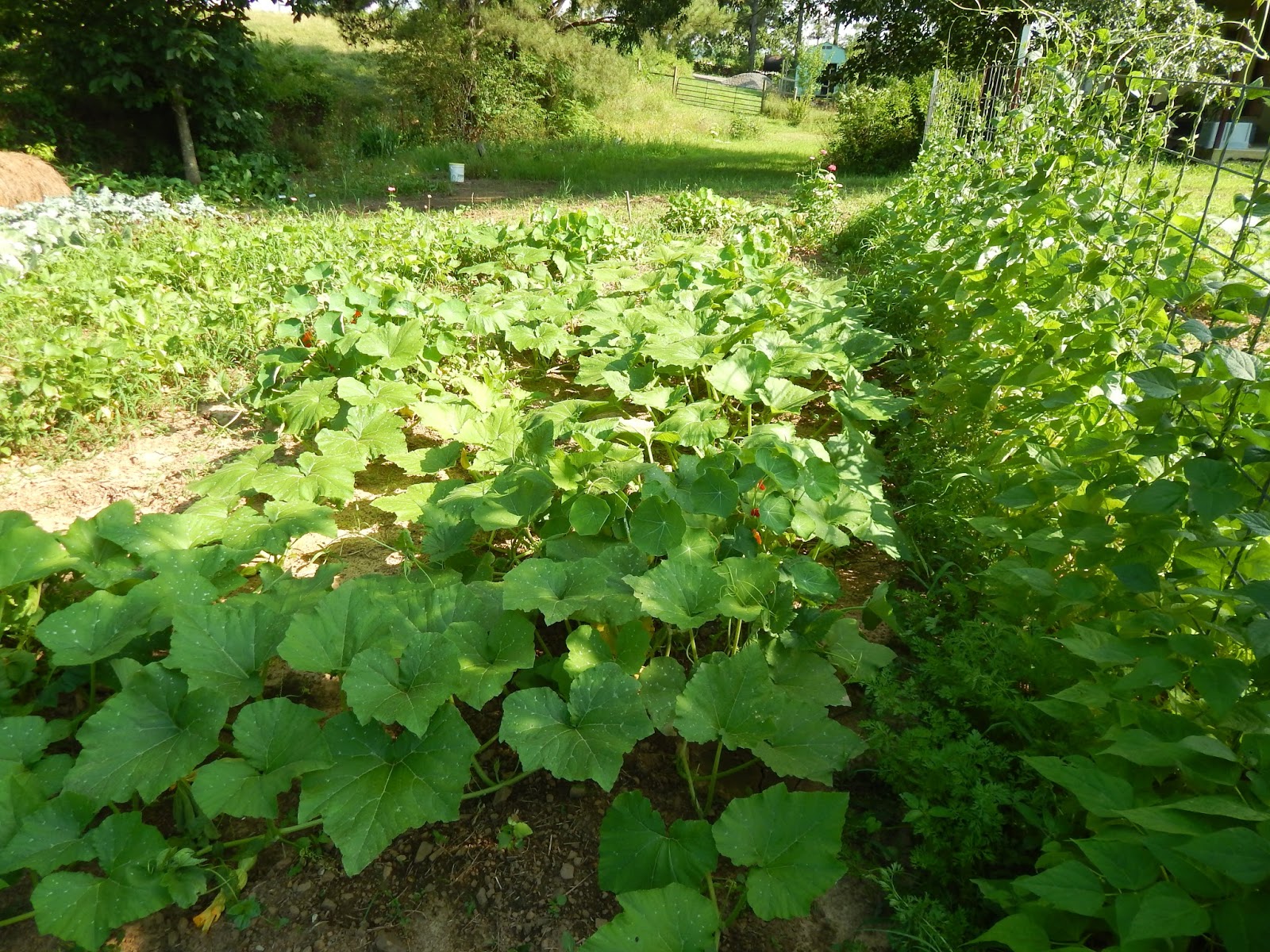
In our efforts to clear the weeds and grass from parts of the garden for fall crops, Frank used the disc on the tractor (like we showed you in a previous post). Well, today we went out to work on it again and Frank got a great idea. Instead of raking and removing the dead grass, he scraped it all together with the bucket on the tractor. It made quick work in the hot sun, instead of using a rake and wagon. That was one of those time and body saving ideas that really paid off. Now after one more session with the disc, the ground will be ready to plant. 


Work on the greenhouse and other slated projects will resume before long when our one man crew returns from vacation. Frank's list of things he wants to complete grows a few more items from time to time.

I continue to do contract work for the school district we both retired from, and with school starting before long, I will be more involved in that process than I have been for the past few months. I will be attending training on a new computer program that the state of Oklahoma is adopting, then spend a day at the school training the teachers how to use it as well.

Frank's Ham Radio & Survival Communications class is going very well. They have two more weeks of class before some of the members will be testing for their ham radio licenses. The local county emergency management office has arranged for Volunteer Examiners to come to the class location to administer the tests instead of the students having to go 60 miles to another testing session being offered by an area radio club. This is the first time the local Volunteer Examiners have administered a test in this area. The ARRL requires them to administer four test sessions before they will be recognized as a certified testing group. It's great that Frank's request for a local test session has lead this group to start up their own program.

Once the radio class is over, the real work will begin. There are several class members that want to set up towers or antenna poles to begin the process of creating a communication network in our area. This is the whole purpose of this class and we are excited to see the interest that is being expressed. Many of these folks know that there are hard times coming and want to be able to look out for each other when they arrive, and for that, we are truly grateful. So even though we expect the deterioration of our country and world to continue, it's comforting to know there are those that are willing to create a workable communication network in this area.


This morning we turned 16 of our eight week old hens out with the adult flock of birds. This gives the 17 or so young roosters more room in their pen to grow a few more weeks before they take up space in the freezer. We look forward to having fresh chicken again. We rationed out the last few from last year and are now out of chicken meat. 


The young batch of chicks are now a month old and will soon need both 'baby' pens to prevent overcrowding. We will be looking at the hens in this group of birds also to see which ones we want to keep. We plan to keep about 20 young hens to replace the current laying flock. We will also choose two young roosters. In about three or four months, the older bird will find their way into jars once the young hens start laying. Then the cycle will start once again.

Scruffy drinking fresh squeezed milk
 

The heat keeps us inside during the hot afternoons this time of year. Our busiest times outside have waned until the weather starts to cool in September. We will continue to work on our projects in the mornings, or when the heat allows. There is still so much to do, and we feel the time gets shorter everyday. 

Until next time - Fern

Wednesday, July 22, 2015

Prepping the Garden for Fall, Part 1

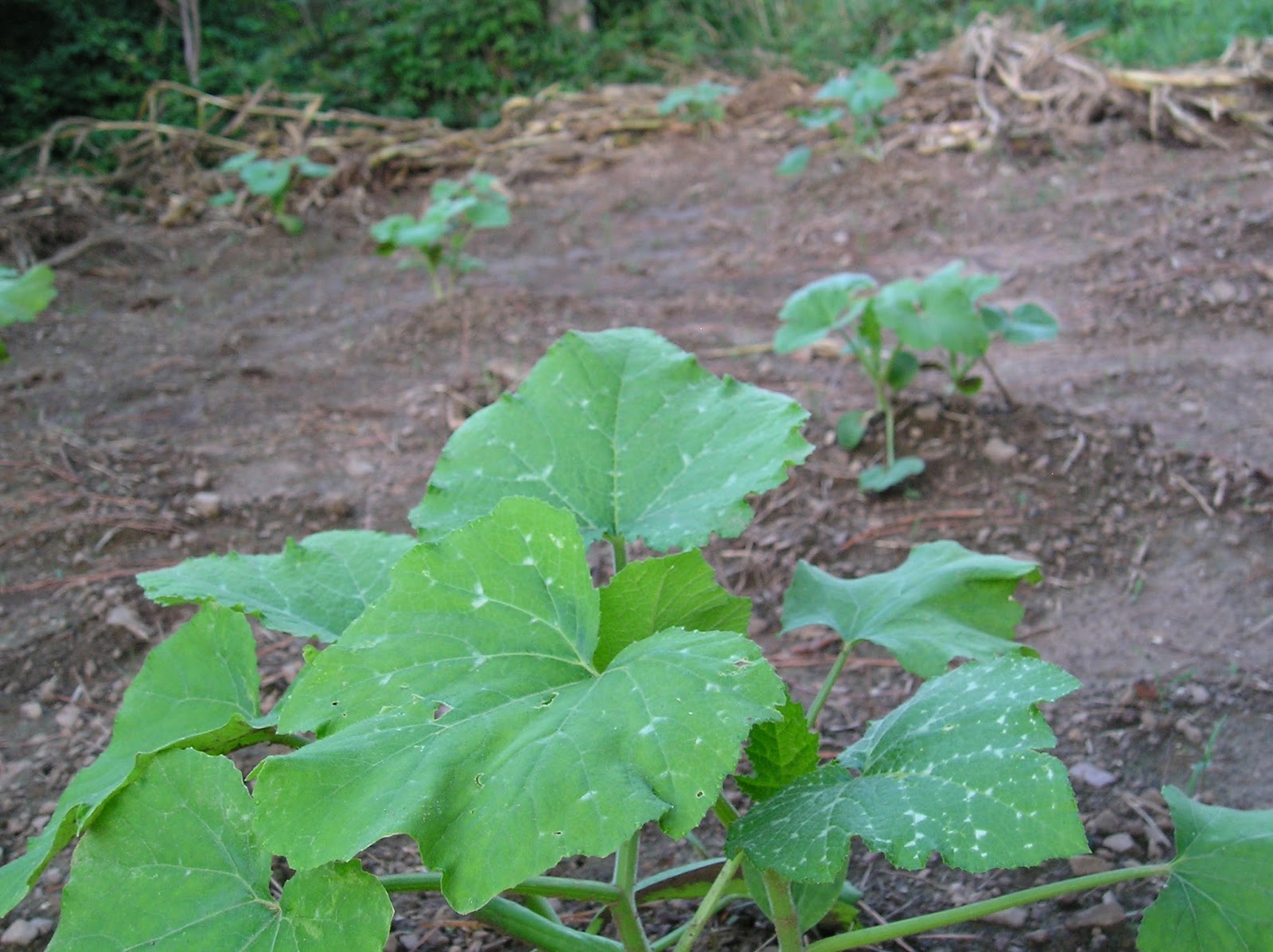
We have started preparing the garden for planting fall crops, but we're not finished yet. I have a few pictures of the beginning, but we probably won't get it finished up until Saturday when I hope to get many, many wonderful, miraculous little seeds planted. I am always in awe of how a tiny little seed can turn into so much food. It is truly a miracle to me. 


It is really nice to see the tall grass down and turning brown in the hot sun. I hope to rake it up and remove it so we can run the disc through there again before I plant. I'll give you another update when we get it finished. Due to several upcoming obligations, it will take a few more days than I would like. Some of the crops I will be planting are 120 days to maturity, like peanuts and Mangel beets, which means our window of opportunity is closing soon. Our first average frost date is October 31st, so July 31st is my very latest goal date. I hope I make it.


Keep your eyes and ears open. Listen for that inspiration that will lead you the next step you need to take in your preparations. And remember, you can never have too many seeds. Never. They will be more precious than anything made of metal. You can't eat metal, but you can feed yourself with seeds. Never plant the last of your seeds. What if you have a year like it has been here and just to get anything to grow you have to replant two or three times? What if a storm destroys your plants like it did to CQ from Hickory Holler? (She is on our blogroll.) What if insects destroy some of your crops? What if you are planning on that food to get you through the winter? Will you make it? Really inventory what you have and determine what you need, then get it and store it along with the information you need on how to grow, harvest, preserve both fruit and seeds, then inventory again. I am.

Until next time - Fern

Saturday, June 13, 2015

Survival Gardening Scenario

I have a scenario for you. Somehow, it doesn't matter how, you have found conclusive evidence that there will be a catastrophic collapse of societies, governments and economies worldwide sometime between the end of October and the end of November this year. Remember, this is a fictional scenario I am giving you. There is already evidence of disruptions in the food supply for the coming months, along with sharply rising prices.The media dishes out a plethora of reasons for these problems that amount to nothing but more wasted oxygen by never ending talking heads. You have some things growing in your garden, enough that you can preserve some of it for winter. But now you realize that you need to grow food. A lot more food. As much as you possibly can, for the rest of the growing season in your area.


My questions are these. What will you grow? How will you preserve what you grow in the shadow of an impending collapse? Do you have the space, seeds, and supplies you need to do so? If not, are you still able to procure what you need?


I would really like to hear from as many people as possible. There is much we can teach each other, and I learn a lot from the differing perspectives, locations, and experience of the people that read here. So, please share your thoughts. An example. Our friend Grace down the road a ways, can grow things in her garden that we can't grow. We can grow things that she can't. I have bug problems she doesn't and she has some that I don't. It's important to know what grows well in your garden, and how to preserve the harvest of your labor. Remember, this is a collapse scenario, so you can't put it all in the freezer unless you have a reliable source of power.

The other day when I was out in the garden, I took stock of what is there. At the end of that exercise, I felt like there wasn't much in the way of food quantities. I still have places that need to be replanted and have plans for those areas. There are crops that will soon be harvested leaving more space for additional crops that will grow into the fall. And yet, even with all of that planning, I felt like there wasn't enough of a food supply to sustain Frank and I for the winter. 

When I posed this question to Frank he had a ready answer. Plant what grows here. Simple, direct and right on target. He said we know we can grow green beans. If we have enough green beans to eat everyday, great, that's what we'll eat. We also know we can grow squash, tomatoes, cowpeas, cucumbers, turnips, peppers, beets and carrots. Plant as many of all of these as you can. What we don't preserve we can give away, and many of these crops are also great for our animals.

I have written articles about the nutritional contents of some of the vegetables we grow. My purpose was to see if the things we can grow will provide the nutrition we need to remain healthy and active in a collapse situation. I have yet to go back and evaluate the information on these vegetables as a group to see if they would meet our needs or not. But in the long run, what we can grow will be what we eat.

There are many ideas and scenarios I ponder from time to time. Some realistic, some idealistic, and some just down right silly, but this one has stuck with me like it is something very important that I need to pay attention to. We have many things vying for our attention right now at our homestead and I am not spending near the time in the garden I should. It continues to beckon me with it's empty spaces. Spaces that need to be planted, for the time is near. There are many indicators that the fall of the year 2015 may be monumental in the history of our planet Earth. The world has become a much smaller place with the complexities of interwoven economies, food supplies and power struggles. The fall of the year may bring the fall of us all.

So, tell me. What would you grow and why?

Until next time - Fern

Monday, August 11, 2014

The Nutrition of Potatoes

One of our more successful crops this summer has been red potatoes. We have gradually been increasing our skill, we hope, at growing enough to see us through the winter until another crop is ready to harvest. With this in mind, and my curiosity about what kind of balanced nutrition we are growing, here is the latest in my series of posts about the nutritional content of our garden crops.

One large, raw potato with skin contains the following nutrients:

  • protein 7.5g
  • calories 284
  • carbohydrates 68g
  • fiber 8.1g
  • starch 57g
  • vitamins A, C, K
  • niacin
  • folate
  • choline
  • omega-3 fatty acids
  • omega-6 fatty acids
  • calcium
  • iron
  • magnesium
  • phosphorus
  • potassium
  • sodium


We have cut up some of the potatoes we harvested this spring to plant for a fall crop. The interesting thing about them, is that they came from the 'potato bush' that we grew from our crop from last summer (2013). When I was planting the garden this spring, we had a few small, shriveled potatoes left from last summer that had very long, leggy sprouts on them. We figured they were done for and were going to just throw them out. Well, I decided to pile them up in the corner of the garden and throw some dirt on them. They
'Potato bush' in the corner of the garden, May 2014
grew.....and grew......and turned into a tightly clustered 'potato bush'. So, some of the potatoes we are planting now for our fall crop came from last year's potatoes. We want to continue this experiment and see if we can grow a self-sustaining crop. You can also use store bought potatoes for seed potatoes, we have used them more than once. Our feed stores have seed potatoes here in the spring, but you never see them in the late summer or fall. So, even though we have bought some seed potatoes each spring, we don't know what variety of red potato we are currently growing. 


We know from the history of the potato that many peoples have utilized this tuber as a part of their daily diet. Potatoes are high in carbohydrates and starch which are very important nutritional qualities in a survival situation. If we are sitting on the couch reading or writing blog posts, we probably don't need as many carbohydrates in our meals. Nevertheless, potatoes have been an American mainstay for many, many years. Ask Frank, the carnivore, meat and potatoes make a mighty good meal.

Until next time - Fern


Saturday, August 17, 2013

Back to School

It's time for school to start in our neck of the woods which means I will be going back to work. This will be my 30th year teaching special education in a public school system. My experience covers a wide geography - from urban to remote bush Alaska - and many, many children. Working with these children has taught me much over the years and this profession has allowed us to live in some of the most challenging, adventurous places. I continue to be blessed with employment that I enjoy.

Because of my return to work, our blogging will decrease somewhat, but we will still be here. The usual adjustments are being made around the farm to accommodate more time away from home.


We are drying up one of our does to lessen the milk load. Velvet is producing less milk than One Stripe or Ivory so she was the likely candidate. It has been easy to switch to milking her every other day without any distention of her udder to worry about. Now I will switch to just checking on her to see if I need to take any more milk at all, or if she will just reabsorb what milk she has.

Time to tend to and process the garden will be squeezed in after work. The fall garden will hopefully be able to tend to itself for the most part. The weather is different this year with lows in the 60's in August. It almost feels like winter will come early, which is strange for this part of the world. We usually have temperatures around 100, with lows in the low 80's or upper 70's. If the frosts come early, I will do some more experimenting with the frost cloth I used in the spring for the late frosts. It may extend our harvest of winter squashes.

 
The winter squashes and pumpkins are growing well. I got about two thirds of the corn stalks moved to mulch behind the winter squash when I ran into a pile of fire ants. So the rest of the mulch will have to wait for them to move on after I disturbed them.


Today I got the sugar beets planted since the ground finally dried out enough to work. 


I tucked the snap peas in between the two volunteer tomatoes and the volunteer
 
  jalapeno on this partial piece of stock panel. It all fit just right. I think I will plant the carrots around the tomatoes after I can till in a few more weeds. The potatoes haven't come up yet. We will just have to wait and see how that goes. 

Like many folks this summer, we haven't had many tomatoes and I haven't been able to try my hand at making tomato sauce as I had hoped. But there will be another time and another garden, if all goes well with the world. We still have some peppers, okra, purple hull peas, squash and cucumbers to pick and process, not to mention the milk and eggs from the goats and chickens, so there will be more than enough to do.

So for the last day of summer vacation, I got some things planted in the garden, canned 9 pints of purple hull peas, made a quart of fresh salsa and cooked up 3 or 4 pints of green beans for a casserole to take to church tomorrow for lunch.

And for everyone that is following Frank's radio communications posts, we will soon be explaining the new radio he installed in the car today. It is the same radio we use for a VHF/UHF base station. This will help standardize what we are using and give me more power in the vehicle to reach home when I need to. We feel effective means of communication are more important than ever.

Until next time - Fern

Wednesday, August 14, 2013

August Gardening Update

First, a bug update. I learned something very interesting about ants and aphids. We have an over abundance of fire ants here. A few years ago there were a few, then more and more. This year they seem to be everywhere and in everything.

I was talking to a neighbor about gardens a few days ago and told her I had some aphids on my purple hull peas. She told me that anywhere there are ants and available plants there will be aphids. There is a mutually beneficial relationship between the two insects. The aphids secret a 'honeydew' that the ants eat and the ants protect the aphids from their predators. The ants will actually carry the aphids around and place them on choice plants so they will produce more honeydew. The ants have even been observed to 'milk' the aphids so they will produce more honeydew. Even though I find the ants and aphids to be a serious nuisance, I find this fascinating.

I had a batch of aphids on some of my purple hull peas and I wondered if the assassin bugs would eat them. So I gathered up about 10 assassin bugs from one of my pepper plants in a jar and put them where the aphids are. It didn't seem to make any difference. Now I think it is because of the ants. We have not come up with a natural way to combat the ants. There may not be one. They have really boomed this year and become a real problem.


This morning while out picking the garden I was able to welcome a new bug - a praying mantis. It was in the Romano bean trellis and I was happy to see it.


Another update is the fall garden. We have had seven inches of rain in the last three days along with several more inches in the week prior. The fall seedlings I have planted are ready to go in the ground but it will be several more days before that is possible. The winter squashes and pumpkins are growing well even though they were rather beat up by the heavy rain.


I think the grasshoppers mowed down one of the melons, but there are still four left.


The potatoes haven't come up yet, and I hope they don't rot with all of this rain.


I wrote about the flood in the herb bed earlier in the summer. Time has not allowed me to work on the herb bed this year the way I hoped. Sometimes I would walk by and look at it and think it is a real failure this year. But a few weeks ago, I started really looking at what I had growing there. Even though I hoped to have much more established by now, I realized that I have quite a few things growing. The mulch is not in place and I am fighting the weeds more than I would like, but I have some strong perennial plants that will continue coming back. So here they are in no particular order.

Basil


Blackberry Lily


Chives
Comfrey
Elderberry
Green tea
Horseradish
Kale
Leeks
Lemon Balm
Marjoram
Multiplier Onions
Oregano
Parsley (which has bloomed and gone to seed)
Peppermint
Rhubarb
Rosemary
Sage (two types)
Sweet Potato (I replanted one we grew last year)
Wild Lettuce (going to seed)


Muddy footprints just trying to get around in the herb bed.


The kittens are starting to get out and around and 'help' pick the garden. They still get lost a lot, but it's fun to watch them explore.
We are blessed with abundance and beauty all around us. Even if we have too much rain, the weeds are growing like crazy and the grass needs mowing, life is good - very, very good.

Until next time - Fern