The Road Home

The Road Home
There is no place like home.
Showing posts with label radio communications. Show all posts

Saturday, January 9, 2021

Times Are Changing

Hello Everybody, Frank here.

Let's talk radio.

It would appear that in the very near future, radios might be a great way to communicate. Radio communication has taken a back seat to the internet and cell phones. It is easy to understand why. Internet is mighty convenient. Cell phone, I don't even stop and think at this communication marvel.

Times are changing. Times are changing quickly. I'd like for you to think about radio as a backup system to cell phone and internet. Yes, radio will never replace internet or cell phones, but if you need to talk to someone in your area, or you just want to listen to that same group of people in your area, you can do this with radio. We're going to talk about that.

A few years back I wrote a number of articles about various radio communications. Here is a link to a list of those articles. It's also on the side bar under Frank's Radio Communications.

LINK: Frank's Radio Communications

Some of the information is dated. Some of the test manuals are out of date. Some of the links to various businesses may not work. But the information about the radios themselves, very little has changed here.


Look through some of these articles. Times are changing. If you have questions, put them in the comments. Boys and girls, we need to be able to communicate. Think about it. If you say to yourself, well I can't do that. Then you can't. If you see Bubba riding down the road in his old truck with his CB antenna on it - well he can do it. Fear of learning is common. Adults generally are not good students. Get over it. Learn.

Read some of the articles. If you don't understand it, let it soak in. Most radio is push the button and talk. I live surrounded by Bubba, it's a great place to be. Learn. Read. And do.

Always use caution when sharing information with folks you don't truly know. One last thing. Anything you say on a radio can be heard by somebody else. Don't give out phone numbers, addresses, it's called operational security, OPSEC. Let's do this.

Put questions in the comments. Local is where you live. Local is where you will survive. Bubba is your buddy. Remember, humor is the essence of survival.


We'll TALK more later, Frank


Sunday, May 10, 2020

A New Era of Individual Responsibility?

COVID19 will be a part of the world's vocabulary for many years to come. Discussions of the impact it has had on countries, cities, towns, neighborhoods and families will be ongoing for many years. We don't even know what those impacts will be, for they have yet to play out in real time. History in the making, right in front of our eyes.

If you or yours have suffered a loss as a result of this virus, our hearts and prayers to out to you. There have been many difficult situations and fears that have been heart breaking. I look forward to the time that I can go into the nursing home to see my mother again. Visiting through the window with someone in the advance stages of dementia is very difficult. She doesn't understand and it just breaks my heart.

After the initial scare of a raging pandemic that was predicted to kill millions and millions of people, leading to shortages at the store, and overwhelming the ability of the medical industry to cope, we are now in the stage of trying to regroup and regain a sense of normalcy. The resulting stay-at-home/lock down orders have highlighted some of the tendencies of governments to initiate and strengthen their desire to control the lives of the people they 'govern', showing they aren't in the position to serve the people, but to control them. Some of the serfs are not happy with this. Most of us initially complied under the false narrative of the severity of the virus and pending threat of death by a virus - the invisible enemy, President Trump calls it. 

But this isn't an analysis of the advice given to the President by his task force members that are also trying to roll out their own agendas of control. Personally, I think this has been a bioweapon unleashed upon the world as a backlash for leaders and countries backtracking from the One World Government and attempt to control everyone and every country in it. Control. Ultimate control of everyone through the monetary system, the food supply, medical attention, the ability to work and provide for the family. All of it. The whole package deal. Life. And everything that it entails.

No, this article isn't about that. You can read many different articles and opinions about those topics. This is about the changes some people appear to be making in their lives. For instance. Why are the Mom & Pop mail order chicken hatcheries unable to fulfill orders until late summer now? Why are seed companies out of seeds? Why are gun and ammo suppliers seeing record all time sales and shortages? There are shortages of radios - alternate forms of communication. Why are the shelves at the store that hold beans, rice, pasta, flour and other staples mostly empty? Why are the news stories on the mainstream sites showing how to make bread, how to bake, how to cook?

Frank and I have discussed for years that if just a tiny percentage of the population of our country woke up one day and realized they would run out of food, went to the store and bought enough for a week that the shelves would be empty. Then along came COVID19. And it happened. And it continues to happen. And the prices of everything are going up, except for oil and gasoline. It appears they will continue to go up. Excuses for that? Supply chain disruption, it's China's fault, it's...... It really doesn't matter what caused "it" and what is going to continue causing our new normal to unfold. The fact of the matter is the future will unfold whether we like it or not, vote for it or not, or deal with it or not.

Frank and I chose our life style decades ago. We have worked toward this level of self-sufficiency for a long time and have realized many of our dreams. Now we are working on new dreams, how to maintain as much independence as we can, as long as we can, while we 'grow' into old age. We are in a time of change in our lives. The parallel is that now the whole world is in a time of change with no real sense of the direction it will take. A true time of cognitive dissonance where normal has flown out the window, never to be seen again. Where did it go? How did it leave so fast? Amazing, isn't it?

Now people are searching for ways to manage, ways to provide for their families, ways to continue to be independent without leaning on the government, food banks, or other means of income. Will this lead to a new era of individual responsibility or an ever growing population that expects everything to be provided? 

The few times we have been out and about in a very limited fashion over the last month or so, we have noticed more garden spots. Some large, some small, some in tubs or buckets. We find that to be very encouraging. We have heard of some folks that are focusing more on food and provisions, for the time being anyway. Will it continue? Will this be a wake up call for some that priorities need to be changed and focused on the real things in life? I think once the restrictions are lifted there will be a rush to regain the old normal, only to find it no longer exists. Some behaviors will be driven by fear of the virus and the effects it will have. Government overreach in it's many facets will be here to stay unless people stand up and install those that would reverse the heavy handedness that has shown up in some areas. At this point, I would say the future is an open book with blank pages. If things are allowed to continue the way they have been going it's just a matter of time before we are all locked down, tracked, banned and told to sit back and shut up. But that's not my focus here.

Take stock of your shelves. How long will your food last if you could never buy one more scrap of food? Without Food, You are Dead. I wrote about it not long ago. Control of the food supply can and will control you. Period.

What can you do to supplement, stretch, extend your food supply to the maximum extent possible? What do you need to learn to increase that supply even more? We have been writing here on and off for a number of years about our attempts to grow food and raise animals to increase our self-sufficiency. If you haven't been reading here very long, check the list of articles and pages that may lead you to some information that may benefit you. Frank has written extensive articles on radio communications that will explain how to set up a network of communication for your family or area in case cell phones are down. There are many articles on gardening, raising goats, chickens and pigs. We have written about reusable products you can make, like the masks that are being made around the world right now. If you have questions, ask. We and other readers are always ready to share our experiences in the hopes it may help another.

We're all in this together folks. Some days it looks like we have fallen over the cliff of no return to soon crash at the bottom with a resounding thud. Other days? It just looks real dicey. We have yet to see if more serious food shortages and economic calamities are right around the corner. At this point, I think the virus is the least of our worries. I can only hope it is a new era of individual responsibility which will lead more people to step up and take care of their own instead of holding out their hand for more while they scream about someone not wearing a mask.

Pay attention. Take notice and take stock of your shelves and yourself. No one is coming to save you. If They show up at all, don't get on the bus.

Until next time - Fern


By the way. Does anyone know why some of the pictures in our last few articles have disappeared? All of them were taken at the same time, none were downloaded from the internet. I haven't researched the problem, it just wasn't that important to me. It may be a simple fix.

Friday, April 19, 2019

GMRS Radio - Time to Get Talking

Hello Everybody, Frank here.

I thought I would introduce you to another form of communication, but first I'm going to back track a little. A couple of articles back I gave you FCC regulations. It is your responsibility to know them, or at least pretend like you do. There are rules, there are regulations, and there are laws. For this boys and girls, you are responsible. People violate the law everyday, that does not make it RIGHT. I have a tendency to drive a little to fast in my vehicle sometimes. Am I violating the law? Yes. It is my choice.

Moving on. We also talked about CB radios, a great means of communication. Today, we're going to primarily discuss GMRS. It is a great way to communicate also. It is FM instead of AM, just like your car radio, FM has a clearer signal and less static than AM. There are reasons why, which at this particular time you don't need to know, but it will be covered later on, just not today. GMRS frequencies will not bounce off of the ionosphere like CB frequencies will on occasion. They are line of sight communication, LOC, similar in nature to CB, with some slightly different properties. The re-posted article below has lots of information talking about GMRS, FRS and MURS. 


They have come out with a new radio since this original article was published. Other companies may manufacture this new radio, but the only one I have seen is made by Midland. Yes, it is legal. It has more power, a detachable antenna and I can see where lots of people would like this particular radio. I have included a picture here and the manufacturers website. Check it out. You can use this radio as either a mobile or a base station. You can put a mag mount antenna on your vehicle, or at your base station you can put an external antenna way up in the air. The higher your antenna, the greater your line of sight communication. 

A controversial statement here. Could you use a commercial radio, either handheld, mobile or base station and communicate with these same GMRS frequencies? Absolutely. Can you use a modified ham radio transmitter? The answer again is yes. The difference is the Midland radio is legal, the modified ham radio and commercial radio are not legal to transmit on the GMRS  frequencies. You will hear this often from me. Is it illegal to drive 36MPH in a 35MPH zone? Yes. Is it illegal to drive 96MPH in a 35MPH zone? Yes it is. Which one will get you the most attention? 36 or 96? The answer is obvious.

You will still need the license to operate the GMRS radio mentioned above. It is not a ham radio license. If you have a ham radio license can you use the illegal radios mentioned above to operate on GMRS? You can, but it's still illegal. I will talk  more about commercial radios and modifying ham radios in the future, but today, we're going to talk about GMRS. I would check out that new Midland radio mentioned above.

Now, below is a re-posted article with a handful of comments added to it. If you're interested in learning more details about GMRS, please continue reading. As usual I would encourage you to get your ham radio license. It is by no means 100% necessary, but it will vastly increase your communication options.

If you have questions, ask. If you have comments, state them. Remember, this is fun. Go in the bathroom and look in the mirror and have a good laugh. Life is too short to be stuffy. There are enough serious things in the world. Have fun and communicate. Communication might save your life.

We'll talk more later,  Frank


Originally published October 11, 2014
 

Radio - GMRS, FRS & MURS


Hi Everybody, Frank here.

We're going to do a re-post today about non-ham radios. I know some survivalist say that everybody needs to get their ham radio license, but in the real world, that's just not going to happen. I received a comment on the blog this last week or so, and I want to share it with you. This man and I have shared a couple of comments back and forth, dealing with the properties of 2-way radio communications. If you want to get your ham radio license, great. But, if you want to communicate with your cousin Billy Bob down the road, then there are other ways besides ham radio. 

The GMRS radios, made by a number of manufacturers, will all communicate with each other. Don't believe the advertisements about 36 miles or 24 miles. These are line of sight communication radios, but they work great for their intended purpose.

~~~~~~~~~~~~~~~~~~~~~~~~~~~~~~~~~~~~~~~~~~~~~~~~~~~~~~~~

Frank- first off, thanks so much for the time you and Fern put in to sharing good information and just real life results of learning homesteading skills.

My question is on repeaters. Our home is partially earth sheltered, with most of the main floor cut in to the hillside. And of course, the garden, barn, and workshop where I am most likely to be when my wife and I might want to communicate, is uphill, the barn with metal walls. So, I am thinking I may well need a repeater to make things work, but am very early in my research. If I were to get the Baofeng/Pofung radios in this post, or something similar, what type of repeater would I need, and are they very expensive? I would most likely buy the radios first, to see if I even need the repeater, but would like to know now what the hit might be if one is needed.

Are there different repeaters for different bandwidths, or are there some repeaters with features that might be of benefit if I decide to move on to ham or CB?

Thanks again for your efforts.


~~~~~~~~~~~~~~~~~~~~~~~~~~~~~~~~~~~~~~~~~~~~~~~~~~~~~~~~

Hello. Great questions, and I can see some thought has gone into the issue.

Number one. I would borrow a couple of GMRS radios and see if they will work from your house to your barn. This would be, beyond a doubt the cheapest way to go. An example. Our barn is metal, our house has a metal roof, the barn is about 500 feet from the house, and from inside the house, to inside the barn, we have absolutely no problems with intelligibility, or volume. There is a small rise between the house and the barn. I can see the upper half of the barn from the house.

Following this same theme, the corner of our property, from corner to corner is about 1500 feet. There is no line of sight, and that is due to a hill in between, not a big hill, but still, no line of sight. With this scenario the transmission has a little bit of noise, but is still intelligible.

Number two. If for some reason, number one does not work for you, an external antenna might be your answer. That means your radio will have to be connected to the antenna, which certainly limits your mobile factor. But, if you do use this type scenario with an external antenna, depending on your setup, you can talk for miles. If I were guessing, I would guess that number one will be your best answer.

Number three. A repeater. A true repeater can get expensive and complicated. It has to have a constant power supply. Now, there are ham radios and commercial radios that function as cross band repeaters. I have never attempted this technique. What cross band means is you have a two band transceiver, one channel is set on VHF, the other channel is set on UHF, and through internal programming, it will broadcast and receive on each of these frequencies. Again, I have never used this technique, but they advertise that it will work. You're looking at $350.00 for this dedicated radio, a power supply, an antenna, but according to the manual it will work.

I would either borrow or buy two real cheap GMRS radios, everybody has them. They may not know they have them, but the things their kids play with, that's what they are. An external antenna for your home is easy to make, and will extend your transmit/receive range sharply. In some of the other radio posts I talk about external antennas. Of course, I would like for you to read all of the posts. Try the two handhelds first. If you decide on the $40.00 radios, great. You will need a programming cable, unless you want to do it the old fashioned way by keypad entry, which can be done. I use the RT system and it works for me.

One last thing to consider. No matter what frequency you use, somebody can hear you. Hope this helps. Enjoyed your blog, by the way. Take care.

Frank


~~~~~~~~~~~~~~~~~~~~~~~~~~~~~~~~~~~~~~~~~~~~~~~~~~~~~~~~

Frank- I went ahead and got the Midland GXT 1050 radios you mention in the post on GMRS/FRS/MURS. Tried it out in the barn, other places, and excellent reception all around. I might even take one up in the tree stand this November and wear the ear piece.

Any comments on maximizing the NiMH battery life? For now, I plan to keep them in the recharge cradles unless we are using them, which may not be a lot till we develop the habit more.

As you and Fern say many times, until you have actually DONE something, you have no idea how it will really go down. In this case, it worked out fine, but we have many other tasks in front of us as we work to improve our self sufficiency. Thanks again for the time you two put in to sharing. After a couple more seasons on our small farm, maybe I will be able to share with the wider world what we have learned as well. 


~~~~~~~~~~~~~~~~~~~~~~~~~~~~~~~~~~~~~~~~~~~~~~~~~~~~~~~~

Hi. I'm glad that these worked for you. As far as maximizing the battery life. One, I would use the radios everyday, then they become part of your routine. It's kind of like putting your keys in your pocket, if you get in the habit, you will always take it with you.

Let the batteries drain before recharging. I know that this type of battery advertises it does not develop a memory, but it does. If you keep them fully charged all the time, then you will have much less battery life. If you're using the internal battery pack that came with the radio, you can remove it and put four AA rechargeable batteries in it that will charge in the cradle, and sharply extend the transmit and receive time. If you're going to be out all day, like sitting in a tree stand, charge the battery that came with the radio, take it out, put it in your pack and keep it as a back up.

My best advice is to not keep the radio in the charger all the time. For a long time I would always charge the radios on a Friday night. Then I would have well charged batteries that would last me a week.

Make sure you wear the ear piece when you are hunting. Because I, on more than one occasion, have listened to hunters chat between each other whispering. There is always some clown who will make a loud noise in the radio, like a duck or coyote call. Some people think that's funny.

No joke, though, don't keep your radio in the charger all the time. It will shorten your battery life tremendously. Hope all this helps, and I'm glad the radios worked out well for you.

Frank


~~~~~~~~~~~~~~~~~~~~~~~~~~~~~~~~~~~~~~~~~~~~~~~~~~~~~~~~ 

Next, I want to share with you an interesting and exciting comment I received this week from an individual that has gotten their Technician ham radio license. They purchased one of the $40.00 radios that I wrote about, and seem to be very realistic about their goals for ham radio. You see there is no magic secret to radio. For the most part, you turn the on/off switch to on, you push the little transmit button and speak into the microphone. Whether ham radio or GMRS, you can still communicate when you need to. And while you're doing your research, don't forget to check out the CB radio. Because with the right CB radio, not only can you communicate with Billy Bob down the road, but when the ionosphere is in the right position, you can also listen and talk around the globe. Do your research. Enjoy the read from the person that got their Technician license, and if you would like, please read the re-post about GMRS, FRS & MURS.

 ~~~~~~~~~~~~~~~~~~~~~~~~~~~~~~~~~~~~~~~~~~~~~~~~~~~~~~~~

Thanks so much for this review [this comment was on the post about manual grain grinders], I really needed an item like this. I also recently got my Technician ticket thanks to all of Frank's writings. I appreciate your blog!

~~~~~~~~~~~~~~~~~~~~~~~~~~~~~~~~~~~~~~~~~~~~~~~~~~~~~~~~

You're welcome for the review of the grinder, but please do your own research.

That being said, Congratulations! on your Technician ticket. I genuinely hope you enjoy the hobby, if you choose to use it as a hobby. As you are aware now, there is a whole world open to ham radio. And you are aware that I use it for survival purposes.

I would highly recommend that you go ahead and pursue your General license. Same number of questions, one more formula, and about the same level of difficulty. The General will open up the rest of ham radio to you. There isn't anything you can't do with the General, just a few places you can't go that the Extra will allow you.

Very few people ever comment on the radio posts, but on occasion I get a comment like yours, stating that an individual had received their Technician and sometimes also their General. Your comment is why I do this. Thank you again. Best of luck.

73s, Frank


~~~~~~~~~~~~~~~~~~~~~~~~~~~~~~~~~~~~~~~~~~~~~~~~~~~~~~~

Frank, I do plan on getting my general. I am a mechanical engineer so the formulas and schematics aren't hard, it is the stuff you just have to memorize that slows me down. I wanted to get my tech before the pool questions changed. I joined the local ham club and the emergency comm group, which is a great way to learn. To me, having a tech is like a learners permit - I can legally practice and learn the culture and then get my general. 73 

~~~~~~~~~~~~~~~~~~~~~~~~~~~~~~~~~~~~~~~~~~~~~~~~~~~~~~~

Fern was kind enough to indulge me when I was working to get my Technician and General. She also picked up her Technician and General. We use radios in our life everyday, and not always ham radio. Fern didn't have the interest in getting her license like I did, so she just memorized all of the answers. We took our Technician's and she did better on the test than I did. She missed one, I missed three. The funny part is, when we took our General test, I was surprised that the guys doing the testing remembered us. When I went up to get mine scored, the older gentleman said, "You missed one." Then kind of laughed and said, "And your wife still did better than you did!" I had a buddy that took his Technician and General on the same day, and he just memorized the answers. I, on the other hand, can't do that. Yes, there are a couple of them that I would never learn. So I found some cute little pattern to try to associate the numbers. But, I have to be able to see how things work in my head. So, that's our story.

I think you have a real good plan, and I really hope that you enjoy it. If you're going to do emergency comm work, check out the CA 2x4 SR. This antenna works outside of the ham bands and does a real good job. And if your area is like most, emergency comms fall in the lower 150's. And there is a ground plane kit for a stationary mount, a Tram 1460.

Take care and keep me up to date.

73s, Frank


~~~~~~~~~~~~~~~~~~~~~~~~~~~~~~~~~~~~~~~~~~~~~~~~~~~~~~~~  
Frank, thanks for the recommendation. I will check them out. I am really excited by this hobby. I can't wait to get a setup that works for me. I have a baofeng HT and am researching what more I want. I enjoy seeing your shack. 

~~~~~~~~~~~~~~~~~~~~~~~~~~~~~~~~~~~~~~~~~~~~~~~~~~~~~~~~ 


Originally published July 5, 2013
 
Hello, Frank here.

Today we're going to talk about Subpart A, Subpart B and Subpart J. Okay, do you wonder if this guy has been out in the sun too long? Well, no ......... maybe. This is what we're going to talk about today.

Subpart A is GMRS, General Mobile Radio Service. Subpart B is FRS, Family Radio Service. Subpart J is MURS, Multi-Use Radio Service. All of this comes from CFR, Code of Federal Regulations, Title 47, Telecommunications, Part 95, Personal Radio Services. This is a little review of where Federal Regulations come from. Subpart A & B we are going to talk about together - that's GMRS and FRS.

These little walkie-talkie type two way radios that guys use during hunting season, and their kids play with out in the yard, are actually GMRS/FRS radios. Okay, what's the difference?
GMRS has 23 channels that operate between 462 - 467 MHz (megahertz). For future reference, when we get into ham radios this is UHF (ultra high frequency) and the ham people call hand held radios HT's (handy talky). But for our purposes, we will call them two way radios. 

FRS shares GMRS channels one through seven. Channels eight through fourteen are only FRS. Channels fifteen through twenty-three are only GMRS. FRS has a maximum output of 500 milliwatts, or 1/2 watt. GMRS has an output of up to 5 watts.

Now here is the big difference. To operate on GMRS you are required to have an FCC license. Not a ham license, but an FCC license. For FRS there is no license required. So, channels 8 - 14 do not require a license. Channels 1 - 7 do not require a license if you operate on low power. Do most people have a license that operate on GMRS? Do most people drive 56 MPH in a 55 MPH zone? I have never met a person that actually has a GMRS FCC license. But if you do apply for one and receive it, then legally anyone in your family or circle of friends at your house can use your radios. 

So much for legal. From here on out, I am just going to refer to these radios as GMRS.

Cobra, Midland, Uniden and others all make two-way radios. All make claims of transmitting 10 miles, 20 miles or 36 miles, but remember this is under perfect conditions. An example: mountain top to mountain top, you can do much farther than 36 miles away. So, take 36 miles distance with a grain of salt. These are line of sight communication devices. If they are putting out four or five watts, the one that advertises 10 miles will go as far as the one advertising 36 miles. What's the difference? Features. Some have duck calls and coyote calls. Some have weather ability. Some have clocks. But if you want a basic radio and you don't care about duck calls, then just about any of these radios will meet your needs.

Most of these two-way radios have rechargeable batteries that can be recharged from the provided cradle and AC and DC power connections. Surprisingly, not all radios come with a charging system. Some only operate off of AA batteries. I would avoid these. Most of the radios come with a battery packet insert that can be easily removed and replaced with AA or AAA batteries, or rechargeable batteries. Some will recharge rechargeable batteries while they are in the charging cradle, but most won't. Here's my point. If you buy a certain type of radio, you can put rechargeable batteries in it, and you can recharge them in the cradle that came with the radio. Rechargeable batteries will last much longer than the battery packet that came with  the radio. Some manufacturers make radios that look almost identical and some will recharge rechargeable batteries in the cradle, but most will not. I learned this from simple trial and error. It's a lot more handy to come in at the end of the day, take off the radio, put it in the recharging cradle and the next morning you are ready to go. Or you can take off the radio, take the back off of the radio, take the batteries out, recharge the batteries, then put the batteries back in the radio and replace the cover. It's your choice.

I'm going to make a recommendation here. I use a Midland GXT 1050. The GXT 1000 is the exact same radio, one is black, one is camo and the black one costs about $10 - $20 less. When you buy this package, it comes with two radios,
two battery packets, a charging cradle, AC and DC power supplies, and two earphone/microphone type headsets. I have never used the earphone/microphone accessory. I use a 12 volt system to charge all of my radios, which means that you can charge your radios in your car if you have the charging cradle with you. The reason I recommend this radio is you can remove the battery pack and insert four rechargeable AA batteries and they will charge in the charging cradle. They are advertised up to 36 miles if you live on top of a mountain. Just kidding. I have used this particular radio for a number of years. I have also bought some of the other Midland radios that look identical, but will not charge the rechargeable batteries while inside the radio. Prices vary greatly from dealer to dealer, some folks are a lot more proud of their stuff than others. 

Now I am going to switch over to MURS, Mult-Use Radio Service, for a minute. MURS operates from 151 - 154 MHz, which is in the VHF (very high frequency) range. MURS is also line-of-sight communication. Maximum output power is 2 watts. It does not require a license to operate. There are five channels. In the rural areas few to none use the MURS frequencies. I'm sure over time things will change, but things change slowly in rural areas. I became aware of MURS about five years ago when reading one of James Wesley, Rawles books. He is the author of SurvivalBlog.com. There is not much traffic on channels one through three. Channels 4 and 5 are old business channels, so around some larger cities there are businesses that still use these channels because they have not been phased out yet. 

I do not know of any manufacturers that produce an exclusive MURS radio. Most guys that use the MURS frequencies use a commercial radio. I will give you more information about MURS and how to operate on the five channels in the next post. Most of the people that operate on MURS frequencies use modified ham radios or commercial radios. Both of these techniques are questionable. Remember, driving 56 MPH in a 55 MPH zone is illegal. But if you are not bothering anyone else, then you will not attract attention. As always, it's your choice.

If you would like to start looking at hand held commercial radios, try this site. Some of their radios are strictly ham radios and some are commercial. It is legal to operate a commercial radio on ham frequencies if you are a licensed ham, but it is not legal to operate a ham radio on anything but ham frequencies. While at this site, check out their power pole connectors. They have tons of information and easy to understand diagrams and pictures. I have bought from these people and in the future I will buy from them again.

Next time I'll talk more about commercial radios and modified ham radios. This will introduce us into the first part of the ham radio series.  

We'll talk more later. 73, Frank


Saturday, March 30, 2019

Radio - CB & the Future

Hello Everybody, Frank here.

Hope everybody is doing well. Weather is gradually changing, or it is for us lucky people that live in the south anyway. I know some of you still have a little snow here and there, maybe even a lot. A lot of you still have water covering everything. On an individual basis, this water is devastating. On a national basis, and even worldwide, we need to pay very close attention to these floods. This could very possibly cause a strain on our food supply. Pay attention. This might affect us all. I hope those folks dry out soon and recover quickly. As for you folks still shoveling snow, we are getting ready to plant a garden. There are reasons why old people move south. If you live long enough, you will get old.

Okay. Moving on.

The basic nature of man is to communicate. We've always wanted to know what's going on in other parts of the community and even know what's going on in other parts of the world. It's just a basic, innate, psychological response of man. We want and need to know what's going on, close and distant. Right now, most of us have immediate communications - TV, commercial radio, cell phone, computer and other forms of electronic gizmos. That's a professional term, by the way, only used by the highly qualified. Use at your own peril and risk. I will attempt to drift back into reality here.

So, what if there's a disruption in this immediate communication? Maybe something like a power grid malfunction, happens all the time locally, natural disasters occur, power goes down. But there's always a back up not too many miles away. Power companies come in from other parts, fix things up and 'Bingo!' we're good to go. Ice cream is back on the shelves, frozen burritos are restocked. Yep, Bingo! we're good to go. Another one of those high tech terms, you know, Bingo!

But all joking aside, we are going to have a shut down. There's lots of terms for it, call it what you like. The power will go off, then the local gas stations won't be pumping gas, the hospital generators will run out of fuel, as will the nuclear power plants. Sure hope you're not downwind from one. Anarchy will occur and things will go dark. It IS going to happen.

So, how are you going to communicate? Since it is an innate human need, it's kind of like psychotropic drugs, once you are addicted, you are, well, addicted. You have to have them, kind of like sugar, which is addictive. Instant communications, don't tell me you haven't noticed from every teenager to grandmother, people using their smart phone for some purpose. Get the point here? How are you going to check to see what everybody's doing on Facebook? Yes, it is addictive. Ok? 

So, what are you going to do when the power goes off and stays off? Yes, you need water, you need food, you need shelter, you need the means to protect yourself and you need to have the mind set to deal with all of these issues. Why is mindset important? Because if your head is not screwed on right, it doesn't make any difference how many preps you have. If you check your phone every five minutes to see if you have a message, then you're in trouble. You are addicted. Well, I'll just quit my cell phone. It's a psychological addiction. You'll have the same withdrawals from a psychological perspective as a person having physical withdrawals from psychotropic drugs, sugar, alcohol, tobacco, just to name a few. Some people are obsessed with flushing their toilet. Oops, power is off, water plant motors don't pump, your cell phone is dead, the police aren't coming, the grocery stores are in utter chaos and you don't have a clue what's going on. 

Welcome to reality. Get the picture? You might as well sit down in your driveway and start crying.

Next chapter. So, today we're going to talk about CB radios. Why? Because it is the most common two way form of communication out there. Yes, I know CB's get a bad rap and there's good reason for that. There's a lot of nasty language from foul mouth people. Well, they will quickly be off the air, they will be sitting out in their driveway crying right next to many. They will be off the air because they don't have power, and they won't have batteries, or a small solar panel to keep a car battery charged.

CB used to be an 11 meter frequency. That is a ham radio term. 11 meters is also about 27 Mhz, but you don't need to know that. What you need to know is how to push that button and have a successful transmission, which means you need an antenna, a piece of wire connecting the antenna to the radio, and power for the radio, which in this case will come from a car battery and a small solar panel. That's it. Yes, the system needs to be tuned to work.

By the way, that same solar panel and battery will also provide power for your scanner, shortwave radio, AM/FM radio, a small LED light and it will charge your handheld radios and some rechargeable AA batteries for your flashlights. If you don't have these things right now, then go out and get in line sitting in the driveway because that is where the vast majority of people will be. Sitting on their fat butts waiting for the government to come and save them. Enjoy the wait, because I ain't gonna be there and neither is Fern.

What I put together today is four previously published articles about CB radios. It's the basics, but it will provide you with a plethora of information to get started. Remember, this information is dated, some of the embedded links may or may not work. CB radio, in my humble opinion, will be the most useful radio tool available to man. Now, don't run out and buy a bunch of CB radios today. Read, learn, talk and listen. Ask questions, discretely. There are other forms of radio communication, too.

Let's get this thing started. Radio - CB & the Future.

We'll talk more later,  Frank 


P.S. Fern and I had a interesting visit from a relative that we see very seldom. It was a pleasant visit, a young man, his wife and two daughters. The reason I mention this is that when he was about two or three, we had a picture of him holding a day old chick. You see, Fern and I have been preparing for many years now, and this young man, now in his 30's, also has chickens and is preparing for what is coming. He and his wife's father have many CB radios. It's just interesting to observe that there are others that are preparing. Fern and I hope to see him more in the future and wish him the very best, and I wish all of you, the readers, the very best also. Many people think time is short.


Originally published June 8, 2013


Radios - CB

Hello, Frank here.

In a previous post we talked about safety and family radio regulations. This time I'm going to direct you to some of the popular CB manufacturer's sites and to a few dealers that sale and service radios. This way you can start to look at some of the features the radios have and get an idea of the approximate cost.

While you are looking at the CB radios at the dealer's sites, you will notice a radio called a 10 meter radio, sometimes called an export radio or one of the big boys. I'll discuss these in greater detail, when I talk about ham radios.

There are CB radios that can cost less than $50.00 and there are CB radios that can cost hundreds of dollars, but they all come from the factory with the same advertised power maximum which is four watts. 

While you are perusing these radios, check out the ones with the letters SSB, which stands for single side band. Not all manufacturers produce SSB radios. Understand, it is still a CB radio with 40 channels, but has single side band capabilities. This is not technical and don't let it throw you off. 

If what you want to do is talk to your neighbor two miles away, then any CB radio will do that job if you are in a pretty flat area. This is assuming you have the proper antenna which will be discussed more later. If you want to talk to and listen to people hundreds of miles away it can be done with a CB radio that has SSB capabilities with the proper antenna. 

The more popular CB manufacturers are: 


Cobra
Midland 
Uniden 
Galaxy

After you look through these manufacturers websites, you will see that they also make many other communication items. Some of them, but not all, make marine band radios, weather radios, scanners, GMRS/FRS radios and accessories. In future posts, we will go into further detail about all of these.

Next are a couple of online retail outlets. This is not an endorsement, pro or con, for these companies. I have bought from all three and am happy with the service I have received.   


CB World


Looking at these online retail sites will give you some ideas about prices and the products that are available. Between looking at the manufacturers and some retail sites, this should give you lots of information to play with. 

Remember, to operate a CB radio, you will need an antenna, a radio and a source of power. Almost all of these units operate off of 12 volt DC power. They are intended for mobile operation inside of a car, but can be easily used at home as a base station with a 12 volt DC power supply. Again, this is not complicated or technical. If you are going to put it in your car, you have a power supply. If you are going to use it at home, then you will need a separate 12 volt power supply.

Don't be in a big rush. In the next few posts, we will talk about CB radios, antennas, power supplies and SAFETY.

There is one recommendation I would make. If you are looking for a CB as a means of communication. I would be looking for one that has SSB (single side band) capability. This will narrow your search greatly. 

And for fun, check out CB Radio Magazine, this site will answer many of your questions because there is a continuous debate about the best radio or antenna.

We'll talk more later. 73, Frank 


Originally published June 14, 2013

 
Radio - Mobile CB

Hello, Frank here.

So, it's time for a CB radio. I wouldn't purchase one just yet, there are some other things I want to tell you, especially about 10 meter export radios. But, if your heart is set on a CB, then let's talk about a possible radio for your vehicle, which is referred to as mobile, or a base station which in many cases can be the same style of radio.

CB radios can go in cars, trucks, boats, four wheelers, farm tractors - anywhere that has a motor and some type of battery. We talked earlier about single side band, SSB.  The type of radio you choose depends upon what type of mobile operation you want. If you want a basic CB radio, there are numerous types to choose from. But if want to include weather (NOAA) and/or SSB, then your selection choice drops sharply.

Examples: If you take your pick-up truck and go mudding, then you probably want a very basic CB radio. If you spend more time in your vehicle in a quiet world, then please consider an SSB CB radio. What activity you do will determine what type of radio you want and the type of antenna.

Some folks for mobile operation have a magnet mounted antenna. But again, if you are mudding or hill climbing, then you will want something permanently mounted. There are lip mounts which attach on the lip of a hood or a back door hatch. 


Mirror mounts, are what you think of when you see the big rigs. Mirror mounts, in some cases, will also attach to luggage racks. What you get depends on your need. 
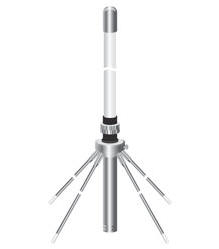
The antennas themselves come from eight feet long to about two feet long. As a general rule, the longer the antenna, the farther you can transmit and the better your reception. There are all metal antennas, metal antennas with little spools of wire in the middle, fiberglass antennas with wire embedded in the fiberglass. Some are flexible, some are rigid.


So much for antennas, mounts and radios. Now you need to decide which type you want. Included in a previous post are some websites for CB radio dealers. I will include these sites again at the end of this post.

So, now you have picked a radio, you've picked the type of mount and antenna you want. The power supply is going to be the 12 volt system in the vehicle. It is best to connect the radio power cable directly to the battery. The positive side connected to the battery and the negative side to the battery or to any good solid metal attachment. You might have to buy a little extra cable to do this.
A cigar-type plug connected in the cigarette lighter outlet or any 12 volt accessory outlet will also power the radio. The problem with plugging into a cigarette lighter adapter is that sometimes there will be engine and computer noise from the vehicle on the radio.
In future posts, I will talk more about power supplies. The closer you connect the power cable to the battery, the less background noise there will be from the vehicle.


Whatever type of mount and antenna you choose, you will need to run coax cable to the antenna connector on the radio. Most mag mount antennas come with this cable already connected with a plug-in adapter on the end of the cable. Some mounts come as kits with cable and adapter provided, with others you will have to provide your own. Most people run the cable through a door opening and bring it into the vehicle. If you run it underneath seats, make sure it is not in an area where moving the seat forward or backward will damage the cable. 

Now that just about covers it. You have the radio, a place to mount it inside your vehicle, and the antenna with a cable plugged into the radio. A slight warning here, NEVER key the microphone on the radio to transmit without an antenna connected. This is a very easy way to fry the radio.

You are ready to go - almost. There is this little thing called SWR, which means standing wave ratio. Somebody with an SWR meter needs to check and see if the SWR on your radio is low or high. Either the antenna or the coax cable will need to be adjusted to lower the SWR if it's high. This may sound extremely complicated, but if you are going to be successful with a CB radio, then the SWR needs to be low. You ask, "What is SWR?" To make it very simple, SWR is the radio frequency waves bouncing back from the antenna to the radio, restricting the ability of your transmitted signal to be transmitted successfully. This applies to any transmitted signal, whether it is mobile, base, CB, MURS, or ham radio. Any local CB shop should be able to help you tune your radio system so that the SWR is low and your enjoyment is maximized.

Many CB radios have a built in SWR meter. These meters are not known to be tremendously accurate, but they are a good start. Some antenna systems will say pre-tuned at the factory and that is probably true. They were pre-tuned at the factory for whatever piece of test equipment they were using. That does not mean it is pre-tuned for your vehicle and your radio. How you tune the radio's SWR can be affected by the location of the antenna on the vehicle, the length of the cable running from the antenna to the radio, or how the excess cable is gathered, normally under a front seat. So - being tuned at the factory - take that for what it is worth.

Firestik is a new website that I would like for you to check out. I have done business with these folks, as I have the others mentioned. They make good, quality, American made products. Their site also has a library of information. Besides looking at their products, go to their FAQ and technical help sections. This should answer the vast majority of CB technology questions and problems.

This may sound technical and complicated, but it's really not. Next time we will talk about specific radios for mobile use in a vehicle, because there is a big difference between vibrating down the highway at 65 MPH in the rain or snow, and a radio sitting stationary inside your house. As stated earlier, some radios will do both. 

We've learned some new terms this time. Study some of the websites. Remember, some radios have weather, SWR, and even have alarm clocks - which could come in handy if you are sleeping in your car, for whatever reason. If you know of a reputable, local CB shop that installs radios, stop by and visit with them. You might pay a few extra bucks for this service, but if the people know what they are doing, they can teach you how to install a radio properly.

I would still recommend a CB radio with SSB. There are only a few on the market. One is made by Cobra, some are made by Galaxy and Uniden makes a new one. If you want to sit at home at night and talk to stations around the country, then your best bet is a single side band. If you want to talk to your neighbor down the street, SSB will also work for short distance line-of-sight communications. Again, remember, CB radio is line-of-sight communications unless you are using a radio with SSB. Yes, on rare occasions any CB radio will work long distance by bouncing off the ionosphere. But a radio with SSB, will bounce off the ionosphere more often and with more reliability.

Think safety.

We'll talk more later. 73, Frank

CB World


Originally published June 21, 2013


Radio - Base CB
 
Hello, Frank here.

Last time we talked about mobile CB radios. For a base station most of the equipment will be the same - power cable, radio and coax cable. What you will need different this time is a power supply. Since almost all CB radios operate off of 12 volt or 13.8 VDC, then you are going to need a separate power supply that produces this voltage.

In most cases, you will also need a base type antenna. If you have a metal roof, you can get creative and stick a magnet mount antenna, (the kind used on a vehicle) on your roof, and it will work okay. But most choose to go a different route. I am going to talk about two antennas - the 102 and the A99. I will also give some examples of power supplies. 

Next I am going to give a formula that will be used through all levels of radio communications. And guess what it is? P = E x I.  Now, you need to remember this. P equals power or watts. E equals voltage. I equals current or amps. Alright. If your radio uses four watts of power (P) and the voltage is 13.8 (E), then divide P by E and get I, which in this case is about .3 amps. So, you will need a power supply that produces .3 amps. Most amateur power supplies are rated with their output in amps. Now, you might say, that is not a lot of amperage. You will need
more than .3 amps to transmit. But then, 4 watts is not a lot of power. Another rule: The rule of 80. The maximum you ever use of any piece of equipment is 80% of maximum rated output. So, in this case, go ahead and purchase a power supply that puts out at least 2 amps minimum. 80% of 2 amps is 1.6 amps. You need .3 amps for a 4 watt radio to listen, so there is power to spare with this set up, but not a lot. Something else to remember, you cannot have too much amperage, but you can have too little. 

This is a side note here. If you are never going to add any more equipment to your system, then a 5 amp power supply will work fine for years to come. But - if you have plans to add more power to a CB radio or you might buy a manufactured radio that uses more power, like an 11 meter radio, or most ham radios, then you might want to buy a larger power supply now. Remember, you can't have too many amps. Universal Radio and Bells CB both have many power supplies and a lot of information. I have done business with both companies and am satisfied with their service and products.

Example: Let's say you purchased a 30 amp power supply, which is a good choice for long-term planning. This is, of course, at 13.8 volts. Everything we are talking
about here is. Then go back to the formula of P = E x I. You have 13.8VDC (direct current) times 30 amps, equals 414 watts. That is your usable wattage output. Now figure in the rule of 80 - 414 times 80% equals 331 watts, which you can use very comfortably with a 30 amp power supply. We'll talk a whole lot more about P = E x I. Learn it now. Look up above to see what P, E, and I mean.

 There are many, many antennas sold by many, many dealers. Every antenna promises the maximum output and the best reception. I'm going to recommend the classic 102, which is a stainless steel, whip antenna. 102 means one hundred and eight inches in length. It is actually a 102 with a six inch spring attached to the bottom. Wa-la! giving you 102 inches. To mount this antenna you will need a trucker mirror type mount, because it will probably go on a pole attached to the outside of your house. We'll talk more about attaching the antenna to the pole in just a minute. By the way, the 102 antenna, in my opinion, is the best antenna made for mobile operation. It really looks cool on a jeep. Again, my personal opinion.

Next is the A99 made by Antron. It is about 16 feet long, comes in three fiberglass pieces and is a standard in the industry. It comes with a radial plane kit. Some will say the kit is needed and others will say it's not. This antenna is a pole mount only and if you use the radial plane kit, you will need to go a little higher because the radials point downward at an angle. The mounts that come with this antenna, will mount poles about an inch and a half in diameter. Do some research and find the exact size, because you want the pole to be smaller than the mounts call for. The same is true with mounting the 102. 

Now you are going to need some cable or coax. It is actually called coaxial cable. On each end of the cable you will need a PL259 connector. Of course, it depends on how far your antenna is up in the air as to how much cable you need. Buy a few extra feet. Depending on the length needed and the power used, a standard cable is RG-8X. If you're running high power, and greater length than, let's say 25 feet, then you will need a different coax cable. We'll talk more about that when we talk about high power equipment.

Okay. Now, you've picked out a power supply that will cost you any where from $50 -$100. You have chosen your antenna. A 102 antenna will cost at the most, $50. An A99, with radial attachment, will be, maybe $130. Without the radial attachment, less. Pre-made coax cable with connectors on each end, let's say, 25 feet - $35 or $40 or less. Now you need a radio.

All CB radios operate on AM, which is amplitude modulation. They all operate around 26 to 27 Mhz (megahertz). This is the operating frequency. All manufacturers make a good, solid radio. You can find one from $75 to $125. Some have weather (NOAA), some have alarm clocks, some the dials change colors, others light up at night and during the day, some have echo, some have talk back, some have SSB, some have adjustable power, adjustable microphones, adjustable input power - there are many, many choices to pick from. Like I said before, if you want to talk to your buddy half a mile down the road with no hills in the way, any radio will do. If you want to talk to somebody a long ways away, then not any radio will do.

Talk back and echo, I think, are a little silly. Lighted dials come in very handy, especially in a mobile situation, and sometimes they just look cool. A weather option is your choice. SSB (single side band) is necessary if you want to talk long distance. 

Cobra makes the 148, which is a classic SSB radio. Galaxy makes a handful of SSB radios: 949, 959, 979. Uniden makes the Bearcat 980. These are all strong contenders for single sideband radios. The Uniden is a new radio. It hasn't been out long, but it is well worth a look. My personal preference is the Galaxy line of radios. All of these radios tend to cost a little bit more than your average non-SSB radio, and work well in a mobile environment. Having the same radio in your house and your car means you become more familiar with the knobs and it's operation. Something to think about.

Now, we have a radio, an antenna, cable, and a power supply. That's about all you need. There are some things I cannot tell you on a blog. You are going to need a pole to put up your antenna. Some people use fiberglass. You can purchase these at some Army/Navy stores. Hardware stores that carry fencing supplies that come in 10 foot sections work pretty good too. I like to have the pole attached to the ground, attached to the side of the house and just far enough above the roof line so that the antenna will fit. Mount the pole in it's chosen place; mount the antenna to the pole; connect your cable to the antenna; run your cable into your house however you choose; READ THE RADIO MANUAL; READ THE RADIO MANUAL; connect the cable to the back of your radio; connect your radio to the power supply, which is real easy - red connects to red, black connects to black; turn the on/off switch in the appropriate direction - which is normally also your volume; and you are in business. If you purchased an SSB radio, most CB SSB is conducted on the LSB (lower side band). It is usually done between the frequencies of 30 & 40. Example: Channel 34 LSB.

Now, CAUTION. During a thunderstorm or electrical storm unplug your radio antenna connection. Some people also disconnect their power supply. Depending on how you ran your coax into your house, put your antenna connection into a glass jar, because lightening can and will fry your radio and all associated equipment. CAUTION. If you choose to pep up your radio and run more power, then you can do RF (radio frequency) damage. If you don't know what you are doing then don't do it. With 4 watts of power this is not a concern. 

I have talked on my SSB CB radio from southeastern Oklahoma to Grants Pass, Oregon; Ontario, Canada; and southern Florida. I hope you enjoy your CB radio. But if you do want more options, or more power, then in a couple of posts we are going to be talking about 10 meter and export radios, which are on many of the sites I have given you before. 

We'll talk more later. 73, Frank


Originally published June 27, 2013

Radios - CB Export/10 Meter

Hello, Frank here.

I would like to tell you about a CB radio that is not really a CB, but it can be. I don't understand exactly why these are made or sold, but I would assume it has to do with profit. There is going to be some new jargon on this post, so like always, if you don't understand everything, wait a little while and it will soak in. 

Export radios, to the best of my knowledge, are what they say they are. These radios are meant to be sold outside of this country - exports. Other countries use different bands and frequencies for their radio communications. Therefore, these radios are easy to modify and can be used for the frequencies and bands in this country as well. Some export radios are programmable via computer which makes it easy to add the CB frequencies. Another option is power capabilities up to 100 watts, 200 watts and more. These radios also tend to be more expensive. Are they legal to use on the CB frequencies? The answer is no. Do people use them on the CB frequencies? The answer is yes. Some of the previous sites I have posted sell export radios. If this is what you are looking for you will probably never have any problems with the FCC unless you are interfering with other forms of transmission. 

10 meter radios are similar in nature to export radios. Almost everything I said above applies to 10 meter radios. Let me explain the difference. A 10 meter radio operates on the amateur radio frequencies or ham radio. You have to have an amateur radio license to use the radio on 10 meters. I will talk more about amateur radio licensing and frequencies in a future post. Okay. Follow me here now. Some of the ham bands are 10 meter, 12 meter, 15 meter and so forth. The CB radio frequencies fall between the 10 and 12 meter ham bands. CB is often called 11 meters. Meters have to do with the length of the frequency signal. But at this time, that is not important. It will be discussed more later.


So. You can buy a 10 meter radio with a small modification or you can program in the CB frequencies with the computer program option if it is available. Let's clarify something here. A ham radio license does not allow the ham radio operator to operate on 11 meters because CB radios are approved by the FCC to operate on CB frequencies only. Is it legal to operate a 10 meter radio on CB frequencies? The answer is no. Do people use 10 meter radios for CB purposes? The answer is yes. These same dealers mentioned above also carry some of the 10 meter radios. It's a matter of driving 56 MPH in a 55 MPH zone and driving 95 MPH in a 55 MPH zone. Both are illegal, one will attract a whole lot more attention than the other. 

Can you mount these radios in your car or truck? Sure, you can. If the radio runs higher power, it will come with the appropriate size power cable. If you need
to extend this cable to your battery, use the same size cable or larger. In most cases, you can use the same antenna as any CB radio, unless you are running an exorbitant amount of power. In that case you need to make sure your antenna will handle the power. If you need to tune these, you can do it yourself or you can take it to your local CB shop and they can tune your rig for you.

If you are giving thought to purchasing one of these types of radios, please get one with SSB. Remember, some, but not all of these radios can be used for 10 meter ham radio operation.

If you choose to use this type of radio for a base station, your one amp power supply will not work. A quick review here: P = E x I. P = power or watts, E = voltage, and I = current or amps. Let's say you are running 200 watts of power. That is your P. Your voltage will be 13.8, that is E. That is 200 divided by 13.8, equals 14.5 amps or I. Don't forget the rule of 80. This means you will need at least 18 amps just to run this radio. That's why on the last post it was recommended that you purchase a 30 amp power supply for your home. 

There is something I failed to mention on the last CB post. You cannot take your base station and outside antenna to a CB shop and have it tuned so you will need to do it yourself, or have a competent friend help you. This will involve an SWR meter, and a three foot jumper, which is a short piece of coax with a 259 connector on each end which allows you to put the meter in line between the radio and the antenna. This will allow you to tune your SWR down. Read the FAQ at this site. It will answer most of your questions about SWR. Again, make sure your base station antenna can handle the power you are using. Don't push any antenna to the maximum, use the rule of 80.

If you can, ground your radio. The radio may or may not have a ground plug on the back, most CB's don't. If it doesn't, slide in a piece of flexible, coated, copper wire about size 12-14, where you attach the screws to mount the radio. This will give you a good, solid ground. In your car, find a screw somewhere connected to metal. In your house, run the ground wire back the same way you brought in your antenna wire and attach it to the three foot copper rod that you placed in the earth. Do you have to ground your radio? No. Will it help clean up some sound issues? Yes. When we talk about ham radios, grounding will be covered in greater detail.

By the way, if you choose to get your ham radio license, you can use these radios to operate on 10 or 12 meter frequencies. Just a little bonus there if you decide to make that switch. 

I know all of this information about the CB radios, export radios and 10 meter radios is a general and broad view. I would encourage you to read some of the earlier posts about laws, regulations, safety, and some of the websites that have FAQ sections about radios and antennas. There is a lot of information about CB radios that is not included here. In future posts we'll be talking in more detail about power supplies, antennas, coaxial cables, connectors, ham radios, GMRS, FRS and commercial radios.

What I have to say now is a personal observation. The reason I got into radio communications is because someday there may not be the regular types of communications that we have now. When I say regular, I am talking about cell phones, hard-line phones, internet, television, AM/FM radio, etc. A lot of people currently have CB
radios. Some folks approve of the type of traffic on them and some don't. But if there is a nationwide emergency, CB radios and GMRS will be excellent forms of communication. Most people don't realize that the two-way communication radios that they have right now are of an excellent quality and can be used during an emergency. Of course, I hope this day never comes. But I believe that the wolf is at the door. I would recommend all families have some type of communications, whether it is two-way or listening only. We will talk more about receive only radios - how to power them with things such as rechargeable batteries, small solar panels or car batteries. This is all part of communications. 

This finishes up my posts on CB's for now, more will come later. Next I am going to talk about GMRS, FRS, and MURS. 

We'll talk more later. 73, Frank