The Road Home

The Road Home
There is no place like home.
Showing posts with label sunflower seeds. Show all posts

Tuesday, October 7, 2014

Growing Animal Feed

Growing some of our animal feed is something we have wanted to do for a long time, but it's a goal that is not easy to meet overnight, in a year, or even over a couple of years. This summer we have been able to make a little head way on this project, and we want to share what we have learned.


In the spring when everything was turning green, I started gathering grasses and weeds to feed the chickens. Our chickens are not out ranging at this time, but they do have a run outside of the chicken house. We need to add a chicken proof barrier along the bottom of a couple of gates to keep them on their side of the yard and out of the garden. So, for now, they get some kind of greens almost everyday along with other garden or kitchen scraps as they come along.


In the early spring, I started to feed them beet greens as soon as the plants were big enough to spare a few leaves.


I also planted some new comfrey roots to expand our ability to provide more animal feed. This patch had really done well. For most of the summer, the chickens received a handful of comfrey leaves almost everyday. This was a great addition to their feed. The goats like them as well, but since they had lots of good things to eat out in the pasture, they were not a crazy about these leaves as the chickens were.

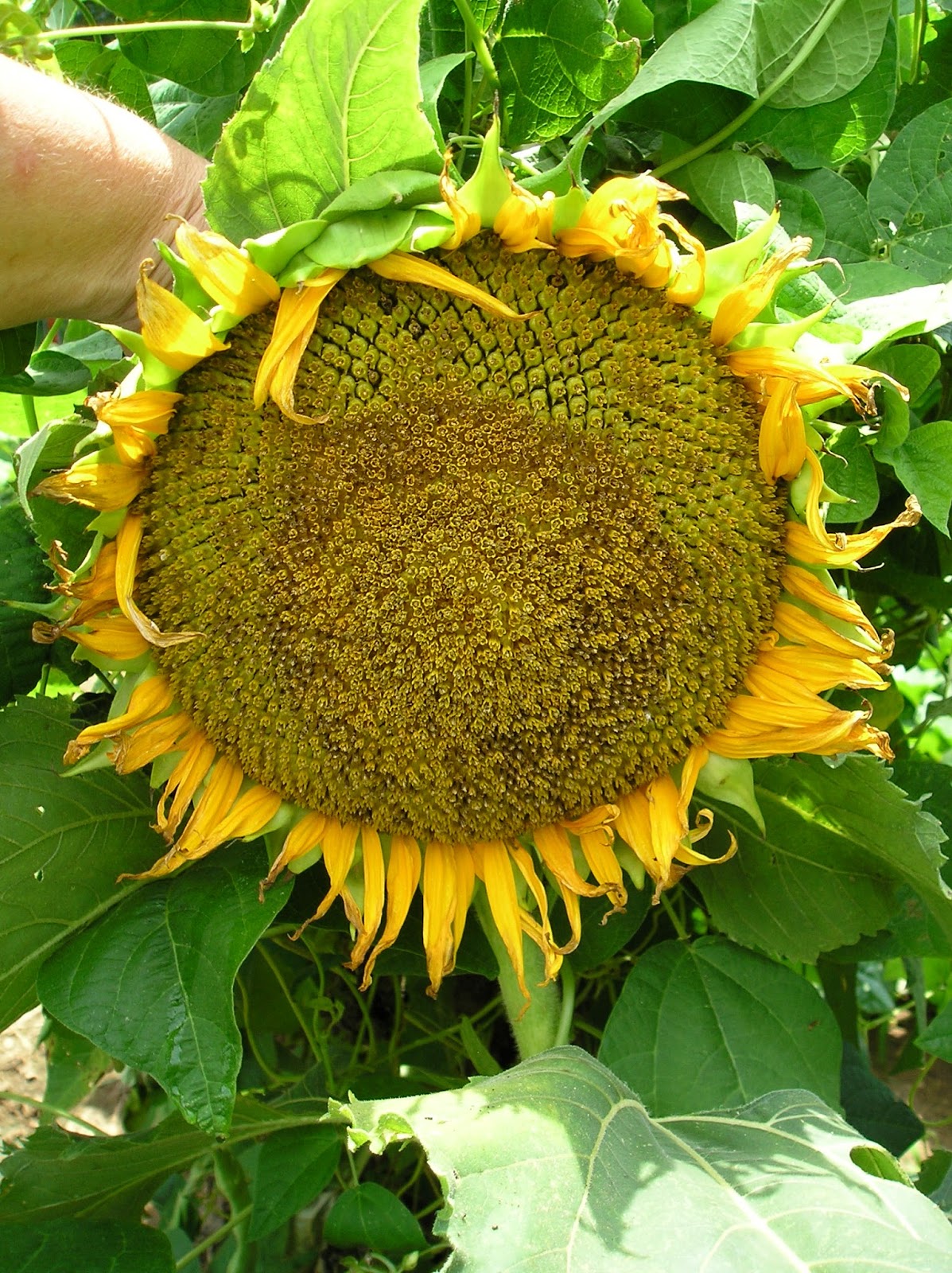
We grew some sunflowers this year to be used as animal feed for both chickens and goats. Our patch was about six feet by thirty feet with four rows of plants. Here is our harvest. All of these plants were grown from seeds we harvested last summer from our very first plants. I think there were about six of them. It's good to know the seeds are easy to save and replant. If we wanted to grow enough to feed a little all winter, we would need many, many more plants than what we grew this year. But it is a start.


The corn we grew ended up being dried for the animals instead of canned for humans. Sometimes things just end up that way. It is interesting to see how it has dried, and figure out an easy way to remove it from the cob. Once it is this dry, the kernels separate from the cob fairly easy just by rubbing two cobs together. I will keep the dried shucks to see if the goats will be interested in them this winter. Another thing to learn. This small amount of corn won't go very far as animal feed, either, but it has been a very interesting learning experience.

 
Now that the fall crops are up and growing well, I pick a batch of greens for the chickens every morning. They get a bucket full of turnip greens.

Turnips, Kale & small Swiss Chard


Add a handful of kale.....


 And a handful of beet greens.


The fall carrot crop is growing pretty well. It will be interesting to see how the animals take to carrots, turnips and Mangel sugar beets as a source of winter feed. Very interesting. This is something I have wanted to try for a long time.


 Our patch of purple hull peas has been taken over by the grass and weeds. But before that happened, we were able to pick several batches that had dried on the vine and fed them to the chickens and goats. They were all more than happy to eat them, the chickens just the seeds, but the goats, pods, seeds and all. This is a very easy crop to grow that is highly nutritious, for both animal and human.

I still throw in a few comfrey leaves every now and then, but I am letting the comfrey put energy into their roots for winter. The original comfrey plant I added to the herb bed about four years ago stays green until about January when our weather turns cold. I have been surprised every year that it takes that long for it to die back. It starts peaking out new leaves in late March when it starts to warm up, but doesn't produce enough leaves for fresh feed until sometime in April.

The amount of feed we are harvesting each day for our animals really doesn't amount to a whole lot, but it is a start. There are some other things we also want to try. Our friend Grace found a article in Mother Earth News that talked about Austrian Winter Peas that can be used for chickens and deer. Some folks also eat the shoots in salads saying they taste just like peas. It is better known as a cover crop for fixing nitrogen in the soil. After Grace told me about them and I read about them, we ordered some seeds. It will be another thing we can try for animal feed. Thank you, Grace.


If times get hard and we have to provide for ourselves and our animals, this small amount of experience will hopefully help keep us on our feet while we learn even more. Challenges will always come our way, and we have had more than a few this year. Even so, our little animal feed growing project has taught us a lot. And we hope to learn even more through the winter and during the growing season next year.

Until next time - Fern

Saturday, March 22, 2014

Researching a New Feed Ration

The more I read about and learn about GMO corn, the more I wish we could totally eliminate it from our diet, even though I know that's close to impossible. We do have a few cans of store bought corn in the pantry, which I don't even like to eat anymore. But, for me, the biggest stumbling block we have is the feed we give our animals. So, more research and more reading.


We used to have our goat and chicken feed mixed according to our own recipe at a small, family owned feed mill. This location does not have that option, so we have been mixing our own. Wheat was one of the ingredients we used to include that has not been available here. A few days ago when we were at the feed store, I noticed a bag of wheat bran that I didn't remember seeing before. I didn't know what the nutritional value of wheat bran would be for goats, so I came home and looked it up. According to Storey's Guide to Raising Dairy Goats, wheat bran has 13.3% digestible protein and rolled oats have 10% . Hmmm....okay. The alfalfa pellets we use have 17% protein and the sweet feed has 10%. 

Summer 2013
The ideal protein ratio for milking does is around 12%. So, what I am trying to figure out is a mix of these grains, minus the GMO corn chops we are currently feeding, that would give me about a 12% feed combination. Another thought I have had is sunflower seeds. Black oil sunflower seeds are very nutritious for both goats and chickens. We grew our first ever sunflowers last summer and actually had seeds to harvest. This summer I hope to grow hundreds of sunflowers all around our place with the plan to harvest them for animal feed.

So, the new feed ration we are going to try is:
  • 6 parts rolled oats
  • 4 parts sweet feed
  • 1 part alfalfa pellets
  • 1 part wheat bran
  • 1 part sunflower seeds
For now, all of these ingredients will come from the feed store. This combination will give me a feed ration of about 11.5% protein. Of course, the protein content is always dependent upon growing conditions.

Summer 2013
I am also going to start several patches of comfrey this summer. Right now I have one plant in my herb bed. I have ordered and received 5 more roots which will begin bed number two. Then the next step will be to start comfrey seedlings. 
Once I have them up and established, I will plant bed number three. Comfrey, also called knitbone, has long been used as a medicinal herb and as a supplement for livestock feed. It is very high in protein and vitamin B12.


Another crop I am going to try to get established for supplemental livestock feed is plantain. I have read about it for a number of years, but didn't really pay much attention to it. When I was ordering some more herb plants from Crimson Sage, I ran across plantain again, right after I had read another article about feeding it to chickens. I have been wondering what I could grow that would supplement our chicken's diet more naturally than grains. It would have to be something that is easy to grow, pick and dry for winter use. So I ordered some. I will let you know how it grows and how the animals like it.

Fall 2013
The third thing I am going to grow more of this summer is kale. I have a few rather sad looking plants that made it through our cold winter. After reading this article, I started picking off some of the bottom leaves and feeding them to the chickens. They took to them right away, but the goats didn't seem to care for them. I will try feeding them to the goats again after they have started producing newer leaves.

Summer 2013

We will try our hand once again at growing carrots, sugar beets and turnips for the animals. Last summer, our fall garden didn't produce much of anything. I got started late and the weather didn't cooperate very well either. If we are really going into another Maunder Minimum, we will see how that affects our ability to produce plentiful gardens like we have in the past.


We may all be learning to garden a little differently if the quality of our sunlight and warmth are affected by decreasing solar activity. Another thing to learn more about so that I can adjust our growing habits to match what nature is providing.


There are many things to take into account when pondering feed rations for both animals and humans. Learn all you can, put it to good use, and hold your family close. They are the most important thing there is in your life. Don't let anyone, or anything, convince you otherwise.


Until next time - Fern


Monday, September 23, 2013

Harvesting Sunflower Seeds


I was excited when my first ever sunflowers came up this summer. And then they actually had these big, beautiful sunflowers! I have always looked at pictures of gardens that had sunflowers and thought I would like to do that someday. Well, this summer, someday arrived. It has been an interesting venture. 


I didn't grow very many. The seeds I planted were a few years old and I didn't know if they would still be viable.


Here are the first two that I thought were ready to pick. I wasn't sure at what stage I should pick them.


The rest I left to ripen longer on the plants. This first batch of seeds I picked out very carefully.


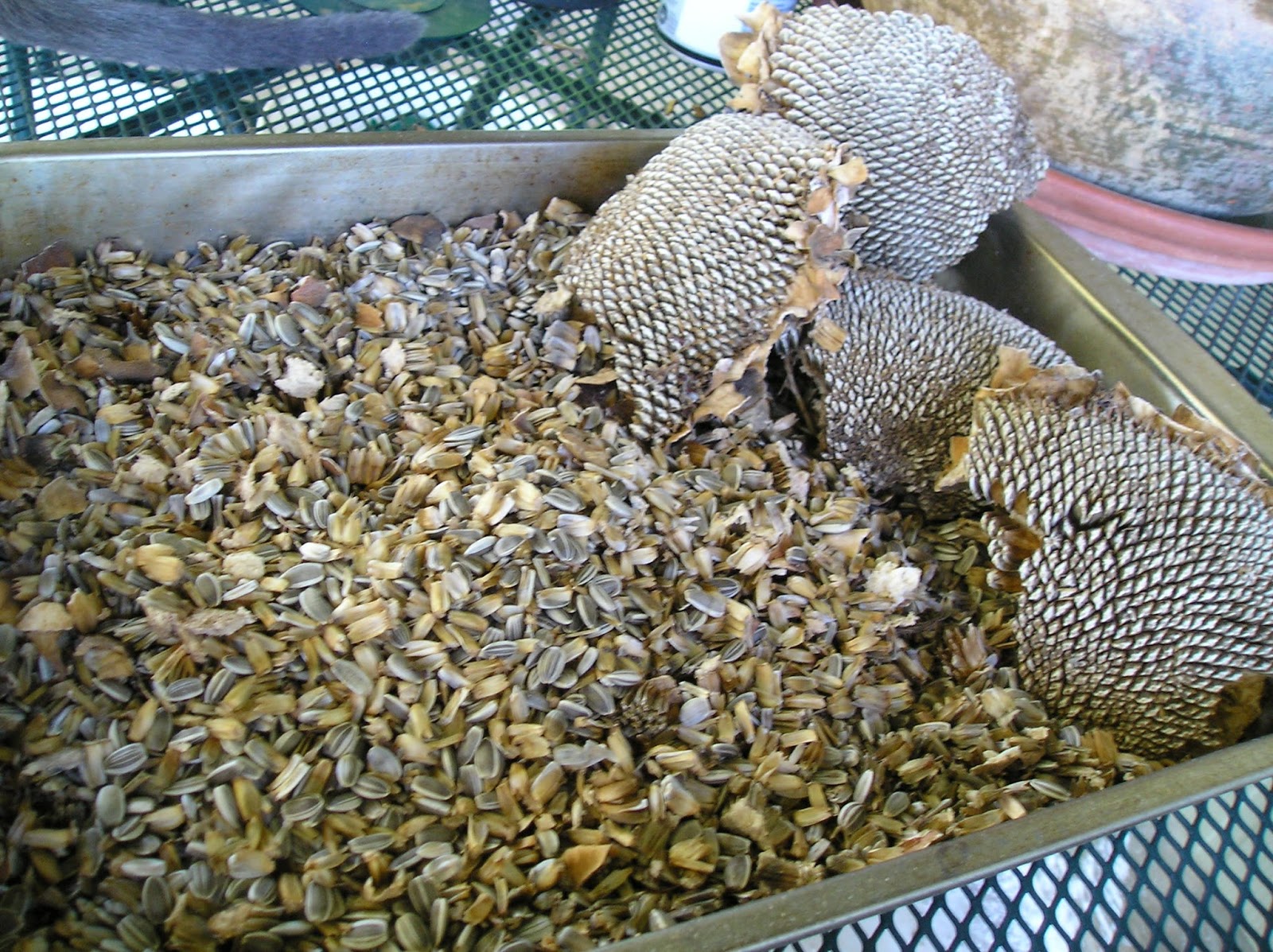
When it came time to get the seeds out of these flower heads, they were much drier and the material surrounding the seeds came out of the flower head as well. It reminds me of the chaff surrounding a wheat seed.
I ended up pulling the dried stem portion from the back of the flower then breaking up the seed head into pieces. This made it easier to handle and remove the seeds. I got a few splinters in my hand and would recommend wearing gloves.


The kittens decided it would be fun to help.

They are great fun to watch. It is a toss up which one is more fun to watch, kittens or baby goats. They both love to run and play and crack me up regularly.

 
A few days ago Frank refurbished our old triangle dinner bell. We have had this for many years and it was a little worse for the wear. He got out the wire brush and cleaned the corrosion off of the metal and added new leather string for hanging. He also had to add another hook to the porch for it to hang from. It is a neat addition to the back porch. I got to admire it while I was working on the sunflower seeds.


I was surprised at the number of seeds I harvested from these few flowers. But as I look at my pan of seeds, I know that it wouldn't last a few days if I was trying to feed goats and chickens. I would need many more. I thought of trying to winnow out some of the chaff or waste material that came with the seeds from the flower head, but if I were to feed these to the goats, I think they would eat it all.


I plan to keep most of these to plant next year. I want to make sure I can grow replacement seeds.  I'll also find out if the goats like them. The chickens get some sunflower seeds in the scratch grain we feed them now, so I know they would eat these as well. 


This has been another good learning experience, one I have wanted to try out for a long time. Now it's your turn. Enjoy.

Until next time - Fern

Thursday, August 22, 2013

Pictures from the Farm


Some of our new Araucana (Easter egg) chickens


The green eggs are from the Araucanas and the brown eggs are from our previous chickens.


Teddy, our new buck, is not working out. His days are numbered.


The sweet potatoes have filled in the patch we gave them. I hope we have a good harvest. (they are in between the green bean trellis on the right and the purple hull peas on the left)


The okra is now over my head. We get about two gallons every three or four days. The squash plants are looking rather sad, but still producing. I picked about 10 nice squash yesterday. The potatoes still have not come up. I don't think they will. For those of you following Frank's radio posts, please notice the antenna farm in the background. We have watered it lately and it continues to grow and grow and grow.


The Romano green beans (on the right) have not germinated or grown as well as I would like. I planted them in June and they are just now producing. We will see how they do.


I have picked a few more sunflowers and have them laying out to dry. Now that I have tried my hand at growing them, I will find a source for black oil sunflower seed that I can grow for the chickens and goats. They appear to be very hardy plants and grow very well here. I have really enjoyed growing and learning about them this summer.


I have saved two of my crookneck squash from two different plants for seed. This is easy to do when you miss a couple when you are picking and they get really huge. Then you can pretend your plan all along was to save them for seeds. Anyway, my book indicates that I should let them sit for six weeks before I harvest the seeds so I put the date on them to remind me. 


All is well on the farm and we are enjoying our busy days. Hope your gardens are producing well and life is good.

Until next time - Fern