The Road Home

The Road Home
There is no place like home.
Showing posts with label jars. Show all posts

Friday, June 14, 2019

Grinding Flax & Other Bread Making Lore

We finally used the ground flax we bought for our sourdough bread and have begun grinding our own. We found a place to buy bulk flax in 50 lb. bags that we pour into five gallon buckets with Gamma seal lids. This is explained in this article with our bread recipe, well what used to be our bread recipe, I have changed it somewhat - again.

We are grinding the flax using the KitchenAid grinding attachment. It is slow, but does the job. When making the last batch of bread, we switched the grind to a coarser setting than what we started out with, so it doesn't take as long and the texture is good. Some folks may want a finer grind, but we like it this way.


This grind is definitely more coarse than the store bought, and it also is more oily, which shows me that ground flax has some things removed to make it shelf stable, just like whole wheat flour. We are really happy to add our own ground flax to our bread.

The difference in the recipe came when Frank asked me to make biscuits and gravy one day for a treat. I dug out the sourdough biscuit recipe I had used before and realized the only real difference was the addition of two tablespoons of baking soda. I also didn't knead the dough with the KitchenAid dough hooks like I did for bread. The biscuits turned out really good, they weren't crumbly from lack of kneading, so now I make regular bread the same way. I stir it in the bowl with a spoon and my hands if needed, but no kneading. That's it. Doesn't take as long and reminds me of how I used to make regular whole wheat bread without the assistance of the dough hooks and a machine.

Everyday starter on the left, stored refrigerator starter on the right.

It was time to feed the extra sourdough starter I keep in the frig when I made this batch of bread, so I also put the everyday starter in a clean jar. I pour about half of the stored starter in the everyday jar, refresh what is left with more water and flour, then return it to the frig. It's then good to go for about a month or so. Did you know that the vertical ridges down the side of a half gallon jar have an indention on the inside of the jar? Me neither, until one time I was washing the sourdough starter jar, which takes more elbow grease than a milk jar. The starter leaves a film on the inside of the jar that needs to be scrubbed well. If anyone had ever asked me, I would have said the inside of the jar is smooth and flat. It's not, and starter wants to stay in those little grooves. An old toothbrush works well to clean the grooves.


One of our new buckets of hard red winter wheat ended up being white wheat, even though the bucket was labeled red. I knew the berries were almost twice as big as the previous bucket of hard red wheat, but didn't realize it was white wheat until we made a batch of bread out of it. It's okay, and some folks probably prefer the taste of white wheat since it is more like a store bought bread flavor, but we prefer the taste of hard red wheat. It is a hardier kind of taste and hard to describe. So we resealed the bucket of white wheat and marked it 'open' and 'white' so we can skip over it. If we need it someday, it will be there, but for now, we will continue to eat hard red wheat.


Do you know what you do when the squash starts producing? You eat lots of squash, even on your pizza. We use the same sourdough bread recipe for pizza dough that we use for everyday bread. The toppings change from time to time, depending on what we have available. This version has ground pork, frozen peppers from last summer, fresh crookneck squash, tomato sauce we canned last summer and our mozzarella. Well done, just like we like it. But the dough came out thicker than we like, so I'll leave the baking soda out of the pizza dough next time. Like Frank says, our bread and pizza never taste quite the same from batch to batch.

Enjoy what you have. Learn everyday. Appreciate the opportunities, talents and challenges you've been given. It's what makes life worth living.

Until next time - Fern
Friday, January 16, 2015

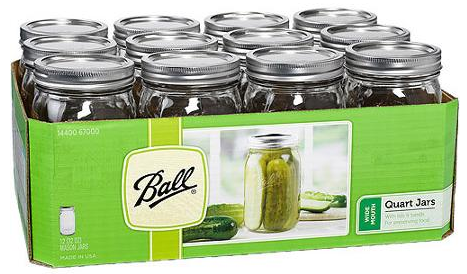
Do You Have Enough Jars & Canning Lids?

We are spending some time organizing, discarding, giving away & figuring. This morning I was going through our canning jars, regular canning lids, Tattler lids, and rings. As I did so, I pondered the possibilities. If these were the only jars, lids and rings I would ever have. Do I have enough? Do you?

With that pondering comes these thoughts. How many jars would I need to fill from our garden, chickens, goats and fruit to last a year until the next harvest was available? I really do appreciate the information we can find on the internet, and went on a quest. Here are a few articles I found that discuss how much food to raise or store, for a year.

~~~~~~~~~~~~~~~~~~~~~~~~~~~~~~~~~~~~~~~~~~~~~~~~~~~~~~~~

How much to plant in your garden to provide a year's worth of food?

Food Storage Calculator

TheFoodGuys.com - Food Storage Calculator 

Long Term Food Storage Calculator (uses Excel)

The Pantry Primer: How To Build a One Year Food Supply in Three Months

Peek Inside My Pantry - Use This Tool To Help Plan A Year's Worth of Food and Supplies

How Much to Plant Per Person in the Vegetable Garden

~~~~~~~~~~~~~~~~~~~~~~~~~~~~~~~~~~~~~~~~~~~~~~~~~~~~~~~~

Okay. That's enough for now. But, you see what I mean. We have been homesteading and gardening for years, but now we are getting very serious about trying to have on hand what we may need if the SHTF or TEOTWAWKI happens. Permanently. We've had many conversations
about how many jars of this or that we may need to last a year in 'normal' circumstances. But what if the electricity is off and we have no freezer, refrigeration, instant hot water, or anything that runs off of the grid? We depend on the freezer to preserve our meat, some cheese and some fruits and vegetables for now. If we didn't have that luxury, and it really is a luxury that many people don't enjoy, even in this day and age. So, if we didn't have that luxury, and instead canned all of our meat, broth, dog food (organ meat and fats from butchering), lard, some milk, maybe butter and cheese, fruits and all of the vegetables, I go back to my original question. Do we have enough jars & canning lids?

Some other things I thought of. With jars, we have to plan on breakage. This happens sometimes during canning, or by accident. Ask Frank. I am a rather clumsy person. Regular canning lids can be reused, sometimes as many as three times. We know. We tried it just so we would know and wouldn't have to hope or guess if we really needed them. But it is not a recommended practice. The Tattler lids can be reused many times if you take very good care of the gaskets. If I was solely dependent upon them, I would want to lay in a good supply of extra gaskets. And for Tattler lids to work, you must have rings. We've tried to devise a way to take extra good care of our rings to make them last as long as possible. When we are canning and our jars have sealed and cooled, we wash the rings, dry them well and store them so they won't rust, thus prolonging their usefulness.

June 2013
Spring and the gardening season will be upon us soon. This year we are going to make a serious effort to can and store a year's supply of food. Food that we produce here on our farm. Then, as we use it up, we will take stock of our jar, lid and ring supply. But until we have a more solid idea of our long term needs, we will continue picking up more jars and lids. Just in case. We have been surprised at the stock of canning supplies Wal-Mart has kept this winter. They usually don't. I'm glad. We have picked up a few more lids.

The more I learn, the deeper I learn, and the more I realize how little I know. There are layers upon layers of knowledge to learn. I have barely scratched the surface.

Until next time - Fern