Hello, Frank here.
Everybody learned to cluck by now? Most of you know that chickens don't speak English, Spanish or Russian. So that means if you want to speak with your chickens, you're going to have to learn to cluck. No joke. You can call your chickens with certain types of clucking sounds. And you can.
No different than calling your cats or your dogs. So, has everybody got over themselves and learned how to cluck? Good. If you really want to impress your friends, the next time you're at a social event, just start clucking. And don't worry, you didn't ever want to go back there again anyway. And if you really want to impress your friends, put your hands under your arms, start flapping your imaginary wings, raise your knees as high as you can and start walking around the room clucking. Now wasn't that fun?? Your grandkids will love it. Their parents may think something has happened. And when you get to be my age, who cares?
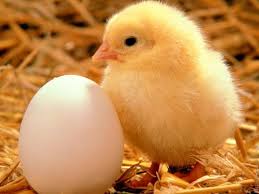
Okay. We talked last time about chicken breeds. Hopefully you have found something that is of interest to you. A batch of straight run mixed heavies is a great way to start out. Words of advice. Don't bring strange birds into your flock without a way to isolate them first. People go buy these Easter egg day old chicks for their kids. You know the people that raise these birds for that purpose are

a tremendously caring group of people. That is until they dip these birds in some type of dye to produce the multiple colors. My point is, these little baby birds are cute, but a lot of adults never studied Science 101. Baby birds grow up to be big birds if their infant doesn't rip it's head off first. And when those birds get big and they won't fit in the parakeet cage anymore, they will try to find a place to dump them on their rural buddies. Don't be tempted to take these birds into your flock. You don't want to bring in some type of strange disease that will kill all of your birds. All chicken houses and all birds have their own little diseases. It's like you and I walking into a mall. Don't expose outside diseases to your birds. But, after you cluck a few times at a party, you won't have anymore city friends.

Chicken houses. Chickens can live in just about any structure as long as they have some basic requirements met. They need to be out of the rain. They need a relatively draft free environment. They need a place to roost. They need a place to lay their eggs. They need food, water and a place to stretch their legs. But the last one is not required. And it needs to be predator proof.
During the daytime predators are not normally a problem. It's kind of like humans that do crime, except for white collar crime committed in
Washington. Most crime is committed when it is dark. Examples: skunks, racoons, opossums, any of the weasel family (not the type in Washington), snakes, owls, coyotes and dogs. Most of these are nighttime. A couple of them are daytime. You'll find some daytime snakes, your occasional hawk, and dogs. Dogs problaby kill more chickens put together than all the predators just mentioned. So, you've got to make your pen predator proof.
Now you can lock up your birds every night and let them out during the day. If your nighttime quarters are predator proof, then your daytime quarters only needs to be minimal. Or you can open up your predator proof chicken coop and let your birds free range. Advice about free range. Dogs love chicken. If a chicken runs, a dog will chase it. Most dogs will anyway. Big predatory birds will kill and eat parts of a bird on site, but it takes a big bird to carry off a seven pound hen.
So let's get a picture here. We talked earlier that a chicken needs three to five square foot in a confined area. If you have 20 birds, you'll need about 100 square feet. Okay, that's 10' x 10', that's not much, is it? So with a 10' x 10' square foot building, you could theoretically confine 20 birds full-time. This will work. Inside that

house you'll need about four nest boxes. You will need a roost for the birds to roost on and socialize. You can put this in a 10' x 10' building. 1 x 12's make great nest boxes. Three 4' long pieces, that is your top, back and bottom. Five pieces cut approximately 11 1/4". These are your two ends and three partitions. A 4' long piece of furring strip placed across the bottom front, up about 1", contains your nesting material (most folks use hay) and the 1" up allows you
to clean out your nest boxes periodically. Now you'll need a roost. 2 x 4's work great. In your 10' chicken house, you just used 4' for nest boxes. Make your roost about 4-5' long at an angle where each roost is about 1' higher and 1' apart. Look at the pictures, you'll get the idea.
A 45 degree angle works well here. You need a little bit of floor space and something for your birds to eat out of. A container to drink out of. Do not put these under the nest box or the roost. You will figure out why quickly. You will need a human door for your access. And if you like make a little chicken door about one foot square.
Birds like light. Windows are nice. They provide sunlight and ventilation. Make sure you predator proof your windows. Rabbit wire works well for this purpose. The 1/2" type. To fasten it, use screws with a big washer.
Okay, now we talked about a minimum size house for 20 birds. This will give you about 17 eggs per day during the summer months when there is lots of daylight and 10 to 12 eggs per day during the winter. If you want to have extra space to separate birds for whatever purpose, then you will need a bigger chicken house. And this is if you keep your birds confined. If you open your chicken house at the crack of dawn and let your birds out, or let's be a little more realistic, maybe 9:00 or 10:00. And you let your birds out, you can have an enclosed pen of any size that you like, or you can let your birds free range. I have found it better over the years to have a chicken coop that I can lock the birds up at night and they are safe and sound. But it's your call.
My first chicken house was a three sided lofting shed about 10' x 10' with a totally enclosed pen surrounding it. The birds did fine, but it was a whole lot more difficult to predator proof that entire pen, than it would if I had built an enclosed chicken coop. But that was my first chicken experience and I have since learned and now I do it different.
Another tidbit here. You will read neat little stories about pretty little chickens working their way through someone's garden. At certain times of year, this may be fine, but WARNING, chickens will destroy your garden. They will eat your seeds, they will eat your seedlings, they will eat your
mature fruit, they will eat any leaf that they can reach and what they don't eat, they will scratch and destroy. Yes, they will fertilize your garden and they will eat a handful of bugs and they will eat all of your squash and all of your tomatoes. Again, it's your call. If you want chickens in your garden after you put your garden to sleep for the winter, wonderful. But if you introduce your chickens to your garden anytime of year then they will climb a fence, fly over a fence, squeeze under a fence and they will remember where your garden is. It is just about impossible to keep a chicken out of your garden if it wants to be there. My advice, do not introduce your chickens to your garden. Bring the garden to the chickens. So much on the garden routine.
Here is a website with a lot of different chicken houses. Some people are very, very proud of their chicken houses. So take the pictures with a grain of salt, but you might be able to get some ideas about how you want to get yours set up. I really like the one with the horse trailer idea. I think that's very, very creative. If you have a large enough spread and you want your chickens to work other areas, there are all kinds of portable chicken houses. They don't need to be built to travel down the interstate 85 miles per hour. So think about it, move your chicken house around, they'll eat bugs, they will just about feed themselves, they love being outside.
Another note. We've had snow and ice here in southeast Oklahoma lately. My chickens will not walk on snow. So if you live in a northern climate with lots of snow that even if you open range or have a chicken run, your birds may not come outside. That means you will have to have enough space inside to accommodate your birds. Okay, back to the portable chicken house. Whether mobile or stationary, the same requirements need to be met. They have to be dry, fairly draft free, nest boxes, roosts, feed, water and enough square footage.
I think that about covers my idea of a chicken house. The link included here has lots of other chicken information. Look at it. We've talked about breeds. We've talked about housing. In our next post, we're going to talk about baby chickens and their needs. Because their first few days of life are critical to their survival. The feed stores will start getting in baby chicks
in February or March and they are really, really cute. But that feed store gets their chickens from a hatchery and so should you. When the chickens come to the feed store, one of the tender loving employees helps these baby chickens get started in life and then 100 little kids will pick up and cuddle these cute little baby birds. Buy your chickens from a hatchery just like the co-op does. Get what you want, just like the feed store does. Your chickens will love you forever for it. So find you a hatchery, start thinking about what birds you want and next time we'll talk about the preparations you'll need to do. Remember, these are baby chicks. And just like any baby, they have special needs.
So, this is what we'll talk about next time. This is not complicated by any means. Now go practice clucking for a while, so when your baby chicks get here in March, April or May they can see you for what you really are.
We'll cluck more later. Frank
Hi All, Frank here.
The title implies we're going to talk about numbers. I can tell you what we're not going to talk about this time. We're not going to talk about breeds, who is the best, who is not, who lays the most or grows up the quickest. We'll do that later.
But I want to introduce you to a cycle. I use 6, 12 and 18. Now these numbers are not cast in stone and they are just for reference.You will need to shift them for your climate. I like to follow Mother Nature's cycle. If you
have already gone to some chicken hatcheries and looked around, then you know that there are some birds or some breeds that you can buy year round. And if that meets your need, great. But most birds in the wild have their babies when it starts to warm up, sometime in the spring. So this is where I will start the cycle.
The first six equals June. Remember, this is just for reference. If you buy DAY OLD CHICKENS from a hatchery or from your local feed store or co-op, then we're going to call them zero days old. In actuality they're
going to be three to six days old, and I'll tell you how they do that in just a minute. Let's say it's June 1, zero day for the baby chicken. Most chickens start to lay eggs in about 4 1/2 to 5 1/2 months. Okay for math purposes, I'm going to call this six months. Now December 1, your birds are six months old and they are starting to lay. Remember, these numbers are just for math purposes and you will need to shift them forwards or backwards, more than likely forward for your region.
Now, you're all happy, your birds are starting to lay, but these are teenager eggs, or pullet eggs. It is not recommended that you try to hatch eggs from a hen this young. It is recommended that your hens be about twelve months old before you consider hatching their eggs. Eat all of them you want, they are excellent eggs. Now, we're back around to June 1st again. Your birds are one year old, they have been laying eggs for six months or more. Now your eggs are hatchable.
So, let's back up three weeks and you have saved up some eggs and you want to hatch a batch of baby chickens. It takes a chicken egg 21 days to hatch, give or take a day. So, you start around May the 7th. You can hatch eggs in an incubator or let one of the hens do it. You start May 7th, 21 days later it's June 1 and you have a bunch of day old chickens. Now think about it. You started one year ago with day old chickens and now you are producing your own day old chickens.
Follow me here now. Those day old chickens that you just hatched will start laying around December 1st. Now you have 18 month old adult chickens and 6 month old pullets starting to lay. The cycle continues.
You have more eggs than you know what to do with. Your adult chickens production will start to drop somewhere in the next few months. If you choose, you can get rid of the adults at this stage. The older hens will be 18 months old. You can sell them at a swap. Give or sell them for about nothing to help a family starting out with chickens. You can butcher them even though they will be a little tough at this stage, but there are things you can do with the meat. These numbers are where 6, 12, and 18 come from. Shift the numbers around to fit your circumstances. This is a great system for sustainability.

A story about day old chickens. Let's say that you decide to buy them from a hatchery and they come via U.S. mail. You think the poor babies will starve to death in route. No, not the case. Right before a baby chick hatches, it absorbs the yolk into it's body, therefore, it can live comfortably around three days without food or water. These hatcheries have been shipping chicks via U.S. mail for many, many years. So, that's how they do it.
Okay, we're just going to talk about numbers this time. How many chickens do I need? It depends on the reason you're raising them. If you have
eight growing kids, then you might eat a couple of dozen eggs a day. If you are an eighty year old couple, you might want two eggs a day. If you want chicken meat, and you're going to raise an exclusive meat bird, then you can buy a special meat bird, feed it a special diet, and at about eight weeks old you put them in the freezer. If you're a homestead, let's say you eat a dozen eggs a day forwhatever reason. Here is where keeping younger hens will give you a more reliable number of eggs per day.
An example: A Barred Rock is a good laying bird and also grows to be a nice sized meat bird. Let's say you have 20 hens, one rooster and you're

getting about 16 eggs a day on average. Come spring time you hatch using an incubator, and you get about a hatch rate of 40 chicks. As a general rule, they will be half and half, males and females. Here's your 20 replacement hens and 20 roosters to put in the freezer. This is how the system works. A valid question: Can you mix young birds with older birds? Not for a while. You will need to have separate accommodations for the young birds for eight to ten weeks. That's where the term pecking order comes from. At about 10 to 12 weeks you will be butchering the young roosters anyway. We'll talk more later about how to separate the birds. The Barred Rock, as mentioned earlier, for all practical purposes is a non-setting bird, which has it positives and negatives. If you want a bird to raise it's own babies it is a poor choice. When a bird is setting, after a point it quits laying eggs and becomes a mommy. Other birds will give you the same egg production and same meat production and are setters. It just depends on what you want.

By the way, I have found a website that sells 12 volt VDC incubators. Cool, eh? What Fern and I do is set up two incubators at the same time and hatch as many birds as we can at one time so they are the same age.
Back to numbers. Let's say you have 20 hens and one rooster. In the warm months, the chickens lay better. There are reasons for this that we will

discuss later. How much room do I need inside a chicken house? Well, if the birds are adults, it is recommended you have four to five square feet per bird. So, therefore, with 20 hens and one rooster, you will need about 100 square feet. Okay, so that's a building 10' x 10'. That's not very big, is it? Now there are all different ways to build chicken houses and chicken pens. There are climates where birds never see outside unless they are looking through a window. In that case, I would want a little more space. Just like people, you get too many people in a small house on Thanksgiving and somebody is going to want to peck at somebody else. Birds need their space too. I have raised birds that never left the chicken house. I have raised birds that have a chicken house connected to an outside run. I have raised birds with a three sided lofting shed built inside a larger enclosed pen. So. There are as many ways to build a chicken house as there are people that build them, depending on where you live, and what you want.

Okay let's go back to the 20 Barred Rock hens and about 16 eggs a day. If you need more eggs, then you need more hens. If you need more hens, then you need more square footage per bird. It's that simple. Numbers. Another little tidbit here. We don't pluck our chickens. We skin them. It has nothing to do with that nasty skin on a chicken being bad for my health, actually I love fried chicken with skin on it. It has to do with the ease and convenience of butchering and processing a bird. Okay? Okay.
We'll talk more in the future about number of nest boxes per number of laying hens. We'll also talk more later about feed conversion, setters vs. non-setters, meat birds, laying hens and dual purpose breeds. This is what the majority of what I discuss will be about - the good, ole' dual purpose
breeds. There are probably local hatcheries in your area. Their prices may be a little bit less expensive. I'm only going to recommend one commercial hatchery that I have used for years. I am more than happy with their service before the sale and after the sale. Their website is filled with information about birds, all kinds of birds. Their prices are a little more expensive, but this year, when I buy some replacement chickens to go along with the ones that I hatch, I will buy them from Murray McMurray Hatcheries. As always, with anything that I recommend, I have no affiliation with these folks. Go to their website and look around. They have a tremendous amount of information about how to raise birds.

Okay, on a personal note. This year I decided to try a different breed of chickens entirely and have gone with the Aracanna breed, or commonly called Easter Egg Chicken, that I bought from Murray McMurray. This has nothing to do with the hatchery, it's just that I don't care much for the breed. So, I will be replacing them with another breed. I don't know exactly what yet. So we will get to choose together.
If I can be of any help, please comment. I hope the numbers help. If you read my radio posts, then you know that I encourage people to think for themselves. There is no perfect chicken, no perfect radio, no perfect gun, you're going to have to think and choose for yourself.
We'll talk more later. Frank
 A few years ago we purchased a portable building from a local lumber yard to use as a chicken house. Sometimes it is easier to buy than build, because older muscles have a tendency to hurt.
In the past we
have let the chickens out to range around the yard and house, but when we got
serious about the garden we knew we would have to limit where they can
go. So we put up a fence to separate their part of the yard from ours.
A few years ago we purchased a portable building from a local lumber yard to use as a chicken house. Sometimes it is easier to buy than build, because older muscles have a tendency to hurt.
In the past we
have let the chickens out to range around the yard and house, but when we got
serious about the garden we knew we would have to limit where they can
go. So we put up a fence to separate their part of the yard from ours.
.JPG) Well, they can easily get under the gates. We tried adding a strip of this construction netting. That kinda worked, but not really. Some of the chickens would just go under the netting, too.
We had set the posts for a pen or run by the chicken house about three years ago. We knew the posts and concrete needed to set up and cure, but.....three years??? Is this called procrastination? Yep.
This part of the pen was our stumbling block. How do we enclose the area behind the steps with chicken wire and make it sturdy enough that when the chickens scratch around to find a cool place in the summer, they won't get out? Well, we finally decided it was time to tackle it.
First we needed to mow around the framework we have already put up.
Well, they can easily get under the gates. We tried adding a strip of this construction netting. That kinda worked, but not really. Some of the chickens would just go under the netting, too.
We had set the posts for a pen or run by the chicken house about three years ago. We knew the posts and concrete needed to set up and cure, but.....three years??? Is this called procrastination? Yep.
This part of the pen was our stumbling block. How do we enclose the area behind the steps with chicken wire and make it sturdy enough that when the chickens scratch around to find a cool place in the summer, they won't get out? Well, we finally decided it was time to tackle it.
First we needed to mow around the framework we have already put up.
 And since we have had a lot of rain this year, the grass was already pretty tall.
Next we need to put up some 2 x 4's under and beside the steps to attach the wire to. Chickens can get through surprisingly small openings.
Frank had come up with several different plans on how to get this done, and this is what we ended up doing.
 We put some gravel up against the board along the ground, under and behind the steps,
to fill in any uneven places and to discourage animals. We didn't take any pictures during this process since we were busy crawling around under the steps!
Ta-da! We did it! And it is beautiful! You know that feeling when you finally accomplish something you have dreaded for a long time? It is a good feeling.
We put some gravel up against the board along the ground, under and behind the steps,
to fill in any uneven places and to discourage animals. We didn't take any pictures during this process since we were busy crawling around under the steps!
Ta-da! We did it! And it is beautiful! You know that feeling when you finally accomplish something you have dreaded for a long time? It is a good feeling.
This was by far the hardest piece - a lot of grunting and groaning was heard doing this part through the steps.
The chickens still haven't figured out what all the noise is about. But they will in a few days.
The rest of the wire goes up much easier and, of course, looks great! Even if it is a little wiggity in places.
Doesn't this gate look wonderful? It was the last step to enclose the pen and let the chickens out.
They haven't come out yet. A few of the hens will stand on the top step, but they don't come outside.
We are all creatures of habit and they do not realize they can go beyond the threshold of the door.
Well, it's a few days later and there are a few brave souls who come outside right after we open the door in the morning. It surprises us that they aren't all outside. Hmmm....some routines are harder to break than others.
The satisfaction of a task completed motivates us to move on to the next project. And maybe this one won't take three years! Frank has an old saying, "Success breeds success."




.JPG)
.JPG)


.JPG)
.JPG)


.JPG)
.JPG)
.JPG)