Seeds. I love seeds and the potential nourishment they represent. If the truth were to be told, I have too many seeds, so some of them age past their prime and lose viability before they have the opportunity to grow. A waste? Yes, could be, but like our preparations, I would rather have too many, than wish I had something grow because we were hungry. Frank has heard me say many times that seeds are worth more than gold. The food that seeds provide can keep us alive. If there are no seeds to be had, all the gold in the world is worthless.
I am grateful that we have had the last seven years here to learn the climate, soil conditions, pests and temperature variations. No two years have had the same weather conditions, which has offered even more to learn. Our first two gardens were grown under extreme drought conditions. This past year we lost some of our hard earned topsoil to flooding, and it was so wet that seeds rotted in the ground.
During the first few years we tried growing the same varieties of vegetables we had grown else where, some did well and some did not. We experimented one year with about six or eight types of peppers, tomatoes and winter squashes. That gave us a very good idea of which ones would produce well here. Some of our favorites made the cut and some did not, fortunately we found better producing varieties that have now become our new favorites.

It took me three years to figure out how to grow lima beans only to discover we really didn't like them. Until two years ago, I didn't like fresh tomatoes. We started growing two old heirloom varieties, and surprisingly, I liked them. Frank has always liked tomatoes and he describes them as more acidic than many of the newer varieties. I have also discovered that my back cannot pick a row of bush beans. I just can't do it. This has led to experiments with several types of pole beans until we found one that we really enjoy, that produces well into the fall.


I wish I could figure out how to grow a head of cabbage. I even wrote an article about it. And onions. Those are things I will continue to work on because we eat a lot of both. I also need to be more diligent at saving our seeds. It has always been easier for me to order seeds instead of planning ahead for seed saving. There will come a time when the only seeds we have will be the ones we save, so this is not a skill for me to continue avoiding or neglecting.


The greenhouse has given us a whole new learning experience in growing food. As would be expected, the cool weather crops are happier than those that like the heat of summer. We have picked one yellow squash and the tomatoes are blooming, but with 38* lows at night, I don't expect much from them. I will soon be planting seedlings in the greenhouse. The window I've used for the past few years has now been replaced by the greenhouse entrance and I find that to be very comforting. I'm excited about the greatly expanded room to grow many more seedlings that won't be leggy and leaning over sideways in an attempt to reach the sunlight. I'll be learning much more about the timing for growing, hardening off and planting these seedlings.


There are many beautiful seed catalogs arriving in the mail now days. They all have something to offer that is new, different or interesting, but I have found a company that has a very wide variety of quality products for a fraction of the cost. With few exceptions, we order our seeds from R.H. Shumway's, which I have no affiliation with, except as a very satisfied customer. Their catalog is not shiny and showy, but it is packed full of seeds and information. I would highly recommend them.
So, what have the seeds taught me? Patience, diligence, responsibility, the power of observation and learning, conditions for success, hard work usually pays off, and that hope springs eternal in the miracle of germination and growth. In a recent article I said, "Our future will be one of incredibly hard work, grubbing in the dirt for our survival." That's what seeds mean to me. Life. Survival. I am continually fascinated that one tiny little seed can produce so much food. In the coming days if you have a few seeds and a shovel to spare, a man could help feed his family. Do you have enough seeds for this year, and the next, and the next?


If you are new to your area, or plan to go somewhere else when the SHTF, do you know someone that can help you with invaluable information about local growing conditions and varieties that produce? When is the average first and last frost date? What insect pests cause the most destruction? Do you know how to deal with them without running down to the local garden center for a fix? Has the soil been turned and worked? Is it fertile enough to support the production you need? There are so many things to learn and know before those seeds will turn into food. I have read many places that people feel prepared to replenish their food supply because they have a can of survival seeds. Unless these people have figured out, and made accommodations for many of the things I have mentioned, they will starve. Not that these cans of seeds are a bad idea or contain inferior products, but the conditions necessary for adequate food production are dependent upon so many factors that the odds are stacked against them.
 |
| Grace's garden |
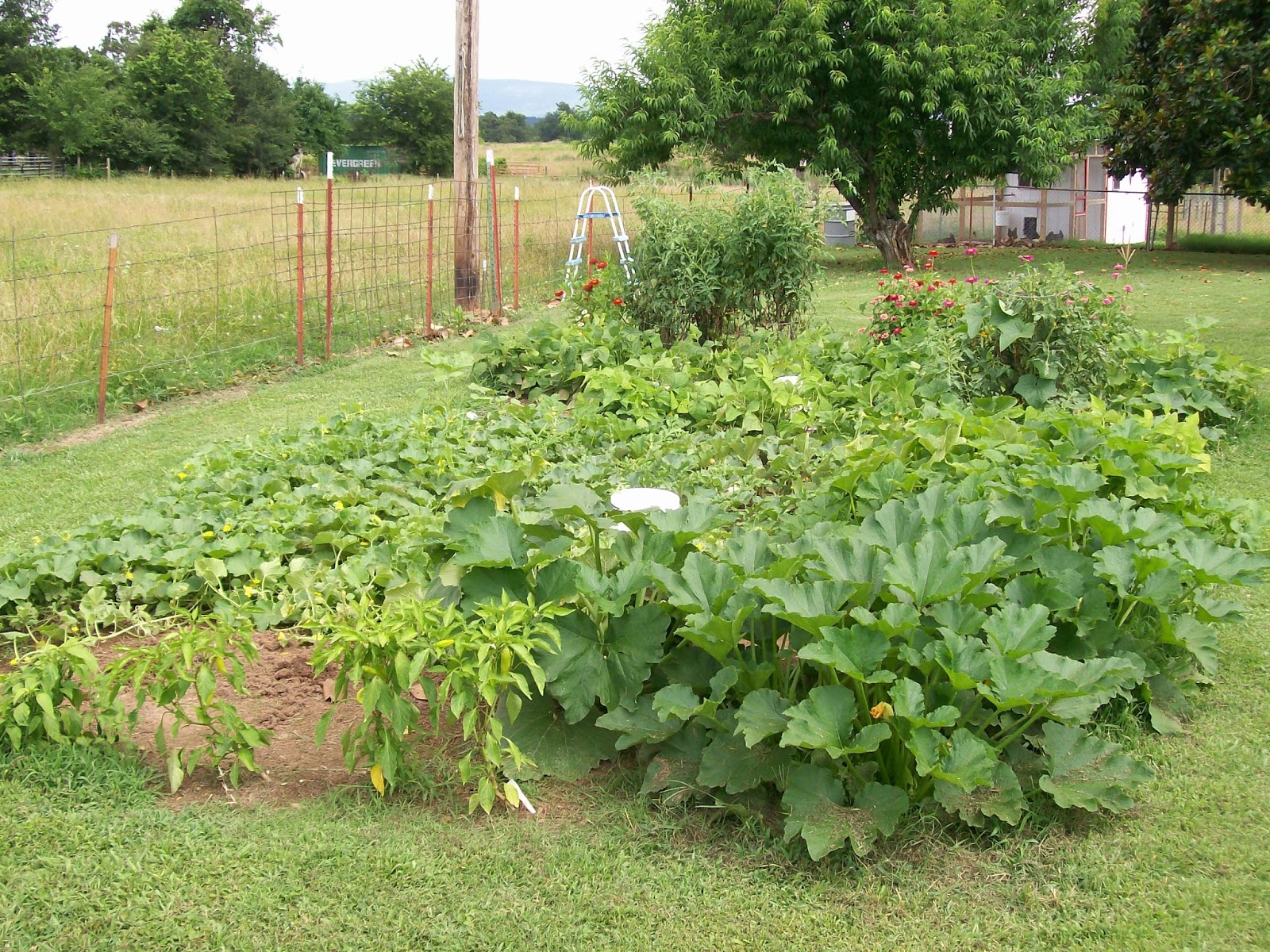
We have a friend, Grace, that gardens just a few miles down the road. She can grow things we cannot. We have pests she doesn't, and she has some we don't. Conditions can change quickly, from location to location, as well as year to year..
What have you learned from your seeds? Please share with us because we are all in this together. Any knowledge we can glean now, before it is a vital means of survival will be of great benefit. As soon as I get back the use of these two hands I will be rolling up a new batch of pot makers and planting them in the greenhouse. I can't wait.
Until next time - Fern
We have saved a variety of seeds over the past few years, but we haven't been very diligent about it. So this year we are trying to save several different kinds that we haven't tried before. We only save seeds that are from non-hybrid or heirloom plants. This insures an accurate reproduction of the original plant.
These are the cucumbers we let go to seed. This is also a great book - The Seed-Starter's Handbook by Nancy Bubel. It is another of my old books with a copyright of 1978.
There are two options for drying cucumber seeds. One is to take out the pulp and wash off the seeds as best you can.
Frank is being the funny photographer while I am trying to figure out what to do. He has always been able to make me laugh. That is a wonderful attribute after 30+ years.
The other option is to scoop out the pulp and let it ferment for a few days.
So we did.


We left the jar sitting on the shelf for a few days and
watched the pulp liquify like described in the book. But then it got to
smelling so bad it had to migrate to the porch.

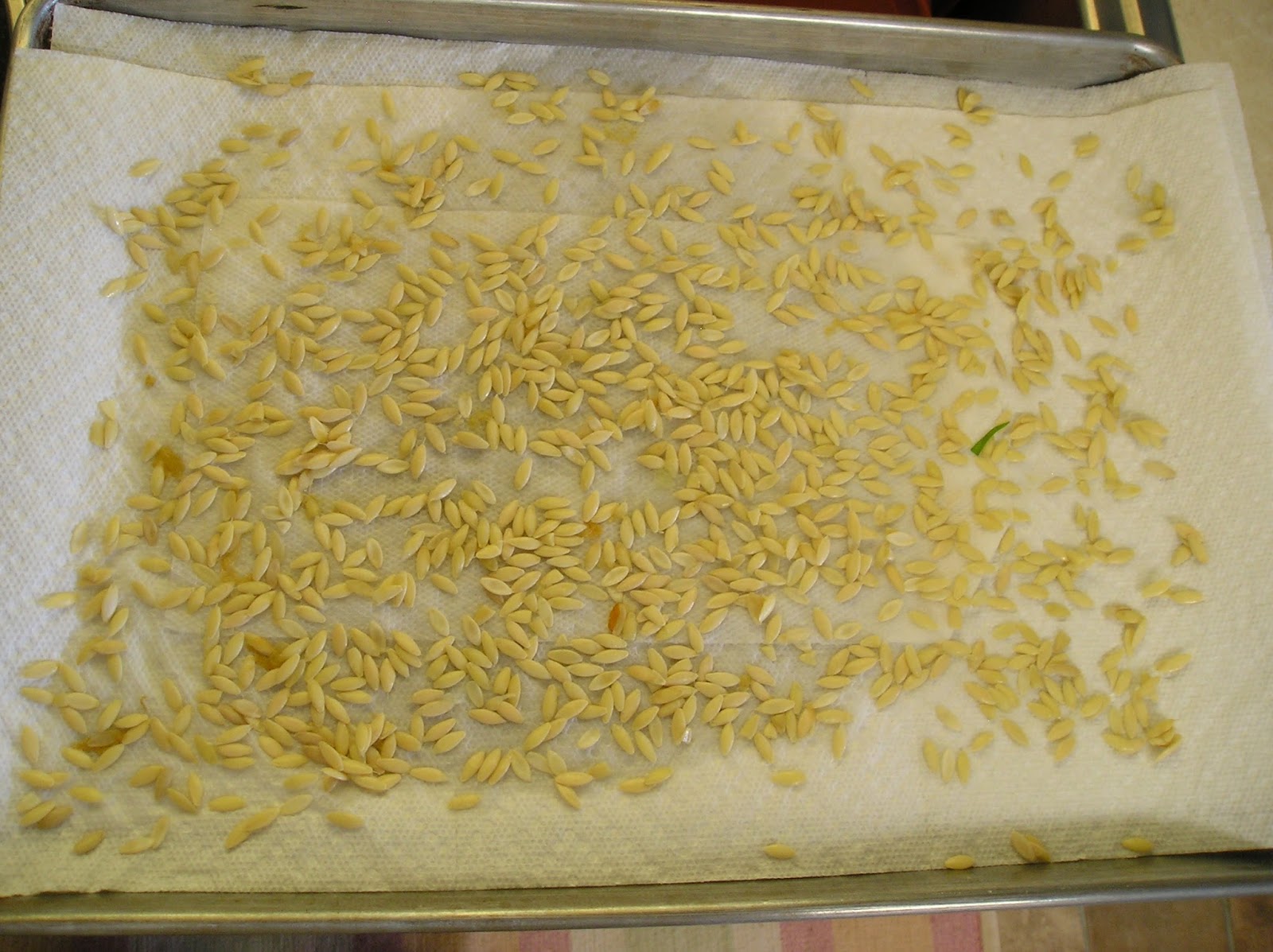
 I used a colander and the garden hose to rinse out the pulp and fragrant liquid.

The lighter or less viable seeds floated to the top (just like the book described) and I was able to pour them off.
 I poured the seeds onto a few layers of paper
towels to absorb most of the moisture before spreading them out on a
cookie sheet to dry.
We have also saved some purple hull pea seeds along the way. We let them mature, shell them and put them in this bowl to dry. I shake them around a few times each day as I walk by.
I poured the seeds onto a few layers of paper
towels to absorb most of the moisture before spreading them out on a
cookie sheet to dry.
We have also saved some purple hull pea seeds along the way. We let them mature, shell them and put them in this bowl to dry. I shake them around a few times each day as I walk by.
 We didn't save any corn seed this year because we planted two varieties together which would cross pollinate, making the seed not reliable for replanting. We wanted to use up the last of our oldest seed, but it wasn't enough, so we added another kind to the patch.
We went flower seed picking a few days ago. We had many, many zinnia volunteers come up this year in the garden which was wonderful. The hummingbirds love them and they help deter destructive insect pests. We have also planted more zinnias and marigolds this year throughout the garden. I hope we have many more volunteers next year. But to supplement them we are harvesting some seeds along the way.
Another first this year is sunflowers. You know those beautiful pictures you see of sunflowers lining someone's garden fence? I have always wanted to try growing them, but have never taken the time. Well, this year I poked a few seeds in the ground here and there in the garden, and you know what? They grew! And they are beautiful! Then one day I walked by and looked at some of them and they were dead. I wondered what was wrong until I tilted
the flower head up and saw sunflower seeds. Well, that is what they are supposed to do, right? That was a very fun discovery. So now I have 3 seed heads drying. Life is so great and rewarding!
We plan to save more seeds this summer, so we will keep you posted. We do this because there might come a day when we can't get any more seeds. What are you saving this year?
We didn't save any corn seed this year because we planted two varieties together which would cross pollinate, making the seed not reliable for replanting. We wanted to use up the last of our oldest seed, but it wasn't enough, so we added another kind to the patch.
We went flower seed picking a few days ago. We had many, many zinnia volunteers come up this year in the garden which was wonderful. The hummingbirds love them and they help deter destructive insect pests. We have also planted more zinnias and marigolds this year throughout the garden. I hope we have many more volunteers next year. But to supplement them we are harvesting some seeds along the way.
Another first this year is sunflowers. You know those beautiful pictures you see of sunflowers lining someone's garden fence? I have always wanted to try growing them, but have never taken the time. Well, this year I poked a few seeds in the ground here and there in the garden, and you know what? They grew! And they are beautiful! Then one day I walked by and looked at some of them and they were dead. I wondered what was wrong until I tilted
the flower head up and saw sunflower seeds. Well, that is what they are supposed to do, right? That was a very fun discovery. So now I have 3 seed heads drying. Life is so great and rewarding!
We plan to save more seeds this summer, so we will keep you posted. We do this because there might come a day when we can't get any more seeds. What are you saving this year?
Until next time - Fern




.JPG)