The Road Home

The Road Home
There is no place like home.
Showing posts with label parsley. Show all posts

Thursday, February 7, 2019

Winter Greenhouse Salad

The greenhouse has turned out to be bountiful, and a good learning experience. I have tried to grow a number of things that were failures, but in the process we learned a lot. We have also been able to eat fresh greens for the past few winters that weren't available to us before.

Since we have changed our diet to healthy low carbohydrates and quality proteins, our meals have become more simple, with less ingredients, and contain as much homegrown food as possible. Actually, we have gotten to the point that we have to be very careful what we eat from the store, because most of it makes us sick. But that's another article for another day.

We are far enough into the winter growing season that the spinach and lettuce in the outdoor, back porch bed is slowing down and buried in oak leaves, while the greenhouse vegetables now provide a good plate of salad fixings.

Small garden bed by the back porch. We have wanted to use this area for a long time.

For these salads I picked.....


Romaine, Buttercrunch and Black Seeded Simpson lettuces


Simpson lettuce


Bloomsdale spinach

Pak Choy cabbage

Cress
The cress is still pretty small. I transplanted it from the back porch bed about a month ago since it had really slowed down it's growth from the weather.

Kale

We have finally found a way to eat kale. All of the other ways we have tried, we don't like because of the strong flavor. Here I pick the leaves when they are about the size of a quarter to half dollar. They are starting to get that kale type of flavor, but mixed in with the other greens, they aren't noticeable.

Parsley

The parsley wasn't growing well back in the herb bed this year, and neither did some of the other herbs. I'm not sure why, but I ended up transplanting them into pots and growing them on the porch instead. Now all of those herbs have moved into the greenhouse to see how they do over the winter. We had a bit of parsley in some of the salads, but it didn't set well in Frank's stomach, so it's just growing in here for now.


When the forecast is in the teens at night, like it is tonight, we cover everything with some frost cloth and turn on a small electric space heater. Tonight is the second time we have used the frost cloth and space heater this winter. I don't worry about 22*F and above. The water barrels seem to keep everything warm enough and most of the things growing in here are cold hardy plants. The space heater and frost cloth seems to help and we haven't lost anything yet. Not even the yellow squash, believe it or not, or the flowers.


I never thought this would grow. We haven't done anything special for it.


It's nice to be able to tell Frank I'm going to go pick some lunch, even in the winter. I feel like I am providing some good nutrition and at the same time, get to enjoy the process of growing things, something I have always enjoyed.


Until next time, Fern


Friday, May 1, 2015

Picking Wormer....From The Yard

As spring has come on, I've been thinking more and more about being able to grow natural wormer for our goats. For now, we still administer Fenbendazole (Safeguard) and Cydectin, and since it's been an exceptionally wet spring, we have prime conditions for a heavy worm infestation. We allow a five day withdrawal period before we keep any milk for human consumption, but we do continue to milk, then feed it to the cats, dog and chickens. I didn't want to experiment with all natural wormers only to have the goats become ill from worms, so this year we're doing both.


The Complete Herbal Handbook for Farm and Stable by Juliette di Bairacli Levy is an amazing source of information if you want to learn how to treat most farm animal ailments naturally. I have spent much time reading and re-reading about many different herbs and plants, especially pertaining to worms. I would highly recommend this book if you are interested in herbal remedies for farm animals. As I read through this book, I began making lists of plants that are good for goats. 

This little notebook contains the beginnings of my research, with ideas for several categories including: plants for feed, plants for overall health, plants for worms and plants to increase milk production.


Now as I head out in the morning to do the chores, not only do I take a bucket to pick slugs and weeds from the garden for the chickens, I take a bucket for some goat pickings as well. The amount and variety of things I pick has grown since I took this picture, but it gives you an idea. Here is a tour of my morning wanderings as I pick for the goats.


I usually start off with comfrey, with anywhere from three to five leaves per goat each day. I am having to limit how much I pick for now until the plants are really at full production. Because of that, the chickens don't get comfrey very often for now. Comfrey is a highly nutritious fodder plant for animals of all kinds.

 
Once the cabbage plants got big enough, I started picking leaves from the Michilli cabbage for the goats. It's a very good source of sulfur and other vitamins. It turns out cabbage is good for lice, as well. Each time I introduce something new, it may take the goats a day or two to get used to it, cabbage was one of those things, but now they really like it.

I have also started including a few mustard leaves in the last few days, which helps to expel worms. Some of the goats seem to really like them, but some of them don't. It's always interesting to see how they will react.

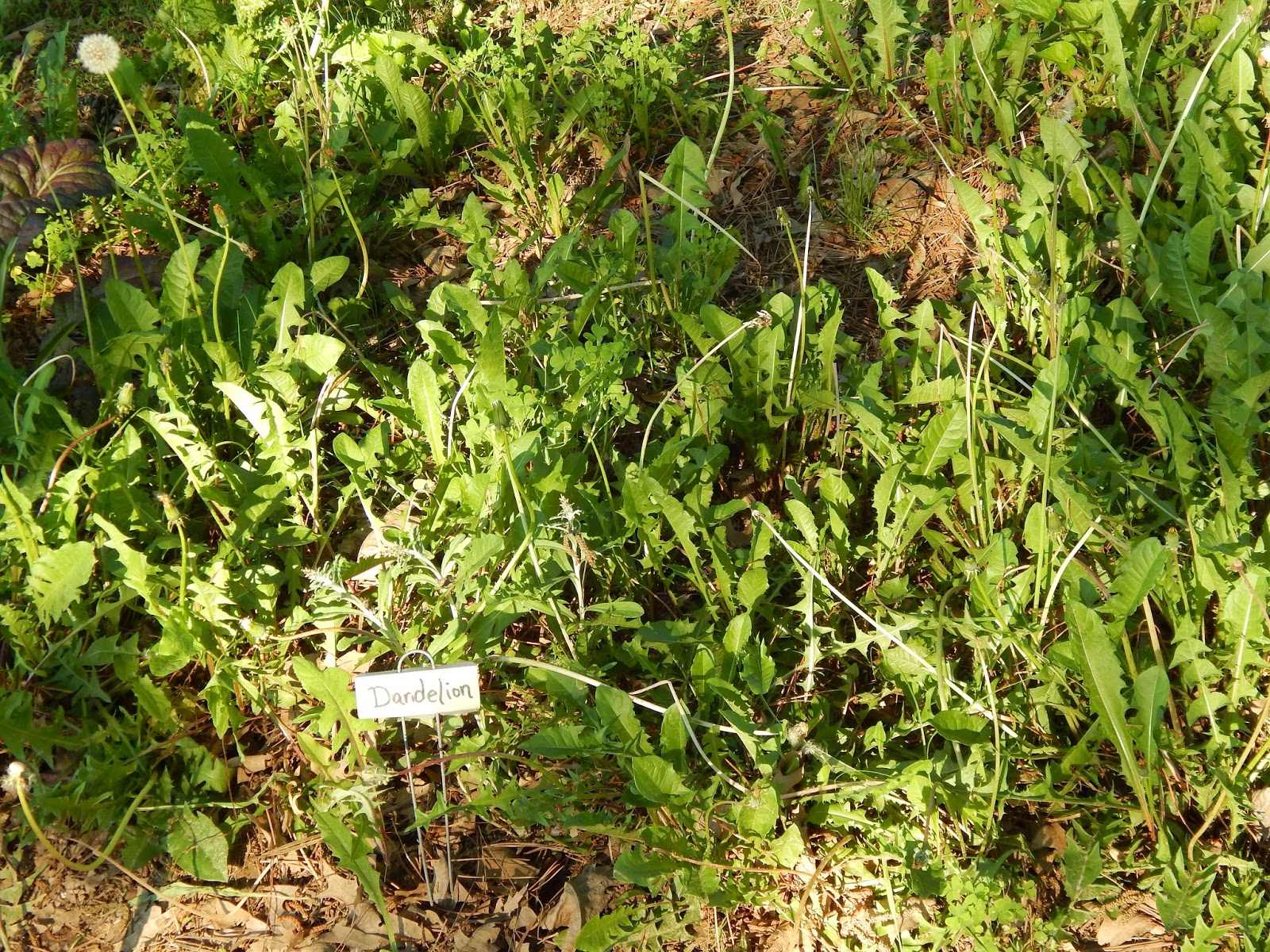
 Next to the mustard is the dandelion patch. I always try to have at least a handful of leaves for each animal. Dandelion leaves are good for overall health as well as expelling worms.


I usually alternate between lemon balm and marjoram, which are both good for overall health. I want the plants to continue developing well for our own use, so the goats only get a few sprigs. They probably wouldn't eat much more than that anyway. It's part of the browsing nature of a goat.

 
Next comes garlic leaves which are high in sulfur and is an effective worm deterent. The goats won't eat much, but they will eat some. I have started to include just a little each day. Behind the garlic is a patch of honeysuckle.


I have a couple of healthy chive plants that I have started picking small handfuls from as well. They are also effective against worms.


Honeysuckle

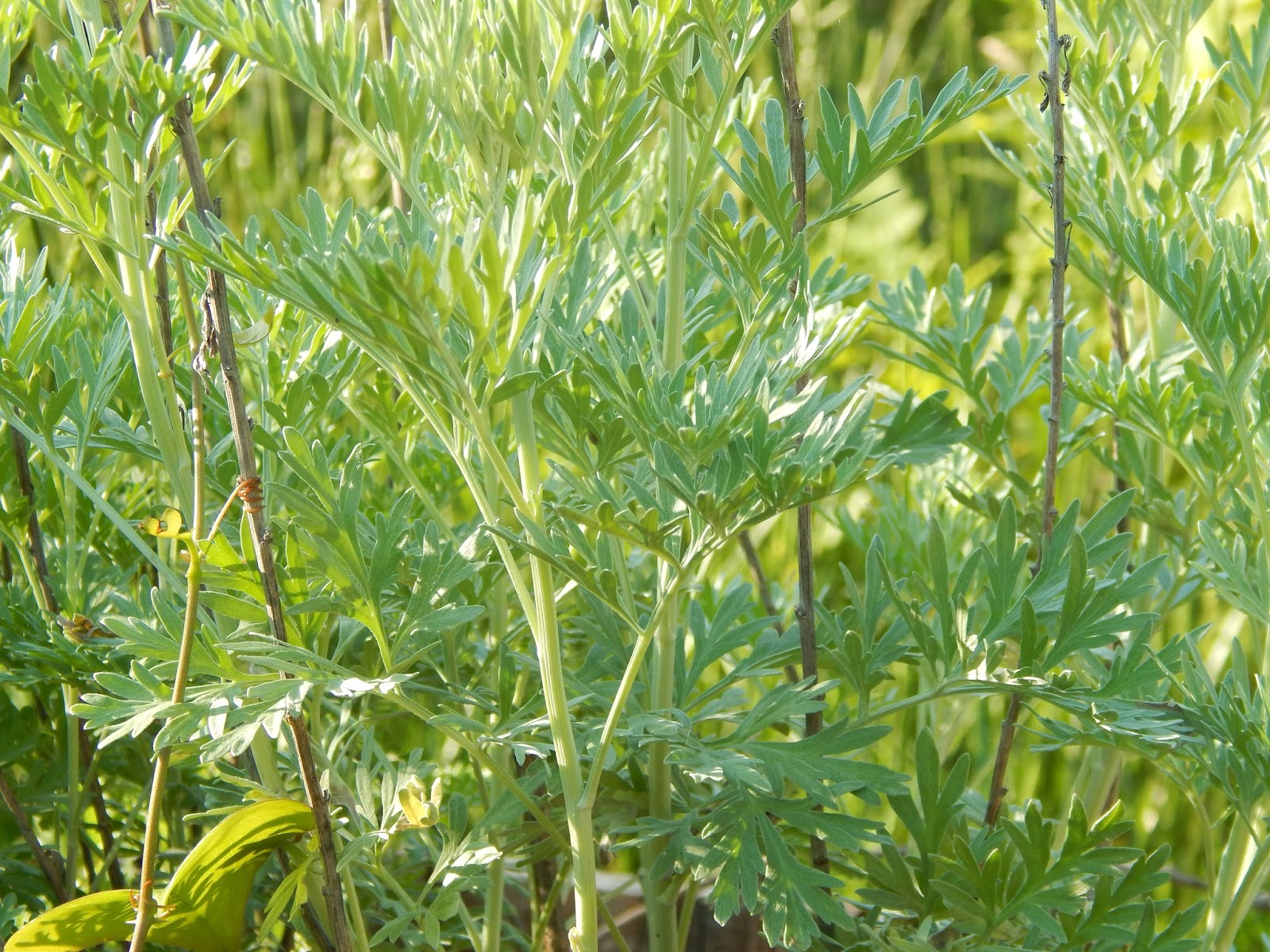
On Saturdays, I also pick a big handful of honeysuckle along with around four or five wormwood leaves for each goat. These two plants are especially good for expelling worms. One thing I have observed that I find to be very interesting is how the goats choose to consume them, or not. I have found that if I walk out into the barn with a large handful of honeysuckle vines, the does will gather around and heartily begin to strip the leaves from the vines. Until they are finished. Not until the leaves are gone, but until they are finished. My theory is, once a goat has eaten enough of a certain plant, they stop. Too much is not a good thing. And enough for one goat, may not be enough for another. They each stop eating the honeysuckle at their own timing. And the wormwood? Sometimes they will eat it and sometimes they won't. Last week I wormed One Stripe and Copper with the commercial wormers on a Monday. Saturday when I brought up the honeysuckle and wormwood, neither one of them would eat them, even though they always did on the preceding days I had brought them. As I wondered why, I realized that they didn't need the plants because I had just recently wormed them. Interesting, huh? Since tomorrow is Saturday, one week later, it will be interesting to see if they will eat these two plants tomorrow.


I started this wormwood from seed several years ago in this large wooden barrel. Now that I know it will continue to grow and have started using it, it's time to move it back into the fringes of the herb bed. Many other plants don't get along with wormwood too well, so it will be out on the edge of the bed next to the camphor wormwood I planted last year. It really does smell like camphor, and I haven't quite decided what I would like to make out of it. I don't use the camphor for the goats, though.


Since I recently read that blackberry leaves are good for goat feed, I stop at this patch of wild berries on the way to the barn and add a good handful of leaves to my bucket. 

Last week when the vet came to disbud our youngest baby goats, we found out they had lice. As far as I know, we have never had a lice problem on our goats before. The vet said our extremely wet spring has created prime conditions for lice. I got out my Herbal Handbook again and looked up lice. It turns out that sulfur is a good natural remedy and you can add a teaspoon of sulfur to the goat feed. Well, that wouldn't work for the young babies that needed treating, so we put a little Sevin dust on them, and the teenage goats that are being weaned. But I needed a natural remedy for the does I am milking. It turns out garlic and cabbage contain sulfur. I was already feeding the cabbage leaves, so I increased the amount each doe was getting. That's when I added in the garlic leaves. They ate more of them the first day, but since then, they will only eat a limited amount. But so far, I haven't seen any lice on the does, so I hope this works.

So what do I do with all of these leaves? I dump my bucket on top of the big round bale of hay by the milk stand and sort everything out. I want to make sure each doe gets a portion of the harvest I have brought. And I only do this for the does I am milking, not the babies or the billy and wethers. As each doe comes to the milk stand, I give them their grain ration, then pile all of the leaves I have brought right on top of it. At first they seemed to be a little irritated with me, but now they just dig around the leaves, eat their grain, then usually have the leaves for desert. It's rather comical. But if I took all of these leaves out to the feeder and spread them out for the goats to eat, they would just turn up their noses and go graze in the pasture. I'm not sure why they will eat them from the stand, but not from the feeder. It's like it's a treat or something.


I am hoping that feeding the goats plants that we have growing here will eventually be enough to keep them healthy and somewhat worm free. I don't want to experiment to the detriment of their health, but I do want to try to eliminate the commercial wormers. I know there are companies that sell a natural wormer, but if I am going to change over to natural, I would like to see if growing our own plants will work. Only time will tell. It may take a year or more to really see what the outcome will be. I'll let you know.

For the off season when the plants aren't growing, I plan to dry the herbs. But, with nature, worms generally aren't a problem in the winter months since the worms go dormant, some in the ground, some in the goat. There are other techniques for controlling worms, pasture rotation, short or tall grass and others. 

This brings us to another question. If the time comes when we are dependent upon ourselves, and we get worms, will these remedies work on us as well? Many of these plants are a common part of our diet and I have read that wormwood can be used with humans. But that is a whole different research project. Just food, pun intended, for thought.

Until next time - Fern

Friday, May 16, 2014

Cabbage Soup


We baked a ham a few days ago. As I was putting the leftovers away, I thought the broth would make a good soup. Next was to figure out what I could put in there that would be good.


We had some celery, cabbage and onions which would make a good start. So I heated up the broth and added some ham chunks.


I wanted to try some of our dehydrated peppers, along with some parsley and garlic.

 
While that was cooking, I decided a jar of our carrots from last summer sounded good. I added them to the pot, water and all, to add more liquid to the broth.


Next, in went some chopped up onion and celery.


Then I chopped up about a third of a head of cabbage. It didn't take long to cook everything up.


This gave us a quick, nutritious meal with leftovers to boot. We decided the ham broth was a little strong and needed to be diluted more. I added another cup or so of water to the soup before I put it in the frig. When I heat it back up I will add a diced potato. That should absorb some of that strong flavor as well.


There are so many different meals that can be made simply from things you have on hand. Our only problem is figuring out what to call them so we can give this post a title, otherwise they would forever remain nameless. We hope to soon be able to get our fresh vegetables from the garden instead of the store. There are several different things we want to try preserving this summer to extend our ability to eat homegrown food. We'll see how it goes, and share with you along the way.

Until next time - Fern