The Road Home

The Road Home
There is no place like home.
Showing posts with label udder. Show all posts

Monday, August 17, 2015

A Simple Non-Electric Milking Machine

The time has arrived that I need to employ a milking machine instead of continuing to hand milk our goats. This time has arrived much sooner than I had hoped, but the arthritis in my hands have made that decision for me. I have a finger that will no longer straighten unless I work on it for a while. It is affecting my grip and I'm dropping a lot of things. Rats. One of the biggest draw backs for me is that I really enjoy milking my goats. I'm sure I still will, it will just be different. I can enjoy the still of the morning, watching the animals and listening to the birds, it will just be different. As the goats and I get used to this new routine, I'm sure there will be challenges and adjustments along the way, so later on, I'll do an update on my new milking routine and tell you what I've learned. For now, here is my very first experience with this machine.


I can't say our milking machine is new because I bought it several years ago. It's been in a storage building awaiting the time that I needed it. This is an example of storing things that will become useful in the times to come. If you have a future project that will make life easier and more productive after the SHTF, and you can afford it now, acquire what you think you will need now and store it away. It will wait for you, just like this milker.

Back when I researched and looked for a simple milking machine the Henry Milker out of Alaska was the only one I found, so I got one. Now there are several companies that have similar products like the one Patrice Lewis at Rural Revolution uses, the Udderly EZ Milker. Patrice did an article on how she uses one to milk her cow here.  If there is anyone out there that uses or has experience with a non-electric milking machine, please share with us. I would really appreciate anything you can share. I wrote this part of the article before we went to the barn and tried out the machine. You'll realize why I said this later on.


The components of our milking kit included the vacuum pump, four tubes, two tube cleaning brushes, two wide mouth quart jars, two lids, a micro fiber cloth and a carrying case. The directions are simple and easy to follow.


Copper with her kids back in March
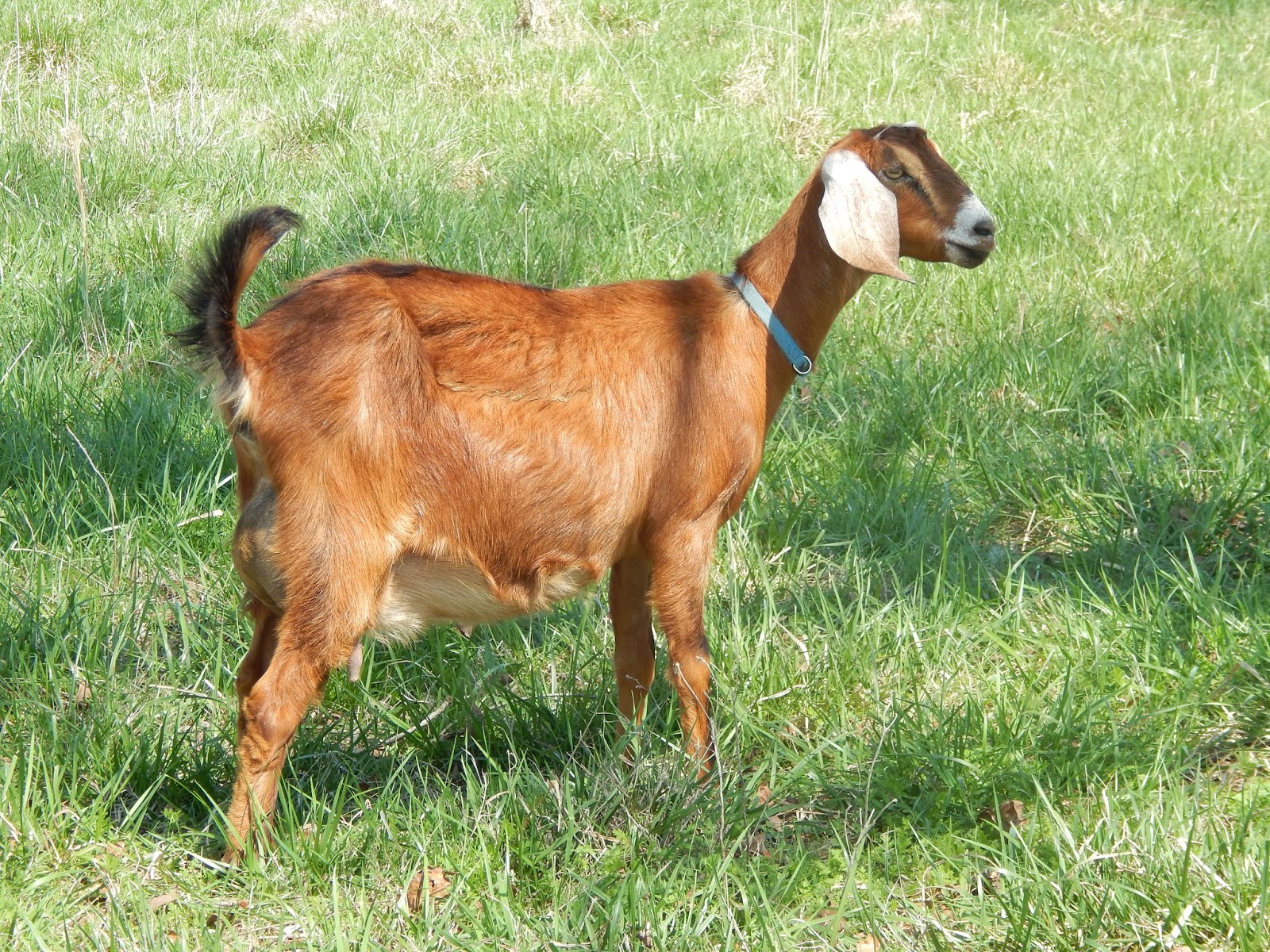
Copper, our three year old doe, was the victim for the first trial of milking with this machine. This is the second year we have milked Copper and she is very easy going and a good milker. She looked at me a few times as I fumbled around trying to get the bucket, which we brought to protect and support the jar, and the syringe that goes over the teat in place to begin this process.


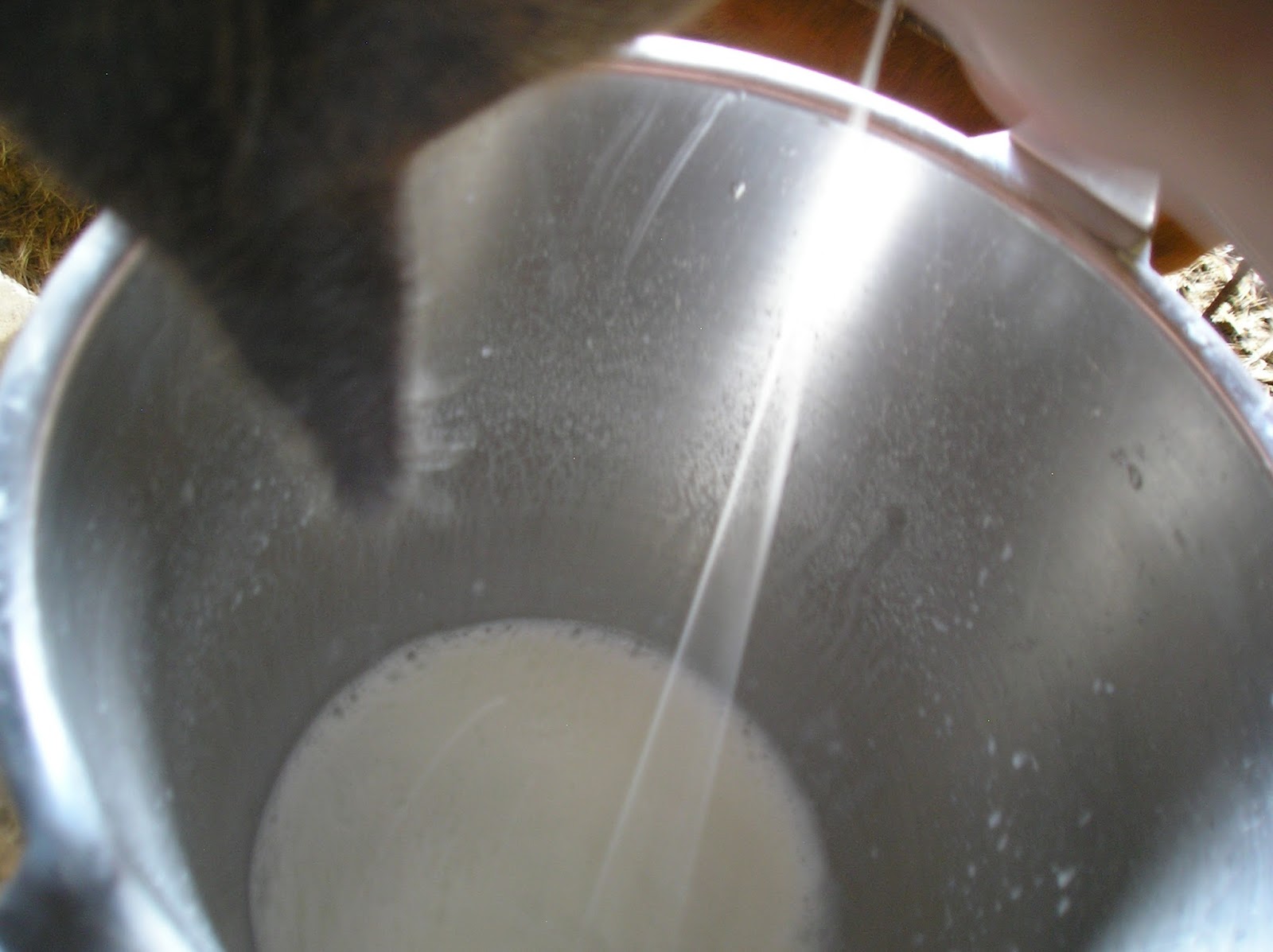
At first I couldn't get a good suction going so the pressure would build up a vacuum and begin withdrawing the milk. With Frank's help, we finally got things going and the milk flowing.


Yes, we always have our radios, even when we're together.


The pressure gauge has to be pumped much more often than I expected, and even though I had to squeeze it less often than if I had milked by hand, it really wasn't that different than milking by hand except I didn't have to squeeze as hard.


I had to restart the suction/vacuum process twice on each teat because the milk stopped flowing. The directions included this possibility, and directed to release the syringe from the teat and start over, which we did.


Even with restarting twice on each teat, we only withdrew about half of Copper's milk. The rest I ended up milking out by hand into the bucket. I'm glad Frank recommended we bring it.


I'm sure with practice this machine would withdraw more of the milk, and I would be get much more adept. Even with all of the commotion of trying to figure out this machine, Copper was very cooperative through it all, and I was grateful. Frank did end up feeding her quite a bit more than usual just to keep her occupied while I tried the milker and he took the pictures. Even the flash on the camera didn't bother her. She did a very good job.

The Henry Milker worked just as advertised. The instructions and videos found on their website were helpful since I did run into a few things that were mentioned. Because I had access to the information ahead of time, I knew what to do when these situations occurred.
No filtering necessary
Pros? The milk goes directly into the jar which prevents any hair or dust from getting into it like it does when you hand milk into a bucket. The milk doesn't have to be filtered. Just change out the lid for a regular plastic one and put the jar in a bucket of water to chill, then into the refrigerator it goes. Even inexperienced people could milk an animal using this machine.

Cons? I have read in other places and heard from an acquaintance that you still need to finish the milking by hand if you want to
Copper's udder
make sure you get all of the milk and keep production to a maximum. The thing I noticed as we were increasing the pressure to create the vacuum and get the milk to flow, was that Copper's teat was pulled down and lengthened in the syringe. My first thought was that I didn't like that. What will that do to the tissue of her teat if this process is repeated over and over twice a day? Will it cause the teats to lengthen and stay that way? Will it cause them to loosen and lose their natural elasticity and break down the structure of the orifice? Will it cause them to leak over time because the tissues have been stretched so often?


One Stripe's udder
I don't even know if these are questions that address a valid concern, but my first thought was I don't want that to happen to my does' udders. I have grown very particular about the udders my does have and we have bred them to have certain characteristics. Another thing that has caused this concern is a video about another company that makes non-electric goat milking machines that shows the process compared to an electric milking machine. Some of the does in this video have very large teats and the suctioning motion of the electric milking machine rhythmically pulls on the teats. I think this process over time has caused part of the shaping of the teats. I don't see how it can keep from it. There are also some people that prefer a large bulbous type of teat, even for hand milking, because you get more milk per squeeze, therefore you don't have to squeeze as many times to get the same amount of milk as a doe with smaller teats. Maybe I am just backward in my choice of goat teats, but I don't think so. I think the straight, smaller structure of this type of teat is much closer to what is found in nature as opposed to what is found with structured breeding practices.

So, what about my arthritis? I don't know. But for now I will continue milking by hand and doing the best I can. I may need to limit how many goats I have in milk at once, I don't know. It is very interesting to finally get to a place where I thought I would have to give in and quit milking by hand even though I didn't want to. Now that I have tried it, I really don't want to use a machine, not unless I really, really, really have to, and for now I don't have to, so I'm not. I thought about just deleting this article and not finishing it, but then again I thought maybe it would be of use to someone, so here it is. Food for thought.

Until next time - Fern

Saturday, June 20, 2015

Nary an Udder the Same & Goat Happenings

As I milk the does each morning, it is always interesting to note the differences in their udders. It's something I have experienced for years, but I didn't think about sharing it with you until recently. Goats, just like people, each have their own special peculiarities that make them unique. And since I milk my goats, one of the things I pay particular attention to is their udders. Many goats udders are very similar, but the group of does I have right now don't share many characteristics, and because of that, I thought I would explain the differences and what I think about them.


I'll start off with One Stripe, our old lady goat. She is now seven years old and has been with us since she was five months old. I think she is starting to slow down a little, but for an old lady, she is doing quite well. Her udder is getting longer as she ages. It also has more mammary tissue that the other does. The first year or two I milked One Stripe, her udder was much firmer and more congested than the other does. She didn't have mastitis, but either she wouldn't let me have her milk or the mammary tissue took up so much room, she didn't have much. I have always wondered if that has affected the size of her udder. It still never completely empties when I milk her, but she is a breeze to milk. One Stripe's teats are straight, easy to handle and allow a good amount of milk with each squeeze. She and I have been doing this together for so long that sometimes she will turn her head around and nudge my shoulder when she is ready to leave, but I'm not finished.


Copper is One Stripe's two year old daughter. Copper's udder is even, and holds a nice capacity. She does not have the longer, type of udder her mother has. The teats are even, a little longer than some, and also allow a good amount of milk with each squeeze. Copper is a taller, longer goat than the other does I have. I scoot my chair closer to the end of the milk stand to reach her udder comfortably. Copper was an accidental single kid in the middle of winter, so she didn't have anyone to play with when she was born. Consequently, she came back to the milk stand with One Stripe while I was milking. She has always been very tame and easy to handle, if sometimes a little onery.

Cricket and Lady Bug are twin sisters that are one year old. They each had their first kids this spring. It is always interesting to see how a doe will turn out on the milk stand. Ivory, their mother, was a great milker so I had high hopes for these two.


Cricket started off with very small teats. She was hard to milk and not at all interested in letting her milk down. After a few days I remembered that Ivory started off the same way. That gave me hope that Cricket's teats and udder would develop well during her first lactation. So far so good. She is definitely easier to milk, and she will let her milk down for me now. One of the challenges of increasing her milk production is having her son continue to nurse through the fence. With the work on the barn and the addition of pigs, available space for weaning is limited for now.


Lady Bug started off too wound up for my taste. She was not relaxed, but furtive and anxious. Now, after almost three months she has calmed down nicely, and is very easy to milk. Surprisingly, her teats are much larger than her sisters. They are not as long as One Stripe's or Copper's, but they hold a good volume of milk per squeeze, making her very easy to milk. For a first freshener, Lady Bug also has a very good quantity of milk, even though Easter is still nursing some through the fence.


We sold Penny, who is Copper's daughter, to Faith back in April. I wish I had remembered to take a picture of her udder before she left. She is the first doe I have had that had two different size teats. Noticeably different. One side is much easier to milk than the other. At first I wondered if it was because her twin bucks were nursing more on one side than the other, but Faith tells me they have continued to remain different sizes. She doesn't have any trouble milking Penny, and has adjusted to the different techniques needed to get milk from each side.


Every milker has a preference for the type of udder and teat they prefer to milk. I know I do. As time has passed and my experience as a milker has increased, I am now much more particular about the animals we add to our herd. If we are looking for a new buck, I ask to see the mother's udder in milk or at least pictures of it. If it is pendulous, or the teats are large and bulbous, I pass. If the teats are small, or the udder is poorly attached, I pass. Since I plan to milk our does, I want animals that have the genetic propensity to produce healthy, well formed, udders and teats. I don't have to have an animal that will produce a gallon a day, but I would like to have a decent amount per animals.


Speaking of bucks, when the vet was out recently working on our new pigs, we also had him work on Bill's horn scurs. Bill's horn burning didn't go well before we bought him. We knew he had some scurs when we brought him home, but we have never had any that grew
out like this. Bill had rubbed or caught the sideways scur that had gotten pretty long, and ripped it away from his skull, which caused it to bleed a little. The vet takes care of these types of scurs with large landscaping loppers. Scurs on goats don't generally bleed a lot because they don't develop the same type of blood supply that a regular horn has. This was true for Bill this time. The vet applied some standard blood stopper powder for good measure. While we had Bill in hand, we also wormed him and trimmed his hooves. We hadn't caught Bill in a while, but he is usually tame enough when we feed. You can reach over and pat and scratch him then. But when I poured out the feed and took him by the collar, he jumped up on his hind feet, hollered and fought valiantly to get loose until the vet could take over. I was very happy to turn him over to someone else. If you had been standing around, the dance Bill and I did would probably have been somewhat comical. Luckily, it worked out okay.


We plan to turn One Stripe and Cricket in with Bill on July 1st, to begin our first breeding cycle. We hope they breed sometime in July to give us December babies. This will allow us to have plenty of milk through the winter. We tried this last summer, but Bill wasn't mature enough to handle this responsibility at the time. If our breeding plans are successful, Cricket will dry up around the end of August or early September. One Stripe has already been dried up. Since she is older, I wanted her body to have a break before she becomes pregnant again. I will continue milking Copper and Lady Bug until late December or early January when One Stripe and Cricket are in milk again.


We will breed Copper, Lady Bug, Patch and Easter in November. This will provide us with the larger supply of milk in the spring so we can begin making next year's cheese supply. Well, that's the plan anyway. We will see how it goes.


We still need to butcher our older wethers. We hope, cross your fingers, to get that done in the next week or so. It will be nice to have our own meat in the freezer again. I want to figure out how to make a very simple jerky from our ground chevron. Most of the recipes I have read have more ingredients than I want to use. If you know of a very simple recipe that does not use liquid smoke or any sweeteners, I would be interested in looking at it. I would like to use little more than salt and pepper, but I don't know if that would work or not. I need to do some more research on simple jerky recipes.


The over abundance of rain this spring and early summer has also caused an over abundance of worms this year. I have had to worm the goats more than usual. Even Pearl, our Great Pyrenees, has had difficulty with worms which she has never had before. The vet said the weather this year has caused a tremendous flush of worms for all of the animals he sees. It's something good to learn and be aware of as we continue to learn the nuances of our location. We have been here seven years and in that time we have had two years of serious heat and drought and two years of incredible rain and flooding.


We continue to see our goats as vital to our homestead. They provide us with milk which we make into kefir, butter and cheese. The by product of whey is then fed to the chickens and pigs. The dog and cats also benefit from the milk everyday. The goats provide us with meat and the other animals with nutrition through the organs, fat and scraps from our table. We enjoy our goats. They are a good farm animal. But more than that, every animal on our homestead is here for a reason. They all have jobs to perform, and if they don't meet the expectation or need that we have, we don't keep them. Regardless of how much we may like them or want them, if they don't perform adequately, or exhibit an undesirable behavior that we are unable to alter, then we don't keep them. Some we eat, some we sell, some we give away with full disclosure of why we are getting rid of them. 

Homesteading is our way of life. Soon we feel it will be our survival. We continue to increase our skills, so that hopefully, we can depend on what we know, what we have, and what we can do, to see us through the hard times that will soon be upon us all. We would encourage you to do the same.

Until next time - Fern
 

Friday, March 27, 2015

Shopping for Goats

We went shopping for goats today, came home empty handed, and wanted to share the reasons why. Our trip was about 170 miles round trip and took about four hours. When the gentleman asked what we thought and Frank told him we were going to pass, he told us he was sorry we had wasted a trip. Frank told him it was not wasted, we got to visit the whole way. Isn't that neat? There is not much Frank and I would rather do than spend the day with each other whether we are home or on the road, so today has been another day well spent.

A few days ago I found an ad on Craigslist that had the potential for adding some new blood into our herd. We called and set up a time to make the trip. The gentleman wasn't much of a phone talker, and just recommended we come look. I should have tried to ask a few more questions. 

One Stripe
We went to look at a Nubian doe that had black and tan quadruplets. I have always liked black and tan goats, but we have only had one, and she was an excellent specimen of a milk goat. She had a nice thick, long body, she was big and had great babies. Even though my favorite goat at that time was more of a big belly kind of goat, just because she was friendly, kind of like One Stripe. All of this leads to the confirmation of the animal, the type of body structure they have which will add to a herd and not bring some unwanted traits.

Google Images
The first thing we noticed about this doe was her udder. Now that I have learned more about milking and udders, I have realized that there are many subtleties that can add or detract from the performance of an udder over the short and long run. Although this doe's udder was nice and full, and she was able to feed all four of her babies, it wasn't well attached. By this I mean that the ligaments that attach the udder to the body wall were more narrowly spaced allowing the udder to swing or sway side to side when she walked. This is not a desirable characteristic for an udder at our farm. Over time it will break down more quickly allowing the udder to sag, sometimes all the way to the ground.

Copper a week before she gave birth
A well attached udder should be widely spaced between the legs and up to the belly area. It's hard to describe in words. Frank described it to one of his friends using a paper sack analogy. A well attached udder would be like an open paper sack that is wide open. A poorly attached udder would be like a paper sack that is squeezed closed at the top, like you were going to blow it up and pop it. The actual area of attachment to the body is much smaller.

The second thing we found out about this doe is that she is a polled animal. Polled meaning that she was born without horns. There are folks that will tell you that some goats are just 'naturally' polled, but we are of the opinion that any goat that is natural will have horns. Another problem that occurs among polled goats is that if you breed two of them together you may end up with a hermaphrodite. A hermaphrodite is a goat that has "both sex organs and sterile". The gentleman had bought this doe from a lady that had all polled goats.

The next issue we noticed is the way the kids were disbudded, or dehorned. The gentleman's disbudding iron did not have the right tip and he had burned all the way across the top of the kids' heads. Even so, the horns were still growing out.

Copper's ear before we fixed it.
 
And the last thing was the ears. The doe's ears were turned over sideways, similar to this picture. This can be corrected when the goat is very young, just like we fixed Copper's ear. One of this doe's kids had one ear that was the same way.

We wouldn't have bought the doe because of her udder alone. A pendulous udder is not a trait we want in our herd. We had a doe named Red that was born here and was a great milker. I milked her for two years, then one day as she was walking out of the barn I realized that her udder was swinging from side to side much more than any other doe. As I
Red taught us why we don't want horns & about pendulous udders.
watched and really looked at her, I realized that her udder was not widely attached like the other does. Then I really looked at her. Sometimes when you are used to something you don't always 'see' what is really there. Another instance of that was the first goat we had born with parrot mouth. I always knew this goat looked a little different, but it took a number of months for me to realize what it was that was creating that difference. These are the 'ah-ha!' moments of learning, and I am grateful for them even when they lead to an undesirable decision. The goat with the pendulous udder we sold, pointing out this deficit to the buyers. The goat with the parrot mouth we butchered, not wanting to pass on a deformity in our herd or to anyone else. The doe today, we did not buy, even though I would really like to have some black and tan goats.
 

This gentleman also had a billy goat today that we wanted to look at. He was solid black, which is unusual, a solid, nice looking animal. His draw back? He had horns. That was an instant decision. No horns at our place, so no nice big, black buck. Then as we stood and visited for a minute, the buck started backing up and putting his head down in a stance that indicated he would like to butt something or someone. The owner indicated the buck liked to 'play', not a behavior we care to have in a buck when that 'play' can
Teddy was a great looking animal with some bad behaviors.
hurt someone. The buck was separated in an area by himself. The owner said he put a couple of the baby goats in there with the billy for company, but he just chased them and chased them around, so he had to take them out. The only time this billy was allowed around other goats was during breeding time. All in all, what I saw in this goat was one that was not socially adapted to being with other goats or people. So, even if he had not had horns, his behavior would have prevented us from buying him. We learned a lot about unwanted buck behavior from Teddy, who was a very nice big billy and the father of Cricket, Lady Bug and Penny.


It takes time to 'learn' an animal, whether it is a chicken, dog, cat, goat, or any other animal. Time is a good teacher. Having friends, neighbors, or other folks with the same type of animals can help a tremendous amount. Observing and studying your own animals can teach you a lot. Over the years we have made our fair share of mistakes with animals. Buying some on impulse. Trying to ignore bad traits, or think somehow we can overcome them by some magic. It never works out. We just end up dealing with someone else's problem, and it's never worth it in the long run. 

If you are starting out or looking for new animals, research all you can, talk to everyone you can, don't overlook flaws that will cause you troubles and listen to your instinct. Then you still may end up with an unforeseen problem. But if you do, learn from that as well, and in time, you will end up with the herd or flock you want. Healthy, productive and content. We have been blessed with stewardship of this small spot of earth in southeastern Oklahoma, and we give thanks for that every single day. Even when we didn't get to bring home a few more goats.

Until next time - Fern

Wednesday, March 25, 2015

The Sounds of a Peaceful Morning Milking

I've told you before how much I enjoy milking in the mornings. Listening to the birds, the goats, and just watching the world wake up for the day. Well, recently I took the camera with me and recorded a few more short videos. Just for you. So, without further ado, A Peaceful Morning Milking.

You will notice a metalic kind of sound in this video. I have just begun to milk, and the bucket is empty. Copper fusses at me every morning because she has to wait and be second in line. She just doesn't see any reason she should have to wait for her mother, One Stripe, to be milked first. If you milk more than one doe, and are consistent with your line up, you will find that they figure out their place in line, although at first the goats new to the milking routine will try to cut line. 


Now the sounds of milking have changed and Copper is on the stand. I was surprised at how well the sounds came out while taking these videos with my camera. Interesting. By the time I am about half way through milking Copper, the babies start to get restless because they know that they will get to have breakfast soon.


This was the first morning I noticed one of the kids up on their 'dog house' playing. This was originally our Great Pyrenees, Pearl's, doghouse when she was a puppy. Now we use it for the kids when we pen them up away from their moms at night. The first fresheners are still fussing at me because I didn't feed them out in the feed trough like I do on most mornings. This morning, I brought them in on the milk stand to eat individually. I have been doing this off and on for a few weeks now.


This video shows the kids 'escaping' the pen for breakfast. It's a little shaky here and there, but shows you the routine.


Now I have Lady Bug on the stand and I'm showing you how I feel the babies kicking. You can usually, but not always, feel the babies moving around when the does are about three months into their gestation. At first the babies are higher up on the side and up closer to the rib cage. Since all of the young does are due next week, their babies have dropped down and moved back closer to the udder. All of their tail bone ligaments are very loose, and their udders are growing out nicely. I handle the does a lot when they are on the stand. I want them to be comfortable so when it comes time to be milked, that will be the only new thing added to this routine. I show you how I get them comfortable standing with a little wider stance. This gives more room for the milk bucket and for me to comfortably reach their teats to milk. It is a matter of patience and repetition. After a while they will be comfortable and not resist the repositioning of their leg. 


This is Cricket. Here I show you how much I handle the does. At first they kind of cringe with all of this attention since they are a little skittish about being on the stand at all. But by this time they know they will get to eat while I mess with them. I've also trimmed their hooves once since I started bringing them in. It's much easier for me to have the milk stand hold the goat, and I don't have to bend over as much making it easier on my back.


Now for the switch over. I will take Cricket out and let Penny in. Penny is the most hesitant to come in to the stand, so sometimes I have to bring her in, but she's doing better. At first when these young does left the stand they were kind of lost and didn't know which way to go, but now they have figured it out for the most part. Penny is also like her mother, Copper. She will usually come in, turn in a circle, then jump up on the stand. It's funny how that runs in families.


I had to find an application to shorten the videos I had originally taken before Blogger would upload them. First I had to learn how to do the video on my camera, now I am having to learn how to alter them to fit into the blog format. You know, if we had never started this blog, we wouldn't have bought a new camera a year ago, and I wouldn't be learning any of this stuff. So, thank you for encouraging us in our blogging endeavors. We continue to learn much all of the time.


As I try to think of the things we do and have learned about goats so I can share them with you, it helps me to really think through everything. I guess that can go for just about anything we do. We have felt all along that the purpose of this blog is to share what we have learned so that it might benefit others in some way. I hope that is the case.

Until next time - Fern

Wednesday, February 4, 2015

How the Does Do Grow

I thought I would give you another update before the kids are born. One Stripe and Copper both look great, the babies are active and the udders are filling nicely. In approximately six days, we should have kids on the ground. 

One Stripe is very consistent in kidding at 150 days after breeding. Since I have had her for six years now, my estimates of when she will give birth are usually fairly accurate. 

January 14th

All remaining pictures are February 3rd


Her udder will continue to fill until next week. It is still fairly soft.


Their hips are starting to hollow out as the kids move down and to the rear.


You can feel the progress of the hips beginning to spread over the last few weeks.


This will be Copper's second set of kids. Last year she gave birth at 150 days just like her mother, One Stripe. If they both hold to this tradition, One Stripe will birth next Tuesday and Copper will birth on Wednesday. Here is how Copper looks now.
 
January 14th

The rest of the pictures are February 3rd


You can usually feel the kids kicking on the right side during the last two months of gestation.

In the last few weeks, the kids have moved back toward the rear and farther down on the side.

Between now and then we will give the barn a good cleaning, and go through our birthing tote to make sure we have everything in order. 


It's a great time of year. Time for baby goats to start coming, time to plant seedlings for the cool weather crops, time to really start having spring fever. It's interesting how the fall tends to slow us down a little. Then winter seems to be a less active time of year for a while. But with the coming of spring the blood tends to quicken a little in preparation for the more active time of year. Are you ready? I sure am.

Until next time - Fern