The kids are growing like weeds. They have become used to being penned up at night on occasion to provide us with more milk. The horn buds that were burned are starting to come off and leave a nice smooth patch instead of the unwanted horns. Most of the kids are now very friendly. Ivory's twin girls are still rather stand offish, but I hope that improves with time. All of the kids have taken a liking to the new feed ration we are using and are grazing well with their moms. They are a great looking herd and we are pleased.
We look forward to getting a new buck soon and will introduce you to him after he arrives. We will also show you how we manage a new animal before they are allowed to integrate into the herd. There are always new happenings when it comes to raising livestock. Stay tuned.
Until next time - Fern
Experiences from country living; self-sufficiency; Christian values; amateur-ham radio; a hard working good life; and Humor is the Essence of Survival.
The Road Home
There is no place like home.
Showing posts with label disbudding. Show all posts
Monday, April 14, 2014
Monday, March 24, 2014
Disbudding the Baby Goats
We usually disbud the baby goats ourselves, but this year we have both been ill with a weeks long cold/flu/virus something that has happened right in the middle of our busy spring season. When we are well again, we hope to have produced massive amounts of antibodies that will last us for a very long time. There are many people in our neck of the woods that have been sick with this illness that seems to drag on forever.
Anyway, back to the baby goats' horns. This year we had the vet come out and burn the horn buds on all six of our babies. Velvet's boys were three weeks old and their horn buds were getting pretty big, but the vet's burning iron had a deeper depression in the tip than ours does, so he said it should take care of the three week old buds. We are very grateful we still have the services of the vet to call upon.
You know, burning baby goats horns is one of the most disgusting things we ever do. It's one thing to kill an animal and butcher it. We make sure they have a quick, clean, merciful death. But to take these cute little baby goats and burn their heads, listen to them holler and smell the burning hair is awful. I won't pretend
otherwise. So, why do we do this? We tried letting some of our goats that were born here keep their horns. They were tame and wouldn't try to use them on us, but they did use them on each other, especially the ones without horns. Then one day Frank realized that even if it was unintentional, it would be easy for a goat to lift up their head, or shift positions when we were bent over pouring feed into the trough and put out one of our eyes, or otherwise poke or gore us with a horn. We also had goats start getting stuck in our fence, which is field fence. Sometimes they had been there a long time and we had to cut some of the fence to get them out. Next thing we know, they had moved down about four feet and got stuck again. It's just the nature of the beast. These two things changed our perspective about leaving our goats in their natural state with horns. You will find many people that are adamantly opposed to removing a goat's horns. You will find just as many people adamantly opposed to leaving the goats with horns. If you have, or are going to get goats, this is something you will have to decide for yourself. Choose what works best for you and yours. There is no right or wrong choice. The choice you make is the one that is best for you.
We took the first baby goats we had after we moved here to a vet to have them disbudded. When we got home, the mother refused to take them back. She wouldn't let them nurse unless I clipped her collar up to the fence. The babies would cry and she would answer them, but even if they were standing right beside her, it's like they didn't exist anymore. So this time, we had the vet come to us. We don't have electricity in the barn, so we loaded the babies up in a large pet carrier and drove them down to the garage where the vet had plugged in his burning iron to heat. His assistant held the babies on the ground and held the ears back out of the way, while the vet held the goat's nose to prevent as much wiggling and struggling as possible. Our youngest babies were ten days old, so the vet held the burning iron on for ten seconds on each horn. It always seems much longer to me.
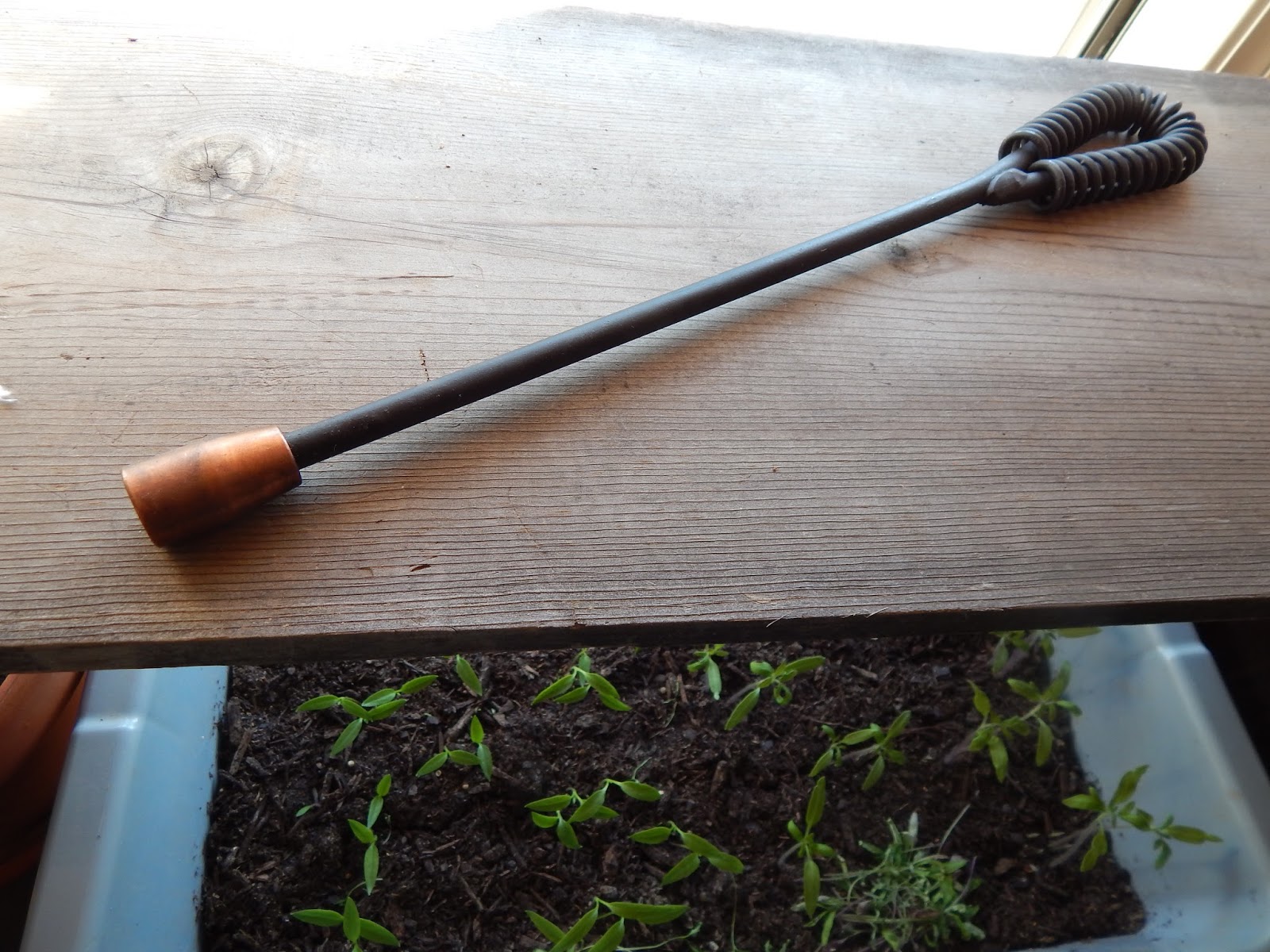
We also have a burning iron that we will be able to use when there is no electricity. You heat it up in a fire until it glows, then it's ready. I was looking around at some blogs the other day and ran across a post at The Riddle Family Farm titled Dehorning Goat Kids, Old West Style using this type of iron. It was the first time I had seen someone use it and describe how it is done. It's very informative and interesting, so go take a look.
As soon as the vet was finished, I took the babies back to the barn, put salve on their horns and turned them loose. They usually nurse and get some reassurance from mom, then take a nap. After that, it's like nothing happened. They are up running and jumping, just like they do everyday. After a few weeks, the scabs will come off, the hair will grow back, and you will never be able to tell they had their horns removed......except for the fact that they don't have any.
There are many things that have to be done in life that are distasteful and unpleasant. That is when you have to dig down and pull up a big handful of gumption and get with it anyway. If you don't, who will? It's your job, so get with it. Go do whatever it is you have on your plate that needs doin' that you haven't done yet. Time's a wastin'.
Until next time - Fern
Anyway, back to the baby goats' horns. This year we had the vet come out and burn the horn buds on all six of our babies. Velvet's boys were three weeks old and their horn buds were getting pretty big, but the vet's burning iron had a deeper depression in the tip than ours does, so he said it should take care of the three week old buds. We are very grateful we still have the services of the vet to call upon.
You know, burning baby goats horns is one of the most disgusting things we ever do. It's one thing to kill an animal and butcher it. We make sure they have a quick, clean, merciful death. But to take these cute little baby goats and burn their heads, listen to them holler and smell the burning hair is awful. I won't pretend
| Our electric iron |
We took the first baby goats we had after we moved here to a vet to have them disbudded. When we got home, the mother refused to take them back. She wouldn't let them nurse unless I clipped her collar up to the fence. The babies would cry and she would answer them, but even if they were standing right beside her, it's like they didn't exist anymore. So this time, we had the vet come to us. We don't have electricity in the barn, so we loaded the babies up in a large pet carrier and drove them down to the garage where the vet had plugged in his burning iron to heat. His assistant held the babies on the ground and held the ears back out of the way, while the vet held the goat's nose to prevent as much wiggling and struggling as possible. Our youngest babies were ten days old, so the vet held the burning iron on for ten seconds on each horn. It always seems much longer to me.
We also have a burning iron that we will be able to use when there is no electricity. You heat it up in a fire until it glows, then it's ready. I was looking around at some blogs the other day and ran across a post at The Riddle Family Farm titled Dehorning Goat Kids, Old West Style using this type of iron. It was the first time I had seen someone use it and describe how it is done. It's very informative and interesting, so go take a look.
As soon as the vet was finished, I took the babies back to the barn, put salve on their horns and turned them loose. They usually nurse and get some reassurance from mom, then take a nap. After that, it's like nothing happened. They are up running and jumping, just like they do everyday. After a few weeks, the scabs will come off, the hair will grow back, and you will never be able to tell they had their horns removed......except for the fact that they don't have any.
There are many things that have to be done in life that are distasteful and unpleasant. That is when you have to dig down and pull up a big handful of gumption and get with it anyway. If you don't, who will? It's your job, so get with it. Go do whatever it is you have on your plate that needs doin' that you haven't done yet. Time's a wastin'.
Until next time - Fern
Thursday, October 10, 2013
Some Things About Raising Goats
Raising goats, just like anything, has taught us a lot over the years and I thought I would share a few things.
Despite the best laid plans, animals don't always accommodate our wishes. I showed my breeding calendar in a previous post and thought I would give you an update.
As you can see, One Stripe did finally breed this summer. I don't think it was so much her as it was Teddy, our buck, that delayed the breeding. We bred One Stripe in the summer to have December kids, although it may be January this year. We are trying to have year-round milk instead of drying all of the does off at once. Ivory, Velvet and Copper will be due in late February and early March. That will get us into the heavy milking season just when we are ready to start making cheese again.
We dried up Velvet in August because we had made most of the cheese we wanted and we just had too much milk to deal with.
One Stripe is currently drying off by herself. This is her typical pattern. About two to three months after she breeds, she begins to dry up so she can put her energy into her developing kids.
So right now, we are only milking Ivory. We have gone back to milking her twice a day to try to increase her production a little. We are getting about a quart and a half a day, but would like to get at least half a gallon a day. We like milk and Pearl usually gets about 3 cups a day for breakfast.
As the kids are born we will share how we disbud them. It is a nasty project, but we have tried raising the goats with horns and have decided it is much safer for them and us if they are dehorned or disbudded.
Disbudding doesn't always work. There have been times that we let the kids get a little too old and didn't get all of the horn bud killed off when we burned them off.
We use a disbudding iron. Sometimes only a little nub of a horn bud grows out and sometimes some odd looking horns grow.
Velvet and Copper both have little nubs. This is about as big as they get. Copper has even knocked hers off before.
Nubby's grew much more (his name comes from his horns). He is one of our wethers that is destined for the freezer.
This little guy's disbudding was successful, but he has parrot mouth. This is a birth defect resulting in the length of the jaws not being the same. His bottom jaw is shorter than the top one. The lips should meet evenly and smoothly together in the front. We had this happen to a doe born here a few years ago. I'm not sure what causes it, my reading indicates it may be a genetic anomaly. The animals don't seem to have any difficulty eating or anything, but it is not a defect we want to pass on in our herd or anyone else's, so this is also a wether that is destined for the freezer.
And then there is Teddy. He is a nice looking, big buck that we could use to add some size to our herd. We hope all of our does are bred and have healthy kids from his bloodline because he will not be staying here much longer.
We bought him last spring as a three year old. He is easy to handle when led by his collar or a leash and loads into a trailer with ease. So we were very impressed, initially. The first time we turned him in with the does he became aggressive toward Frank and
I by trying to bump and kind of herd us, so we started carrying a baseball bat when we were out among the animals. That worked for us. But then he started being aggressive with Pearl, our Great Pyrenees. It was bad enough when he started rearing up like he was going to butt heads with her, but then he started ramming her against the fence or gates. That was the last straw. He is not worth injuring us or losing Pearl. She is an excellent livestock guardian. While Frank was taking pictures of the wethers over the gate, Teddy was pushing against the gate with his head over and over trying to get it to open. So, as soon as we are sure the does are bred, he will be going to the sale barn. Then we can get the wethers in the freezer and be down to four does for a few weeks until the kids start arriving.
The seasons bring changes in everything - the garden, the goats and the chores we do around the farm. Everything in it's season. The season of our country is also changing. It appears that autumn is coming quickly and the winter that follows may be cold, dark and harsh. Be ready.
Until next time - Fern
Despite the best laid plans, animals don't always accommodate our wishes. I showed my breeding calendar in a previous post and thought I would give you an update.
As you can see, One Stripe did finally breed this summer. I don't think it was so much her as it was Teddy, our buck, that delayed the breeding. We bred One Stripe in the summer to have December kids, although it may be January this year. We are trying to have year-round milk instead of drying all of the does off at once. Ivory, Velvet and Copper will be due in late February and early March. That will get us into the heavy milking season just when we are ready to start making cheese again.
We dried up Velvet in August because we had made most of the cheese we wanted and we just had too much milk to deal with.
One Stripe is currently drying off by herself. This is her typical pattern. About two to three months after she breeds, she begins to dry up so she can put her energy into her developing kids.
So right now, we are only milking Ivory. We have gone back to milking her twice a day to try to increase her production a little. We are getting about a quart and a half a day, but would like to get at least half a gallon a day. We like milk and Pearl usually gets about 3 cups a day for breakfast.
| Red was born here, but has since been sold. |
As the kids are born we will share how we disbud them. It is a nasty project, but we have tried raising the goats with horns and have decided it is much safer for them and us if they are dehorned or disbudded.
Disbudding doesn't always work. There have been times that we let the kids get a little too old and didn't get all of the horn bud killed off when we burned them off.
We use a disbudding iron. Sometimes only a little nub of a horn bud grows out and sometimes some odd looking horns grow.
Velvet and Copper both have little nubs. This is about as big as they get. Copper has even knocked hers off before.
| Nubby is the red goat in the center. |
Nubby's grew much more (his name comes from his horns). He is one of our wethers that is destined for the freezer.
This little guy's disbudding was successful, but he has parrot mouth. This is a birth defect resulting in the length of the jaws not being the same. His bottom jaw is shorter than the top one. The lips should meet evenly and smoothly together in the front. We had this happen to a doe born here a few years ago. I'm not sure what causes it, my reading indicates it may be a genetic anomaly. The animals don't seem to have any difficulty eating or anything, but it is not a defect we want to pass on in our herd or anyone else's, so this is also a wether that is destined for the freezer.
And then there is Teddy. He is a nice looking, big buck that we could use to add some size to our herd. We hope all of our does are bred and have healthy kids from his bloodline because he will not be staying here much longer.
We bought him last spring as a three year old. He is easy to handle when led by his collar or a leash and loads into a trailer with ease. So we were very impressed, initially. The first time we turned him in with the does he became aggressive toward Frank and
I by trying to bump and kind of herd us, so we started carrying a baseball bat when we were out among the animals. That worked for us. But then he started being aggressive with Pearl, our Great Pyrenees. It was bad enough when he started rearing up like he was going to butt heads with her, but then he started ramming her against the fence or gates. That was the last straw. He is not worth injuring us or losing Pearl. She is an excellent livestock guardian. While Frank was taking pictures of the wethers over the gate, Teddy was pushing against the gate with his head over and over trying to get it to open. So, as soon as we are sure the does are bred, he will be going to the sale barn. Then we can get the wethers in the freezer and be down to four does for a few weeks until the kids start arriving.
The seasons bring changes in everything - the garden, the goats and the chores we do around the farm. Everything in it's season. The season of our country is also changing. It appears that autumn is coming quickly and the winter that follows may be cold, dark and harsh. Be ready.
Until next time - Fern
Labels:
breeding,
disbudding,
goats,
parrot mouth,
Pearl,
wether
Subscribe to:
Posts (Atom)