Hello Everybody, Frank here.
I thought I would introduce you to another form of communication, but first I'm going to back track a little. A couple of articles back I gave you FCC regulations. It is your responsibility to know them, or at least pretend like you do. There are rules, there are regulations, and there are laws. For this boys and girls, you are responsible. People violate the law everyday, that does not make it RIGHT. I have a tendency to drive a little to fast in my vehicle sometimes. Am I violating the law? Yes. It is my choice.
Moving on. We also talked about CB radios, a great means of communication. Today, we're going to primarily discuss GMRS. It is a great way to communicate also. It is FM instead of AM, just like your car radio, FM has a clearer signal and less static than AM. There are reasons why, which at this particular time you don't need to know, but it will be covered later on, just not today. GMRS frequencies will not bounce off of the ionosphere like CB frequencies will on occasion. They are line of sight communication, LOC, similar in nature to CB, with some slightly different properties. The re-posted article below has lots of information talking about GMRS, FRS and MURS.

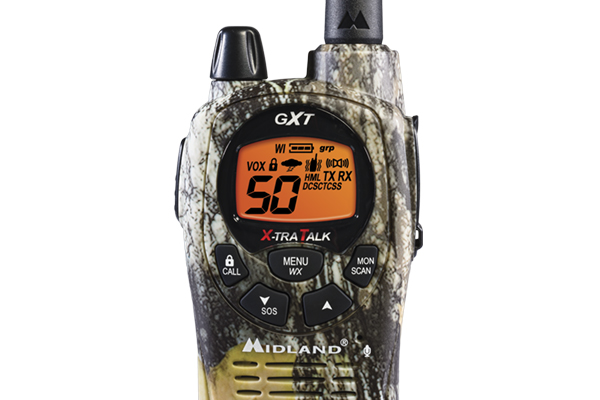
They have come out with a new radio since this original article was published. Other companies may manufacture this new radio, but the only one I have seen is made by Midland. Yes, it is legal. It has more power, a detachable antenna and I can see where lots of people would like this particular radio. I have included a picture here and the manufacturers website. Check it out. You can use this radio as either a mobile or a base station. You can put a mag mount antenna on your vehicle, or at your base station you can put an external antenna way up in the air. The higher your antenna, the greater your line of sight communication.
A controversial statement here. Could you use a commercial radio, either handheld, mobile or base station and communicate with these same GMRS frequencies? Absolutely. Can you use a modified ham radio transmitter? The answer again is yes. The difference is the Midland radio is legal, the modified ham radio and commercial radio are not legal to transmit on the GMRS frequencies. You will hear this often from me. Is it illegal to drive 36MPH in a 35MPH zone? Yes. Is it illegal to drive 96MPH in a 35MPH zone? Yes it is. Which one will get you the most attention? 36 or 96? The answer is obvious.
You will still need the license to operate the GMRS radio mentioned above. It is not a ham radio license. If you have a ham radio license can you use the illegal radios mentioned above to operate on GMRS? You can, but it's still illegal. I will talk more about commercial radios and modifying ham radios in the future, but today, we're going to talk about GMRS. I would check out that new Midland radio mentioned above.
Now, below is a re-posted article with a handful of comments added to it. If you're interested in learning more details about GMRS, please continue reading. As usual I would encourage you to get your ham radio license. It is by no means 100% necessary, but it will vastly increase your communication options.
If you have questions, ask. If you have comments, state them. Remember, this is fun. Go in the bathroom and look in the mirror and have a good laugh. Life is too short to be stuffy. There are enough serious things in the world. Have fun and communicate. Communication might save your life.
We'll talk more later, Frank
Originally published October 11, 2014
Radio - GMRS, FRS & MURS
Hi Everybody, Frank here.
We're
going to do a re-post today about non-ham radios. I know some
survivalist say that everybody needs to get their ham radio license, but
in the real world, that's just not going to happen. I received a
comment on the blog this last week or so, and I want to share it with
you. This man and I have shared a couple of comments back and forth,
dealing with the properties of 2-way radio communications. If you want
to get your ham radio license, great. But, if you want to communicate
with your cousin Billy Bob down the road, then there are other ways
besides ham radio.
The
GMRS radios, made by a number of manufacturers, will all communicate
with each other. Don't believe the advertisements about 36 miles or 24
miles. These are line of sight communication radios, but they work great
for their intended purpose.
~~~~~~~~~~~~~~~~~~~~~~~~~~~~~~~~~~~~~~~~~~~~~~~~~~~~~~~~
Frank- first off, thanks so much for the time you and Fern put in to
sharing good information and just real life results of learning
homesteading skills.
My question is on repeaters. Our home is
partially earth sheltered, with most of the main floor cut in to the
hillside. And of course, the garden, barn, and workshop where I am most
likely to be when my wife and I might want to communicate, is uphill,
the barn with metal walls. So, I am thinking I may well need a repeater
to make things work, but am very early in my research. If I were to get
the Baofeng/Pofung radios in this post, or something similar, what type
of repeater would I need, and are they very expensive? I would most
likely buy the radios first, to see if I even need the repeater, but
would like to know now what the hit might be if one is needed.
Are
there different repeaters for different bandwidths, or are there some
repeaters with features that might be of benefit if I decide to move on
to ham or CB?
Thanks again for your efforts.
~~~~~~~~~~~~~~~~~~~~~~~~~~~~~~~~~~~~~~~~~~~~~~~~~~~~~~~~
Hello. Great questions, and I can see some thought has gone into the issue.
Number
one. I would borrow a couple of GMRS radios and see if they will work
from your house to your barn. This would be, beyond a doubt the cheapest
way to go. An example. Our barn is metal, our house has a metal roof,
the barn is about 500 feet from the house, and from inside the house, to
inside the barn, we have absolutely no problems with intelligibility,
or volume. There is a small rise between the house and the barn. I can
see the upper half of the barn from the house.
Following this
same theme, the corner of our property, from corner to corner is about
1500 feet. There is no line of sight, and that is due to a hill in
between, not a big hill, but still, no line of sight. With this scenario
the transmission has a little bit of noise, but is still intelligible.
Number
two. If for some reason, number one does not work for you, an external
antenna might be your answer. That means your radio will have to be
connected to the antenna, which certainly limits your mobile factor.
But, if you do use this type scenario with an external antenna,
depending on your setup, you can talk for miles. If I were guessing, I
would guess that number one will be your best answer.
Number
three. A repeater. A true repeater can get expensive and complicated. It
has to have a constant power supply. Now, there are ham radios and
commercial radios that function as cross band repeaters. I have never
attempted this technique. What cross band means is you have a two band
transceiver, one channel is set on VHF, the other channel is set on UHF,
and through internal programming, it will broadcast and receive on each
of these frequencies. Again, I have never used this technique, but they
advertise that it will work. You're looking at $350.00 for this
dedicated radio, a power supply, an antenna, but according to the manual
it will work.
I would either borrow or buy two real cheap GMRS
radios, everybody has them. They may not know they have them, but the
things their kids play with, that's what they are. An external antenna
for your home is easy to make, and will extend your transmit/receive
range sharply. In some of the other radio posts I talk about external
antennas. Of course, I would like for you to read all of the posts. Try
the two handhelds first. If you decide on the $40.00 radios, great. You
will need a programming cable, unless you want to do it the old
fashioned way by keypad entry, which can be done. I use the RT system
and it works for me.
One last thing to consider. No matter what
frequency you use, somebody can hear you. Hope this helps. Enjoyed your
blog, by the way. Take care.
Frank
~~~~~~~~~~~~~~~~~~~~~~~~~~~~~~~~~~~~~~~~~~~~~~~~~~~~~~~~
Frank- I went ahead and got the Midland GXT 1050 radios you mention in
the post on GMRS/FRS/MURS. Tried it out in the barn, other places, and
excellent reception all around. I might even take one up in the tree
stand this November and wear the ear piece.
Any comments on
maximizing the NiMH battery life? For now, I plan to keep them in the
recharge cradles unless we are using them, which may not be a lot till
we develop the habit more.
As you and Fern say many times, until
you have actually DONE something, you have no idea how it will really go
down. In this case, it worked out fine, but we have many other tasks in
front of us as we work to improve our self sufficiency. Thanks again
for the time you two put in to sharing. After a couple more seasons on
our small farm, maybe I will be able to share with the wider world what
we have learned as well.
~~~~~~~~~~~~~~~~~~~~~~~~~~~~~~~~~~~~~~~~~~~~~~~~~~~~~~~~
Hi. I'm glad that these
worked for you. As far as maximizing the battery life. One, I would use
the radios everyday, then they become part of your routine. It's kind of
like putting your keys in your pocket, if you get in the habit, you
will always take it with you.
Let the batteries drain before
recharging. I know that this type of battery advertises it does not
develop a memory, but it does. If you keep them fully charged all the
time, then you will have much less battery life. If you're using the
internal battery pack that came with the radio, you can remove it and
put four AA rechargeable batteries in it that will charge in the cradle,
and sharply extend the transmit and receive time. If you're going to be
out all day, like sitting in a tree stand, charge the battery that came
with the radio, take it out, put it in your pack and keep it as a back
up.
My best advice is to not keep the radio in the charger all
the time. For a long time I would always charge the radios on a Friday
night. Then I would have well charged batteries that would last me a
week.
Make sure you wear the ear piece when you are hunting.
Because I, on more than one occasion, have listened to hunters chat
between each other whispering. There is always some clown who will make a
loud noise in the radio, like a duck or coyote call. Some people think
that's funny.
No joke, though, don't keep your radio in the
charger all the time. It will shorten your battery life tremendously.
Hope all this helps, and I'm glad the radios worked out well for you.
Frank
~~~~~~~~~~~~~~~~~~~~~~~~~~~~~~~~~~~~~~~~~~~~~~~~~~~~~~~~
Next,
I want to share with you an interesting and exciting comment I received
this week from an individual that has gotten their Technician ham radio
license. They purchased one of the $40.00 radios that I wrote about,
and seem to be very realistic about their goals for ham radio. You see
there is no magic secret to radio. For the most part, you turn the
on/off switch to on, you push the little transmit button and speak into
the microphone. Whether ham radio or GMRS, you can still communicate
when you need to. And while you're doing your research, don't forget to
check out the CB radio. Because with the right CB radio, not only can
you communicate with Billy Bob down the road, but when the ionosphere is
in the right position, you can also listen and talk around the globe.
Do your research. Enjoy the read from the person that got their
Technician license, and if you would like, please read the re-post about
GMRS, FRS & MURS.
~~~~~~~~~~~~~~~~~~~~~~~~~~~~~~~~~~~~~~~~~~~~~~~~~~~~~~~~
Thanks so much for this review [this comment was on the post about manual grain grinders], I really needed an item like this. I
also recently got my Technician ticket thanks to all of Frank's
writings. I appreciate your blog!
~~~~~~~~~~~~~~~~~~~~~~~~~~~~~~~~~~~~~~~~~~~~~~~~~~~~~~~~
You're welcome for the review of the grinder, but please do your own research.
That
being said, Congratulations! on your Technician ticket. I genuinely
hope you enjoy the hobby, if you choose to use it as a hobby. As you are
aware now, there is a whole world open to ham radio. And you are aware
that I use it for survival purposes.
I would highly recommend
that you go ahead and pursue your General license. Same number of
questions, one more formula, and about the same level of difficulty. The
General will open up the rest of ham radio to you. There isn't anything
you can't do with the General, just a few places you can't go that the
Extra will allow you.
Very few people ever comment on the radio
posts, but on occasion I get a comment like yours, stating that an
individual had received their Technician and sometimes also their
General. Your comment is why I do this. Thank you again. Best of luck.
73s, Frank
~~~~~~~~~~~~~~~~~~~~~~~~~~~~~~~~~~~~~~~~~~~~~~~~~~~~~~~
Frank, I do plan on getting my general. I am a mechanical engineer so
the formulas and schematics aren't hard, it is the stuff you just have
to memorize that slows me down. I wanted to get my tech before the pool
questions changed. I joined the local ham club and the emergency comm
group, which is a great way to learn. To me, having a tech is like a
learners permit - I can legally practice and learn the culture and then
get my general. 73
~~~~~~~~~~~~~~~~~~~~~~~~~~~~~~~~~~~~~~~~~~~~~~~~~~~~~~~
Fern was kind enough to indulge
me when I was working to get my Technician and General. She also picked
up her Technician and General. We use radios in our life everyday, and
not always ham radio. Fern didn't have the interest in getting her
license like I did, so she just memorized all of the answers. We took
our Technician's and she did better on the test than I did. She missed
one, I missed three. The funny part is, when we took our General test, I
was surprised that the guys doing the testing remembered us. When I
went up to get mine scored, the older gentleman said, "You missed one."
Then kind of laughed and said, "And your wife still did better than you
did!" I had a buddy that took his Technician and General on the same
day, and he just memorized the answers. I, on the other hand, can't do
that. Yes, there are a couple of them that I would never learn. So I
found some cute little pattern to try to associate the numbers. But, I
have to be able to see how things work in my head. So, that's our story.
I
think you have a real good plan, and I really hope that you enjoy it.
If you're going to do emergency comm work, check out the CA 2x4 SR. This
antenna works outside of the ham bands and does a real good job. And if
your area is like most, emergency comms fall in the lower 150's. And
there is a ground plane kit for a stationary mount, a Tram 1460.
Take care and keep me up to date.
73s, Frank
~~~~~~~~~~~~~~~~~~~~~~~~~~~~~~~~~~~~~~~~~~~~~~~~~~~~~~~~
Frank, thanks for the recommendation. I will check them out. I am
really excited by this hobby. I can't wait to get a setup that works
for me. I have a baofeng HT and am researching what more I want. I
enjoy seeing your shack.
~~~~~~~~~~~~~~~~~~~~~~~~~~~~~~~~~~~~~~~~~~~~~~~~~~~~~~~~
Originally published July 5, 2013
Hello, Frank here.
Today
we're going to talk about Subpart A, Subpart B and Subpart J. Okay, do
you wonder if this guy has been out in the sun too long? Well, no
......... maybe. This is what we're going to talk about today.
Subpart
A is GMRS, General Mobile Radio Service. Subpart B is FRS, Family Radio
Service. Subpart J is MURS, Multi-Use Radio Service. All of this comes
from CFR, Code of Federal Regulations, Title 47, Telecommunications,
Part 95, Personal Radio Services.
This is a little review of where Federal Regulations come from. Subpart
A & B we are going to talk about together - that's GMRS and FRS.
 These little walkie-talkie type two way radios that guys use during
hunting season, and their kids play with out in the yard, are actually
GMRS/FRS radios. Okay, what's the difference?
GMRS
has 23 channels that operate between 462 - 467 MHz (megahertz). For
future reference, when we get into ham radios this is UHF (ultra high
frequency) and the ham people call hand held radios HT's (handy talky).
But for our purposes, we will call them two way radios.
FRS
shares GMRS channels one through seven. Channels eight through fourteen
are only FRS. Channels fifteen through twenty-three are only GMRS. FRS
has a maximum output of 500 milliwatts, or 1/2 watt. GMRS has an output
of up to 5 watts.
Now
here is the big difference. To operate on GMRS you are required to have
an FCC license. Not a ham license, but an FCC license. For FRS there is
no license required. So, channels 8 - 14 do not require a license.
Channels 1 - 7 do not require a license if you operate on low power. Do
most people have a license that operate on GMRS? Do most people drive 56
MPH in a 55 MPH zone? I have never met a person that actually has a
GMRS FCC license. But if you do apply for one and receive it, then
legally anyone in your family or circle of friends at your house can use
your radios.
So much for legal. From here on out, I am just going to refer to these radios as GMRS.
Cobra,
Midland, Uniden and others all make two-way radios. All make claims of
transmitting 10 miles, 20 miles or 36 miles, but remember this is under
perfect conditions. An example: mountain top to mountain top, you can do
much farther than 36 miles away. So, take 36 miles distance with a
grain of salt. These are line of sight communication devices. If they
are putting out four or five watts, the one that advertises 10 miles
will go as far as the one advertising 36 miles. What's the difference?
Features. Some have duck calls and coyote calls. Some have weather
ability. Some have clocks. But if you want a basic radio and you don't
care about duck calls, then just about any of these radios will meet
your needs.
Most
of these two-way radios have rechargeable batteries that can be
recharged from the provided cradle and AC and DC power connections.
Surprisingly, not all radios come with a charging system. Some only
operate off of AA batteries. I would avoid these. Most of the radios
come with a battery packet insert that can be easily removed and
replaced with AA or AAA batteries, or
These little walkie-talkie type two way radios that guys use during
hunting season, and their kids play with out in the yard, are actually
GMRS/FRS radios. Okay, what's the difference?
GMRS
has 23 channels that operate between 462 - 467 MHz (megahertz). For
future reference, when we get into ham radios this is UHF (ultra high
frequency) and the ham people call hand held radios HT's (handy talky).
But for our purposes, we will call them two way radios.
FRS
shares GMRS channels one through seven. Channels eight through fourteen
are only FRS. Channels fifteen through twenty-three are only GMRS. FRS
has a maximum output of 500 milliwatts, or 1/2 watt. GMRS has an output
of up to 5 watts.
Now
here is the big difference. To operate on GMRS you are required to have
an FCC license. Not a ham license, but an FCC license. For FRS there is
no license required. So, channels 8 - 14 do not require a license.
Channels 1 - 7 do not require a license if you operate on low power. Do
most people have a license that operate on GMRS? Do most people drive 56
MPH in a 55 MPH zone? I have never met a person that actually has a
GMRS FCC license. But if you do apply for one and receive it, then
legally anyone in your family or circle of friends at your house can use
your radios.
So much for legal. From here on out, I am just going to refer to these radios as GMRS.
Cobra,
Midland, Uniden and others all make two-way radios. All make claims of
transmitting 10 miles, 20 miles or 36 miles, but remember this is under
perfect conditions. An example: mountain top to mountain top, you can do
much farther than 36 miles away. So, take 36 miles distance with a
grain of salt. These are line of sight communication devices. If they
are putting out four or five watts, the one that advertises 10 miles
will go as far as the one advertising 36 miles. What's the difference?
Features. Some have duck calls and coyote calls. Some have weather
ability. Some have clocks. But if you want a basic radio and you don't
care about duck calls, then just about any of these radios will meet
your needs.
Most
of these two-way radios have rechargeable batteries that can be
recharged from the provided cradle and AC and DC power connections.
Surprisingly, not all radios come with a charging system. Some only
operate off of AA batteries. I would avoid these. Most of the radios
come with a battery packet insert that can be easily removed and
replaced with AA or AAA batteries, or  rechargeable
batteries. Some will recharge rechargeable batteries while they are in
the charging cradle, but most won't. Here's my point. If you buy a
certain type of radio, you can put rechargeable batteries in it, and you can recharge them in the cradle
that came with the radio. Rechargeable batteries will last much longer
than the battery packet that came with the radio. Some manufacturers
make radios that look almost identical and some will recharge
rechargeable batteries in the cradle, but most will not. I learned this
from simple trial and error. It's a lot more handy to come in at
the end of the day, take off the radio, put it in the recharging cradle
and the next morning you are ready to go. Or you can take off the radio,
take the back off of the radio, take the batteries out, recharge the
batteries, then put the batteries back in the radio and replace the
cover. It's your choice.
I'm
going to make a recommendation here. I use a Midland GXT 1050. The GXT
1000 is the exact same radio, one is black, one is camo and the black
one costs about $10 - $20 less. When you buy this package, it comes with two radios,
two battery packets, a charging
cradle, AC and DC power supplies, and two earphone/microphone type
headsets. I have never used the earphone/microphone accessory. I use a
12 volt system to charge all of my radios, which means that you can
charge your radios in your car if you have the charging cradle with you.
The reason I recommend this radio is you can remove the battery pack
and insert four rechargeable AA batteries and they will charge in the
charging cradle. They are advertised up to 36 miles if you live on top
of a mountain. Just kidding. I have used this particular radio for a
number of years. I have also bought some of the other Midland radios
that look identical, but will not charge the rechargeable batteries
while inside the radio. Prices vary greatly from dealer to dealer, some
folks are a lot more proud of their stuff than others.
Now
I am going to switch over to MURS, Mult-Use Radio Service, for a
minute. MURS operates from 151 - 154 MHz, which is in the VHF (very high
frequency) range. MURS is also line-of-sight communication. Maximum output power is 2 watts. It
does not require a license to operate. There are five channels. In the
rural areas few to none use the MURS frequencies. I'm sure over time
things will change, but things change slowly in rural areas. I became
aware of MURS about five years ago when reading one of James Wesley,
Rawles books. He is the author of SurvivalBlog.com.
There is not much traffic on channels one through three. Channels 4 and
5 are old business channels, so around some larger cities there are
businesses that still use these channels because they have not been
phased out yet.
I
do not know of any manufacturers that produce an exclusive MURS radio.
Most guys that use the MURS frequencies use a commercial radio. I will
give you more information about MURS and how to operate on the five
channels in the next post. Most of the people that operate on MURS
frequencies use modified ham radios or commercial radios. Both of these
techniques are questionable. Remember, driving 56 MPH in a 55 MPH zone
is illegal. But if you are not bothering anyone else, then you will not
attract attention. As always, it's your choice.
If you would like to start looking at hand held commercial radios, try this site.
Some of their radios are strictly ham radios and some are commercial.
It is legal to operate a commercial radio on ham frequencies if you are a
licensed ham, but it is not legal to operate a ham radio on anything
but ham frequencies. While at this site, check out their power pole connectors.
They have tons of information and easy to understand diagrams and
pictures. I have bought from these people and in the future I will buy
from them again.
Next
time I'll talk more about commercial radios and modified ham radios.
This will introduce us into the first part of the ham radio series.
We'll talk more later. 73, Frank
rechargeable
batteries. Some will recharge rechargeable batteries while they are in
the charging cradle, but most won't. Here's my point. If you buy a
certain type of radio, you can put rechargeable batteries in it, and you can recharge them in the cradle
that came with the radio. Rechargeable batteries will last much longer
than the battery packet that came with the radio. Some manufacturers
make radios that look almost identical and some will recharge
rechargeable batteries in the cradle, but most will not. I learned this
from simple trial and error. It's a lot more handy to come in at
the end of the day, take off the radio, put it in the recharging cradle
and the next morning you are ready to go. Or you can take off the radio,
take the back off of the radio, take the batteries out, recharge the
batteries, then put the batteries back in the radio and replace the
cover. It's your choice.
I'm
going to make a recommendation here. I use a Midland GXT 1050. The GXT
1000 is the exact same radio, one is black, one is camo and the black
one costs about $10 - $20 less. When you buy this package, it comes with two radios,
two battery packets, a charging
cradle, AC and DC power supplies, and two earphone/microphone type
headsets. I have never used the earphone/microphone accessory. I use a
12 volt system to charge all of my radios, which means that you can
charge your radios in your car if you have the charging cradle with you.
The reason I recommend this radio is you can remove the battery pack
and insert four rechargeable AA batteries and they will charge in the
charging cradle. They are advertised up to 36 miles if you live on top
of a mountain. Just kidding. I have used this particular radio for a
number of years. I have also bought some of the other Midland radios
that look identical, but will not charge the rechargeable batteries
while inside the radio. Prices vary greatly from dealer to dealer, some
folks are a lot more proud of their stuff than others.
Now
I am going to switch over to MURS, Mult-Use Radio Service, for a
minute. MURS operates from 151 - 154 MHz, which is in the VHF (very high
frequency) range. MURS is also line-of-sight communication. Maximum output power is 2 watts. It
does not require a license to operate. There are five channels. In the
rural areas few to none use the MURS frequencies. I'm sure over time
things will change, but things change slowly in rural areas. I became
aware of MURS about five years ago when reading one of James Wesley,
Rawles books. He is the author of SurvivalBlog.com.
There is not much traffic on channels one through three. Channels 4 and
5 are old business channels, so around some larger cities there are
businesses that still use these channels because they have not been
phased out yet.
I
do not know of any manufacturers that produce an exclusive MURS radio.
Most guys that use the MURS frequencies use a commercial radio. I will
give you more information about MURS and how to operate on the five
channels in the next post. Most of the people that operate on MURS
frequencies use modified ham radios or commercial radios. Both of these
techniques are questionable. Remember, driving 56 MPH in a 55 MPH zone
is illegal. But if you are not bothering anyone else, then you will not
attract attention. As always, it's your choice.
If you would like to start looking at hand held commercial radios, try this site.
Some of their radios are strictly ham radios and some are commercial.
It is legal to operate a commercial radio on ham frequencies if you are a
licensed ham, but it is not legal to operate a ham radio on anything
but ham frequencies. While at this site, check out their power pole connectors.
They have tons of information and easy to understand diagrams and
pictures. I have bought from these people and in the future I will buy
from them again.
Next
time I'll talk more about commercial radios and modified ham radios.
This will introduce us into the first part of the ham radio series.
We'll talk more later. 73, Frank
Hello Everybody, Frank here.
Before we get into how radios operate, or sometimes don't operate, we need to understand where our government stands on rules and regulations. At this point right here, right now, it doesn't make any difference what you think or feel about the government. I wrote a piece recently about the government is the enemy, and I still feel that way, but they are the government, they have the big stick and we are slaves to their dictates. So let's try not to upset them any more than necessary.
Here are the basic rules governing the type of radio communication that we are interested in participating in. To be fair, there are reasons we have rules. They are not just there to punish us and limit our activities and freedom, and they're not always the product of some tyrannical government. Many rules involve safety. You don't want to fry your little girl's brain by being stupid. You don't want to burn your house down. You don't want to interfere with other frequencies and maybe cause a plane to fall from the sky, or a pipeline valve to open at the wrong time. So, there are rules and they do have a reason for being there.
DON'T BE STUPID. Don't try to prove to your buddies that you are the most stupid in the group. Radio can be fun, entertaining, it is a tool, you can use it for business, emergencies, it's a great hobby. You will hear me say frequently, DON'T BE STUPID. If you are offended by that, get over it. We all do stupid things.
If some of the information I put out is wrong, please let me know. That is not my intent. Let's get started.
Below is a link to Title 47, Chapter 1, Subchapter D. This link will take you to the rules that you and I need to follow. Open up this link and we're going to take a look at it.
Ok. Follow me here. Look down the list and you will see Part 90 and Part 95 and Part 97. This is where we will spend our time. You will notice Part 96 says Citizens Broadband Radio Service - this is a different frequency range than CB radios. The CB radios that we will be talking about are under Part 95.
A brief overview to start with. Part 90, or sometimes called commercial radio. That little Baofeng that you have in your hand? Take out the battery, look inside the radio, and it will probably say Part 90 certified. This applies to police departments, fire departments, ambulances, a lot of public service activities and private business. Can you listen to these frequencies? Absolutely. Can you transmit on these frequencies? Sometimes. If you are with, or affiliated with, an agency that gives you the authority to transmit on these bands or frequencies, then yes, you can transmit.
Example. You are with a volunteer fire department. Your Baofeng radio, if programmed correctly, will transmit on these frequencies. If the authorizing entity gives you permission to use this radio on a specific frequency, then yes, you can use it to transmit.
Can you use it to transmit on unauthorized frequencies? Absolutely. This is a case in point where you are trying to prove how STUPID you are. Do not mess with an ambulance call, running hot, to a crash scene just to cause confusion. Let me reiterate here. THIS IS STUPID.
By the way, if you are authorized to use your handheld on any of the above mentioned bands, and your kid gets a hold of it and decides to go play with it, remember, you are the adult, they are the kid.
Moving on. Part 95. This is the general concern for the vast majority of people. So click on that 95 from the link you opened above. You will see Subpart A, which is General Rules for Personal Radio Service. Scroll down a little farther, Subpart B, Family Radio Service, FRS.
Skip Subpart C, unless you're into remote control, which a lot of guys are.
Subpart D, CB Radio Service. You will notice it is called CBRS.
Subpart E, General Mobile Radio Service, GMRS.
GMRS and FRS are the frequencies preprogrammed into the handheld radios that you buy across the counter at sporting goods stores.
Skip Subparts F, G, H, I.
Subpart J, Multi Use Radio Service, MURS. MURS is a group of frequencies that you might want to consider along with GMRS, FRS and CB. Your Baofeng will transmit and receive on all of these frequencies except CB. To transmit on the CB frequencies, you will need a CB radio. Later on, we will cover stuff like VHF, UHF, HF, 2 meter, 11 meter, AM, FM, and SSB which are things you will eventually learn, but right now we're talking about rules.
Ok. Scroll back up to Subpart E, General Mobile Radio Service, GMRS. Look down the list just a couple of items and the third category down is licenses. Go down a little bit farther at 95.1761 and you will see GMRS transmitter certification. Your Baofeng radio is NOT certified to transmit on GMRS frequencies. Will it? Yes. Is it illegal? Listen very carefully here. Is it illegal? YES. Make no bones about it, you are using an unauthorized radio to transmit on an unauthorized frequency.
Ok. A parable here. Can you buy a car that will go 100MPH? Yes, you can. If the speed limit is 35MPH, and you are driving 36MPH, are you breaking the law? Yes. If you drive 96MPH in that same 35MPH speed zone, are you breaking the law? Yes. Which one will get you the most attention? 36 or 96? If you choose to use your commercial radio, your Baofeng, which is Part 90 certified, on the GMRS frequencies then you are violating the law. Do people do it everyday? Absolutely. Is it illegal? Yes. It is illegal to drive 36MPH in a 35MPH speed zone. It is also illegal to drive 96MPH in a 35MPH zone. Can you buy that car that will do 100MPH? Sure you can. Can you buy that radio that will transmit where you shouldn't be? Yes, you can.
Another example. If the power limit is 4 watts and you are using 5 watts, that is illegal. If the power limit is 4 watts and you are using 100 watts, that is also illegal. Which one will get you the most attention? Do people use these little radios everyday for unauthorized transmissions? Yes. Is it illegal? Yes. So is driving 36MPH in a 35MPH. CB radios are a perfect example. There are people that run power everyday on CB radios. I think the power limit for a CB is 4 watts AM. But some guys run 1000 watts and it's not uncommon at all for people to run 50 watts. Illegal? Yes. Common? Yes.
If your transmission interferes with someone else's activity. Example. Their television signal, telephone service, an intercom system between a baby's crib and a parent's room. Legal or illegal, you need to stop transmitting and make appropriate adjustments. Here is a case where using too much power, and this is not a joke, you can fry your little girl's brain. No joke.
Another topic. Amateur radio. On that same list you have there, it's Part 97. Amateur radio is a different ballgame. I will call it ham radio. If you get your ham radio license, this does not give you the authority or permission to transmit on any band or frequency that is not ham radio. Some ham radio operators are sadly delusional and believe that they can operate on unauthorized frequencies. This is not the case. As your learning curve increases, you will learn that CB frequencies come between two common ham frequencies. Can you use a ham radio to transmit on a CB frequency? Yes, you can. Is it illegal? Yes. Do not kid yourself that you get special privileges with a ham radio license.
One other sensitive topic. If you do choose to get your ham radio license, and you violate any of the above mentioned rules and regulations, you can lose your ham radio license FOREVER. Something to consider. Can you have a ham radio and a CB radio sitting right beside each other? Yes. Can they use the same power supply, coax and antenna? Yes.
Okay. For the brand new guys, a lot of information here today. I use my handheld, my mobile radios and my ham radios everyday. We use them on our little farm here and I use them to communicate 40-50 miles via use of a repeater. Everything that I do is legal. I have my ham radio license and I follow the rules. By the way, that little Baofeng radio is 100% legal on ham frequencies. That's what I use everyday.
Understand the rules. If you choose to go outside of the rules, that is your choice. If you go a little bit, or a whole lot, that's your choice. Let me finish on a negative note here. If you mess around on frequencies where you shouldn't be, let's say aircraft frequencies, and you think that your government is incompetent and stupid, then you will very quickly find out who is REALLY STUPID. These guys will track you down and shut you down, and rightly so. This is the same government that can send a missile thousands of miles and pinpoint a target to precise accuracy, whether it's launched from submarine, aircraft or ground based, monitored via satellite by a person sitting at a console in an air conditioned office. Never underestimate the power of the government. They are very good at what they do, and you do not want them breathing down your neck. DON'T BE STUPID.
Next time things will be on a more positive note, so let's start having fun.
We'll talk more later. 73, Frank
Hello Everybody, Frank here.
I recently received this comment under a non-radio article. I'm going to share the comment with you, I'll answer this man. He had some very good questions, valid points and is seeking information. The comment will be edited, by removing what part of the country he is from, otherwise it is mostly intact.
Following the answer to his comment, I have included an older article that is a beginning step for understanding radio. Some of the information in here is dated, in other words, out dated. I'll talk about that before you get to the article.
Hi Frank, Thanks for offering additional help! I'm interested, like
you, in "survival communications". Two primary areas of interest.
First, I'm reading about two-way radios like the Midland you referenced;
also looking at a Baofeng. Trying to decide if I want to get the
license, etc. I'd like to be able to communicate with wife, children,
and neighbors/church family around me. Neighbors are within a mile.
Wife/kids could be 30 [miles] if I'm at work (or on way home) and they are home. Second, I'd like to
get a good SW [shortwave] radio with SSB for listening. The new Baofeng I'm looking at has variable power, up
to 8 watts. Not sure if one can charge batteries while in the unit
like you can with the Midland. Best Regards, Tim
Tim had some excellent points here. My very quick recommendation. A Baofeng. Why? It will do the same thing that the Midland radio will do, and significantly more. In many cases, for that matter, most cases, it costs less. The Baofeng can be charged in the cradle, it has a plethora of accessories, and you can attach an external antenna.
One negative for the Baofeng is that it has to be programmed. There are multiple ways to do this. There are YouTube videos, you can attempt to decipher the instructions, there is a free program called Chirp, and the system that I use is called RT Systems. Chirp and RT Systems are via computer. I will include more information in future articles about the Baofeng.
While we're here, in the article that follows, I recommended a Wouxun radio. It's a good radio, but the Baofeng is newer and, in my opinion, just as good and costs significantly less.
Tim's second question. A good shortwave radio. Few shortwave radios have SSB, single side band. Why is this important? If you want to listen to the ham radio operators, you will need SSB. If you've got the jingle, here's what I would do. Purchase an HF radio, which is a ham radio. You can listen to all the lower ham frequencies, plus all of the SW frequencies. It is a higher quality radio and has listening features that few SW radios have. You can also listen to CB on it, and if you ever get the desire to have your ham radio license, you can transmit on it. Remember, you can listen to any radio signal being transmitted. Transmitting is an entirely different ballgame.
So, Tim, I would recommend a Baofeng UV-5R+, about $30.00 on Amazon. An RT System for programming, about $45.00. The money you will save on the Baofengs will pay for the programming system.
For SW, an IC-718 made by ICOM. This radio runs new about $650, used $300 and up. Remember, it will do AM radio, CB, SW, all the lower ham bands which are 160-10M. For this radio you will need a power supply and an antenna which are both an extra expense. When you get your ham radio license, then you can use this radio to transmit on. The legal frequencies, anyway. Getting a ham radio license is very easy.
Ok, Tim, and everybody else. Next is an older, dated article that I think you will enjoy. It's a start. Every few days I'm going to include an older article about radio in an order that will help folks get started. There have been some changes and I will point these out. Safety has not changed and will never change.
If you have a question, ask. Others have the same questions. Utilize YouTube. Check out ARRL. Check out QRZ.com
We'll talk a whole lot more about this later. This is not difficult, it's just new. And there are some new radios out there, too. There's some new guns out there, too. Some are better, some are not. If you have a question, ask.
By the way, in this following article, there is a new weather radio I would recommend. I'll get to it later. Enjoy.
We'll talk more later. Frank Feral
Radio Communications Review
Originally published August 12, 2013
I'm going to try to summarize what we have talked about in the last ten posts.
The reason being, my next radio post is going to start into ham or
amateur radio. So, let's go back and talk about all of the stuff I have
covered so far. We have talked about the rules and regulations, and I will give you my recommendations on certain radios. Okay, let's go.
CB
radio is probably the most popular radio around and more people have
them than any other type. There are basically two types of CB radios -
non-single side band radios and single side band (SSB) radios. Remember,
CB radio is line-of-site
communications, most of the time. CB radio
operates at about 27 MHz. It will also bounce off of the ionosphere
similar to HF ham radios. In some circles the CB radio is called an 11
meter radio. Any CB radio will skip off of the atmosphere if the
conditions are right, but an SSB (single side band) will do a better job
of it and give you greater distance. So if you want to talk to your
cousin Leroy two blocks down the road, and there is not a hill in the
way, any CB radio will do the job. If you want to play and listen to
other folks much farther away, then SSB is the preferred method. I
recommend the Galaxy
line of CB radios with SSB. There are other manufacturers that make a
quality radio, I just think the Galaxy is more dependable and is
prettier. No one likes looking at an ugly radio.
We'll
talk about antennas, power supplies and coax cable later in this post.
Next, let's talk about GMRS/FRS radios. These radios are also very popular. The vast,
vast majority of them are handheld radios.
People use them a great deal for hunting, keeping track of the kids and
just play-type radios. These are also line-of-site communication.
These will not bounce off of the ionosphere so you are not going to be
hearing frequencies from around the world. These radios function at
about 465 MHz. Because of the higher frequency they will work better
from inside a building than your lower frequency radios. The big
difference between these radios, in my opinion, are the batteries or
power systems inside the radios.
While
we are writing this, there is a major electrical storm in our area. All
of my antennas have been disconnected and our computers are unplugged.
If I were a little bit smarter, I would also unplug my power supply.
In a previous post,
we talked about the difference between GMRS and FRS, they are basically
the same radio. These are excellent, high quality radios with a good
clear signal for line-of-site communications. Do not believe the
advertisements for 10, 20, 30 miles - this is a sales gimmick. Not all
of us live on a flat planet, if we
did, then the advertisements would
be correct. Remember, line-of-site. All GMRS radios will communicate
with other GMRS radios regardless of the manufacturer. All the channels
are the same frequencies. I recommend the Midland GXT1000VP4 or
GXT1050VP4. They are the same radio - one is camo and one is black. The
reason for this recommendation is that you can put four AA rechargeable
batteries in the radio and the batteries will recharge while in the
charging cradle. Some other Midland radios look identical, but they
charge slightly different and will not recharge rechargeable batteries
while in the charging cradle. I have used this radio for a number of
years on our little farm.
Okay.
We have reviewed CB and GMRS. There is one other type of radio
frequency and it is the MURS frequencies. MURS comes with five
frequencies operating at about 151 MHz. It is also line-of-site
communications and will work fine inside of most buildings. There is not
a major manufacturer that produces a MURS handheld radio, but you can
buy a commercial radio, which we will talk about in just a minute, to
use on the MURS frequencies. OK, CB, GMRS and MURS are the basic
frequencies for non-ham communications. All three have about the same
power output. CB and MURS do not require a license, GMRS does.
A slightly different type of radio is a commercial radio. These radios are not set for any particular frequency and they will not operate on the CB frequencies. But
they will operate on the GMRS, MURS and the VHF/UHF ham radio
frequencies. You have to program these radios yourself. Most of them
come with a programming cable and computer disc that you download. My
recommendation is the Wouxun handheld commercial radio. Many dealers sell them. I would recommend Universal Radio.
It is 100% legal to use these radios on the ham radio frequencies. It
is not legal to use these radios on MURS or GMRS. We will discuss
legalities and license requirements in just a minute.
Non-transmitting
radios. This is a group of radios that you listen to only. We're going
to talk about shortwave receivers, scanners, weather radios and there
are a few others, but for the most part this covers them. Let's start
with weather radios. Weather radios connect to a radio frequency provided
by the National Weather
Service. Most parts of the country receive
good, clear weather radio signals. Very few places don't. I would highly
recommend a weather radio with S.A.M.E.
This feature will narrow down severe weather signals to the county
level. If you live in an area that has the potential for tornadoes, I
would highly recommend one of these for your home. My recommendation is a
Midland WR300.
It can be powered from a wall outlet, any 12 volt source and has a
built in battery back up for when the power goes off, you can still
receive signals. As I mentioned in a previous post,
it is a little difficult to program. You can connect an external
antenna and a flashing red beacon for those that are hearing impaired.
Scanners
are another type of listen only radio. There are handheld, mobile and
base scanners. The big question right now is whether it is digital or
analog. Some communities are going to a digital signal similar to what TV
did nationwide a few
years back. This is not a national movement. This
is a local decision as to whether to go digital or stay analog. Many
communities are not going digital. You will need to check with your
local emergency management office. Some scanners are S.A.M.E. capable
for weather alerts. New scanners will not receive telephone
communications. Some will not receive the CB frequencies, but all will
receive police, weather, fire, GMRS, MURS and the VHF/UHF ham
frequencies. Some have external antenna capabilities. In some states it
is illegal to have a scanner in your vehicle. This is your
responsibility to find out the laws in your state.
I'm not going to talk much about marine band radios. Marine band
is a two way radio. If you have a boat, or you live near the coast of
the ocean or any large lake, or any navigable river then you can listen
to marine band signals which includes
.jpg) the Coast Guard. There
are commercial frequencies on the marine bands. There are about 88
channels on each marine band radio. They operate at approximately 157
MHz. The commercial radio I mentioned earlier will also broadcast on
these frequencies. Your scanner will also receive marine band
frequencies. A little side note - your scanner will also receive
railroad frequencies. If you choose to purchase a marine band radio and
you choose to transmit on a marine band radio, then know which
frequencies the government is using and do not use those frequencies.
the Coast Guard. There
are commercial frequencies on the marine bands. There are about 88
channels on each marine band radio. They operate at approximately 157
MHz. The commercial radio I mentioned earlier will also broadcast on
these frequencies. Your scanner will also receive marine band
frequencies. A little side note - your scanner will also receive
railroad frequencies. If you choose to purchase a marine band radio and
you choose to transmit on a marine band radio, then know which
frequencies the government is using and do not use those frequencies.

Shortwave receivers
receive the lower frequencies. 30 MHz down to about 1.8 MHz. These are
receive radios only. Shortwave and ham band frequencies are intertwined
everywhere between 30 and 1.8 MHz. Most shortwave broadcast signals are
AM (amplitude modulation) radio, as is your CB radio, which falls in
these frequencies. All ham radio frequencies are AM/SSB. So if you want
to listen to the ham frequencies, you will need a radio that receives
SSB. Most shortwave radios (SW) do not receive SSB. Some SW radios are
capable of external antennas. If you are considering going into ham
radio this would be the place to go ahead and buy an HF ham radio
transceiver, which will transmit and receive on the SSB ham frequencies
and also receive all of the AM shortwave
transmissions. Shortwave radios
can be as inexpensive
as $50 - $80 up to $10,000 and up. A beginner's HF ham radio that will
transmit and receive starts at around $700 and goes up. You do not have
to have a license to listen to any frequency on any radio. But to
transmit on the ham frequencies, you will need a ham radio license. We
are going to discuss ham radio in much greater detail starting with the
next radio post.
Ok. So much for radios. Power supplies.
If you have a handheld radio, it will probably be powered by batteries.
Some come with a built-in rechargeable battery. Some operate off of AA
or AAA batteries that you can
replace with
rechargeable batteries. If they will operate off of
rechargeable batteries, I would recommend you go this route. All mobile
radios, because of the nature of being mobile, will operate off of 12
VDC, which is actually 13.8 VDC. If you choose to use a mobile radio as a
base radio, then you will need a separate power supply. Most receive
radios use very, very little power. Just about any power supply will
work. If you use a mobile CB as a base station then you will need a
power supply that puts out 3 or 4 amps. If you're going to operate a ham
radio or more equipment off of your power supply then I would recommend
that you go ahead and pick up a 30 amp power supply. This will provide
you with enough power to operate your radios, receivers, battery
chargers, charge your cell phones and other similar items.
Antennas. Some radios will need an external antenna. If you are operating
in a vehicle, the only radio we have discussed that will need an external antenna, is a CB radio. Most people use a magnet mount antenna. If you decide to go into ham radio, then your
antennas will become more varied because different frequencies need
different antennas. There is no one antenna fits-all frequencies. For
your CB base station at home, you will also need an external antenna. Go
to the post where we talked about CB base station antennas.
Your handheld radios, like GMRS and MURS, will operate for the most
part off of their attached antennas. If you choose to attach an external
antenna to your scanner or weather radio, I would recommend a basic discone antenna.
It is built to receive these VHF frequencies. If you choose to connect
an external antenna to your shortwave receiver, then I would recommend a
long wire type antenna for this purpose. In the previous post about shortwave receivers, there is information about antennas. There may come a day when you need some coaxial cable. This is what connects
your antenna to your radio. You will also need a plug on
a magnet mount antenna. If you decide to go into ham radio, then your
antennas will become more varied because different frequencies need
different antennas. There is no one antenna fits-all frequencies. For
your CB base station at home, you will also need an external antenna. Go
to the post where we talked about CB base station antennas.
Your handheld radios, like GMRS and MURS, will operate for the most
part off of their attached antennas. If you choose to attach an external
antenna to your scanner or weather radio, I would recommend a basic discone antenna.
It is built to receive these VHF frequencies. If you choose to connect
an external antenna to your shortwave receiver, then I would recommend a
long wire type antenna for this purpose. In the previous post about shortwave receivers, there is information about antennas. There may come a day when you need some coaxial cable. This is what connects
your antenna to your radio. You will also need a plug on  each end of
this cable and in most cases, it will be a PL-259, or a BNC type
connector. For overall general purpose use, I would recommend RG-8X cable.
It is a good all purpose cable for low power, short distance runs of
under 25 feet. It also works well for your receive only radios.
Licensing.
There is no license required for any receive radio. If you choose to
become a ham radio operator, you will need a license. More on that in
the next radio post. CB and MURS do not require a license. GMRS does. As
I stated in a previous post, I have never met a person with a GMRS
license. Which brings us to legal regulations. If you operate any
transmit radio that interferes with any other type of telecommunications
signal, then you are required by law to either fix your problem or
cease transmitting. This is seldom, seldom a problem with legal power
transmitters. If you choose for example to increase your CB power from 4
watts to, let's say, 400 watts of power, and you cause the lady next
door's TV signal to be distorted, then you are running illegal power. If
your 400 watt CB radio does not bother anybody or anything, then your radio is still illegal, but for the
most part,
no one will care. If you decide to buy a commercial radio,
which you can, and you choose to operate it on a frequency, for example
the one the local airport is using, then you will find out very quickly
that being stupid does not pay. If you choose to use an unauthorized
frequency that interferes with the local fire department, again you will
find out that some people might not think this is cute. If you run 5000
watts of power, as an example, and you want to talk to your buddy down
the road and you don't bother grandma's TV signal and you don't
interfere with the local airport or fire department, then probably no
one will care. If you choose to operate or modify your radio, and it is
now considered illegal, this is your choice. Something I said earlier,
if you are driving 36 in a 35 MPH zone, probably no one will notice or
care. But....if you choose to drive 96 in a 35 MPH zone, then someone
will notice and care. Again, this is your choice.
Speaking
of 5000 watts. 5000 watts may be a tad bit of an exaggeration. But if
you choose to pump up whatever radio you are using and you do not know
what you are doing, you can fry your brain. No joke. No kidding. If you
don't know what you are doing with radio frequency, then DON'T DO IT.
Lot's of ham radio guys and non-ham radio guys run what is called, extra
power. It's not a question of legal or illegal, it's a question of, if
you don't know what you are doing, you can cause permanent damage to
your cute little girl's brain. So, one more time, if you don't know what
you are doing, DON'T DO IT. Safety comes first. Always.
Next
time, we're going to get into ham radio. You will find the frequencies
very similar to GMRS, FRS, CB and MURS because ham radio is not some
miracle, mysterious thing. It's just a group of frequencies or bands or
meters that we all share every day. I hope this has helped somebody,
somewhere along the way to understand radio communications just a little
bit better. Look through the previous radio posts. They are filled with
links, dealers, manufacturers, and regulations.
We'll talk more later. 73, Frank
each end of
this cable and in most cases, it will be a PL-259, or a BNC type
connector. For overall general purpose use, I would recommend RG-8X cable.
It is a good all purpose cable for low power, short distance runs of
under 25 feet. It also works well for your receive only radios.
Licensing.
There is no license required for any receive radio. If you choose to
become a ham radio operator, you will need a license. More on that in
the next radio post. CB and MURS do not require a license. GMRS does. As
I stated in a previous post, I have never met a person with a GMRS
license. Which brings us to legal regulations. If you operate any
transmit radio that interferes with any other type of telecommunications
signal, then you are required by law to either fix your problem or
cease transmitting. This is seldom, seldom a problem with legal power
transmitters. If you choose for example to increase your CB power from 4
watts to, let's say, 400 watts of power, and you cause the lady next
door's TV signal to be distorted, then you are running illegal power. If
your 400 watt CB radio does not bother anybody or anything, then your radio is still illegal, but for the
most part,
no one will care. If you decide to buy a commercial radio,
which you can, and you choose to operate it on a frequency, for example
the one the local airport is using, then you will find out very quickly
that being stupid does not pay. If you choose to use an unauthorized
frequency that interferes with the local fire department, again you will
find out that some people might not think this is cute. If you run 5000
watts of power, as an example, and you want to talk to your buddy down
the road and you don't bother grandma's TV signal and you don't
interfere with the local airport or fire department, then probably no
one will care. If you choose to operate or modify your radio, and it is
now considered illegal, this is your choice. Something I said earlier,
if you are driving 36 in a 35 MPH zone, probably no one will notice or
care. But....if you choose to drive 96 in a 35 MPH zone, then someone
will notice and care. Again, this is your choice.
Speaking
of 5000 watts. 5000 watts may be a tad bit of an exaggeration. But if
you choose to pump up whatever radio you are using and you do not know
what you are doing, you can fry your brain. No joke. No kidding. If you
don't know what you are doing with radio frequency, then DON'T DO IT.
Lot's of ham radio guys and non-ham radio guys run what is called, extra
power. It's not a question of legal or illegal, it's a question of, if
you don't know what you are doing, you can cause permanent damage to
your cute little girl's brain. So, one more time, if you don't know what
you are doing, DON'T DO IT. Safety comes first. Always.
Next
time, we're going to get into ham radio. You will find the frequencies
very similar to GMRS, FRS, CB and MURS because ham radio is not some
miracle, mysterious thing. It's just a group of frequencies or bands or
meters that we all share every day. I hope this has helped somebody,
somewhere along the way to understand radio communications just a little
bit better. Look through the previous radio posts. They are filled with
links, dealers, manufacturers, and regulations.
We'll talk more later. 73, Frank
Hello Everybody, Frank here.
If you recall back a few weeks, our little community started and completed a Survival Radio Class. This class included preparation for those seeking their ham radio license, which ended up being about nine Technicians and three Generals. Pretty good turn out. Also, for the record, all of the students that took the test, passed. In most circles that is considered to be 100%.
But, back to the main gist. Besides the folks pursuing their ham radio ticket, the class was geared for those that wanted to learn to communicate by other means. Those means being scanner for listening, and folks listening is CRITICAL, also CB, GMRS/FRS,
MURS, shortwave and smoke signals. Just wanted to see if you're paying attention. We had a handful of people in the class that this was their goal. Well, you say, this is all redundant information, and it is, but when I was a child and I went to cross the street, my daddy told me to look both ways every time I crossed that street. Just because somebody hears something once, doesn't mean it's going to penetrate or settle. Some folks, myself included, need to hear things more than once.
I know lots of you had CBs when you were kids. It was real popular. It was a form of freedom, able to get out. Pitch in four wheel mobility and life is good, till you have to start paying your own bills.
GMRS came along later, new technology, FM not AM, higher frequency. For those not familiar with the term GMRS, these are the little handheld radios you can buy at any sporting goods store, and they work real well. Hunters use them, kids playing hide and seek, it's a handy tool, and some businesses use them. Fern and I have used them for years.
MURS is also a free group of frequencies that is for citizens use. It is rarely, rarely used, a great way to communicate, FM, higher frequency than CB, lower than GMRS. It's in about the same frequency range as most small and medium size towns' police and fire departments.
Let's not forget the scanner. Most, if not all, scanners can receive the VHF/UHF ham bands, GMRS and MURS. Some scanners, but not all, can receive the CB frequencies. Remember, listening or being able to hear is CRITICAL.
But again, you say, this is all redundant information. Go back and read the explanation of redundant above. Some of us need to hear something more than once before it soaks in. Does that need repeating again?
Let's not forget shortwave. Everything we talked about above is pretty much short distance, line of sight, sometimes one mile, sometimes 40 miles depending on the terrain. Shortwave is the ability to listen to long distance signals. It lost popularity with the introduction of the internet, but there is still traffic out there to be heard. That means that there are things out there to be heard around the globe. Many shortwave radios will also receive the lower ham radio frequencies, because that is where shortwave is located. So if you have a scanner and a decent shortwave radio and the appropriate antenna, you can hear local and long distance. Remember, being able to hear and receive is CRITICAL.

So, one more time, where is this going? It's going right here. Last Tuesday night we attempted our first ever Survival Radio Net. Now you're going to have to follow me here because we did a lot of things in a short period of time. Most of the participants of this net were from the radio class with a few additions. I sent out an email to the folks that were in the class letting them know about what we were going to try to do. This email had time, date, place and purpose.
-
Time was 20:00 (8:00pm)
- Date was Tuesday night.
- Beginning place was our local ham radio repeater.
You say there's a problem here. The CB, GMRS and MURS crowd can't communicate with the repeater. Well, that is only half right. If they have a scanner, or a handheld that will receive the repeater, then they can listen to and follow instructions.
A side note here. I got permission from our local emergency management director to use this repeater at that time for this purpose. He was more than happy to accommodate.
The email included some instructions about what we were going to try to do, which are as follows.
-
We would start at 8:00pm.
- I was the net control operator.
- We started off with basic introductions, took care of the legal things, and then started taking ham radio check ins.
- After the check ins, those of us that had CB capabilities, did the same activity, except on a local basis. Not everybody could hear everybody, but some could hear and others would relay.
- During this time, which took about 10 minutes, we asked those that could hear, who they could receive, and then we continued this process. Who hears who, their location, their name or call sign or handle. Now, get this, we had folks that could hear CB reception from 40 miles away. Okay, one guy lives on the side of a tall hill, and another man could hear him 40 miles away. You see, this contact is what this net is all about. Hearing, listening, receiving. It is CRITICAL.
- Next, we went back to the repeater, which was our base and we had a discussion, those that could talk on the repeater, about some of the contacts we had just made.
- Then we proceeded with GMRS and MURS with the same activities.

Due to the characteristics of the different frequencies, CB, GMRS and MURS, different people at different locations could receive different transmissions. Like I said above, follow me here. Example. Two guys, 20 miles apart might be able to hear each other on MURS, but not CB. One of them may be able to transmit on CB to somebody else that can't hear MURS.
A side note here. The big ham radio group in this country that has been around for a long, long time, is called the ARRL. Amateur Radio RELAY League. That second 'R' is what radio used to be, Relay. That's what it's going to be again in the future. RELAY.
 This was a first time experiment and most of the participants would agree that it sharply exceeded their expectations. We're going to do it again very soon, and we're going to try to do it the first and third Tuesdays of each month. I was surprised at the number of people that eagerly participated in our net. But then it dawned on me that they also see an urgent need for communications.

The reason I am telling YOU this, is that this same activity can be duplicated in your area. We need a time to communicate. Let's pick 8:00 at night. Well, we need a frequency to communicate on. How about CB channel 22, which is 27.225 MHz? That's a good start. How about GMRS channel 22, which is 462.725 MHz? How about MURS #2, which is 151.880 MHz? This is something that you can do. Anything that I can do, you can do better. Talk to your local emergency management director, these guys like public attention, remember that. Always say please and thank you. You could even talk to your local ARRL branch. Some of them will be helpful, some won't. This is doable. Now do it.
Another side note. We developed a simple form, 20 lines, about 5 columns. First column was call sign or handle, next name, then location, then mode of communication (e.g. CB, GMRS, etc), lastly we left a column for comments, which could include people contacted or relays made.
Ladies and Gentlemen, most of you know we have perilous times right around the corner. But even if we don't, how about a natural disaster, or a man made disaster? We need to be able to communicate. I'm going to leave these thoughts with you. Knowing what is happening in your area is of CRITICAL importance. You never know what a man made or natural disaster could look like, and you might want to know what is coming down the road. Ladies and Gentlemen, don't get on the bus.
We'll talk more later, Frank
Hi Everybody, Frank here.
Well, Folks, I did something last night I haven't done in four years. I actually taught a class. Except this time, it was a group of adults, and this time, my clientele was not a group of teenage prisoners. They weren't high school, public school kids. You know, prisoners. This group extended from probably about 19 to, I'm going to say, 65 years of age. We had some laughs, which remember, Humor is the Essence of survival.
Our local emergency management director spoke for a little while at the beginning. I invited him, I wanted to thank him for providing us with the materials that we used. This also provided him the opportunity to address some of the needs of the local folks where they live.
We started off by using the Romanchik, KB6NU, new Technician's manual, which is a great way to help get the Technician's license. We got into the very basics of it, the first few pages of the manual. This deals with E = I x R and P = I x E. You see folks seem to think that you have to learn a lot of formulas, but you really don't. I showed them a couple of shortcuts that actually work.
 |
| Wouxun |
 |
| Wouxun & Baofeng |
Then we did a little show and tell. I showed a handheld, which in the ham world called an HT, which is a handy talky, and the non-ham world is called a walky talky.
I took the radio apart, which means I took the battery and the antenna off, and showed them the three basic components of the radio system. These are the basic components of any radio system, which are the battery/power supply, radio and antenna. For demonstration purposes here, I am using a Wouxun radio, which is a $120.00 radio. The Baofeng radio above is the $35.00 radio.
 Then I showed them how you could eliminate the battery, with a gizmo called a battery eliminator. It plugs in where the battery would normally go, and has a coiled cord coming out the back that connects to your lighter plug/power port. Now you can connect to that big battery in the car.
 Then I connected a magnet mount type antenna that attaches to the roof of your car and with an adapter plug, connected it to the port where the removable antenna was.
Wa-la! Now you have a radio that has an external antenna with a much greater distance, and a much bigger power supply that is renewable as long as you have fuel for your car.

 Then I connected a hand microphone to the radio, so now there is a full functioning 5 watt, dual band radio. This can be used for GMRS, MURS, ham radio, police, and fire frequencies. This is a very capable little radio. The cool part is the Baofeng radio itself costs about $35.00. The external antenna is about $20.00. The battery eliminator is about $10.00, and the antenna adapter is about $10.00. You do the math. You can have a full functioning, UHF/VHF system for under $100.00. That includes the microphone, too. If you don't need all the stuff for your automobile, for $35.00 you can have a fully capable, handheld, UHF/VHF radio. Folks, you just cannot beat a deal like that. You can also listen to the weather on it. You can even listen to the railroad frequencies on it. You can listen and communicate on the marine band frequencies, if necessary. And you can also listen to FM commercial radio. An unbelievable deal.

In an emergency, like a natural disaster, you can talk to your neighbors down the road. If you can talk to your neighbors down the road, then you can also know when the bus is coming to round people up for free rides to the FEMA camp. You know, where the government will take care of you.
These little radios will also provide you with communication while your children are outside playing. If you're interested in getting your ham radio license, which is real easy, and you're carrying one of these $35.00 radios, and you get real lost while you're out deer hunting, there are few places in this country that you cannot reach a ham radio repeater. Just food for thought.
Overall the class went well, had a real good turn out of about 25 people. Some there are not interested in getting their ham radio license, and that's great. Some folks there just wanted to improve their communication skills. Well, folks, I know most of you don't live in my neighborhood, but I encourage you all to give serious thought to improving your communication skills, because, just look around, seriously look around, there are hard times just right around the corner. We are going to need to communicate, local and long distance, but it starts local. Every community has some type of ARRL radio club. Go on their website and find a local club. Learn how to communicate using radio. $35.00 is a real inexpensive insurance policy.

We are going to meet five or six more times, and the whole purpose of this class is to eventually get people communicating, because that day is coming, maybe real soon. I'm not going to play head games with you, like there are biker zombies coming. But, for whatever reason, if we need to shut down our community, and people have even 10 minutes notice that there is something bad coming down their road, then they can at least be out of their house and away from the carnage that could be coming. This is the purpose for this class. The whole purpose for this class is to help save my life, and then my family's lives, and then there is the domino effect. It will spread. We have got to be able to communicate. Please wake up.
We'll talk more later, Frank


 These little walkie-talkie type two way radios that guys use during
hunting season, and their kids play with out in the yard, are actually
GMRS/FRS radios. Okay, what's the difference?
These little walkie-talkie type two way radios that guys use during
hunting season, and their kids play with out in the yard, are actually
GMRS/FRS radios. Okay, what's the difference?  rechargeable
batteries. Some will recharge rechargeable batteries while they are in
the charging cradle, but most won't. Here's my point. If you buy a
certain type of radio, you can put rechargeable batteries in it, and you can recharge them in the cradle
that came with the radio. Rechargeable batteries will last much longer
than the battery packet that came with the radio. Some manufacturers
make radios that look almost identical and some will recharge
rechargeable batteries in the cradle, but most will not. I learned this
from simple trial and error. It's a lot more handy to come in at
the end of the day, take off the radio, put it in the recharging cradle
and the next morning you are ready to go. Or you can take off the radio,
take the back off of the radio, take the batteries out, recharge the
batteries, then put the batteries back in the radio and replace the
cover. It's your choice.
rechargeable
batteries. Some will recharge rechargeable batteries while they are in
the charging cradle, but most won't. Here's my point. If you buy a
certain type of radio, you can put rechargeable batteries in it, and you can recharge them in the cradle
that came with the radio. Rechargeable batteries will last much longer
than the battery packet that came with the radio. Some manufacturers
make radios that look almost identical and some will recharge
rechargeable batteries in the cradle, but most will not. I learned this
from simple trial and error. It's a lot more handy to come in at
the end of the day, take off the radio, put it in the recharging cradle
and the next morning you are ready to go. Or you can take off the radio,
take the back off of the radio, take the batteries out, recharge the
batteries, then put the batteries back in the radio and replace the
cover. It's your choice.


.jpg)