Experiences from country living; self-sufficiency; Christian values; amateur-ham radio; a hard working good life; and Humor is the Essence of Survival.
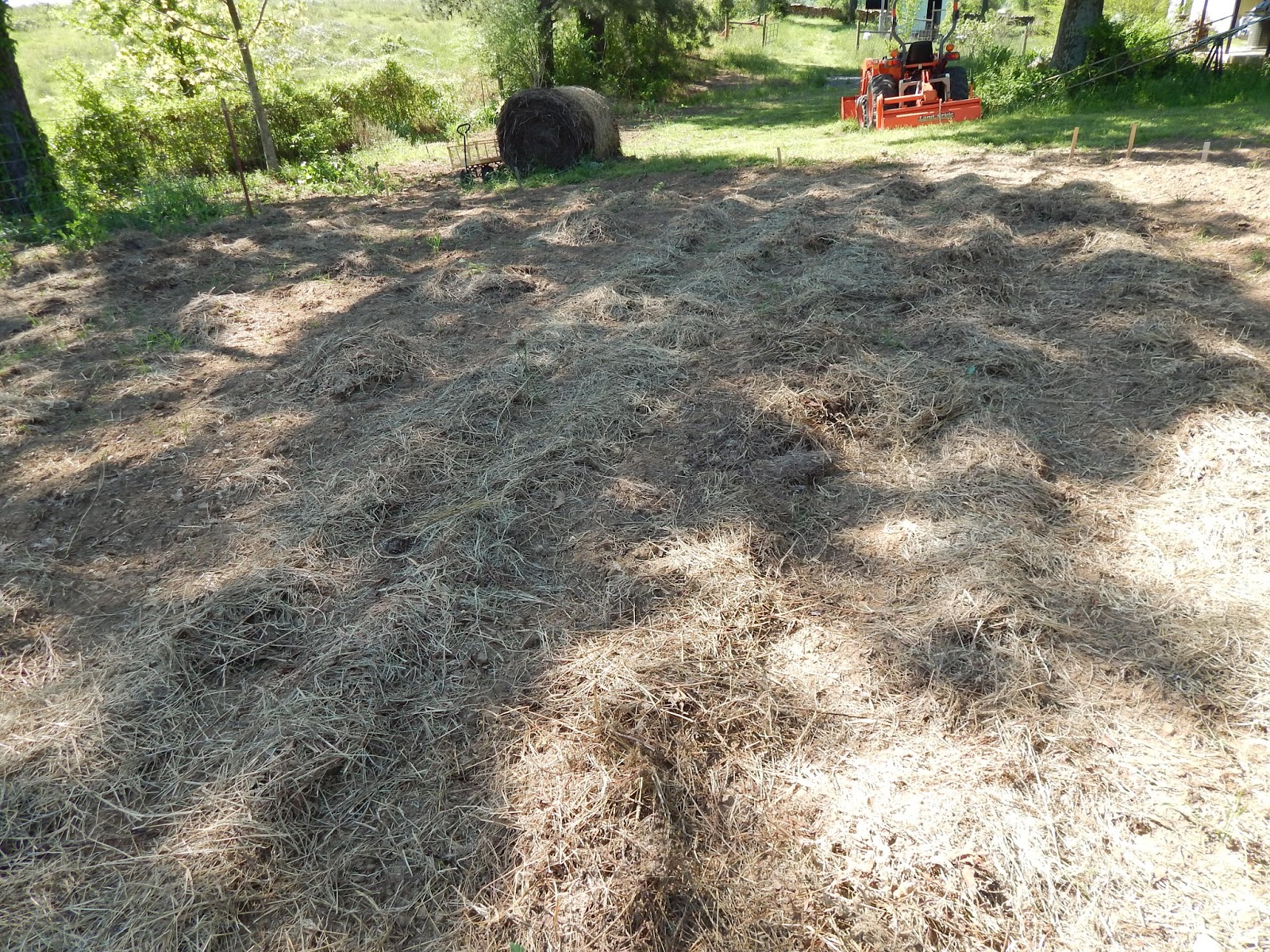
Having a self-sustaining herb bed has been a goal of mine for many years. I started working on this one about four years ago. It is definitely a process to take a piece of 'lawn' and turn it into something useful and sustainable. First we tilled it up, then I covered it in brown painters paper and a hay mulch
April 2014
to try to kill out the grass and weeds. But we had a heavy rain and it washed all of the mulch and tilled up topsoil away. Then we tilled it again, and had another flooding rain that washed the topsoil away. Some people would say I needed
a new location, and that may be true. But we are limited on space in our yard due
to the size of the land around the house, the little seasonal branch that runs
through here, and the topography. Right on the other side of the branch the
land goes uphill and is much drier. Most of the rest of the yard is the garden, or driving area. We have tried to pack as much as we can into this small space. So this is what I have to work with,
and I will keep trying.
April 2014
I actually have quite a few things started and add a few more each year. This year I am getting very serious about having certain things growing. Some of these plants are for culinary use, some for medicinal, some for animal feed and some for both or all three. I have tried a few plants that I would really like to be able to grow for the qualities they have, but they just aren't sustainable in our growing zone, which is zone seven. Some of the plants I have been able to establish are doing quite well, and some are doing so-so. Here is a run down.
I haven't tended to my garlic patch enough to get a good start of 'modern' garlic. There are a few growing from the patch I harvested last summer, but they are small and few. What is growing is what I call my 'old fashioned' garlic. I have two patches. One came from a neighboring homestead where it has been growing for at least 40 years, and the other came from a fence row by an old church. I don't know how long it has been growing there. Both of these older varieties are growing very well after only one year. I think I will stick with them instead of the more common smaller leafed varieties.
Let me back up for a minute. When we moved here six years ago, I increased my book collection for growing, harvesting and using medicinal herbs. From this collection of books, I planned out the herbs I wanted to grow along with their preferred locations, soil types, sun/shade requirements and companion planting needs. From this I made a 'map' of my herb bed, or what I dreamed my herb bed would become. It is now very wrinkled and stained from being stuck in my pocket so many times when I am out digging or planting. I knew that I would need a way to identify each plant until I
learned what they were since I have never grown many of these plants before. We came up with using wooden builders stakes with the name of the plant painted on with black enamel paint. Now some of the stakes have been in the ground long enough that the bottoms are rotting off, so eventually I will need to find something more permanent, but for now this works. This year as I add more plants to the bed, I get out my beautiful (to me) wrinkled, scribbled on map to see where each plant should go. This little piece of paper represents dreams come true to me. It's the culmination of long-term dreaming, planning and working toward a goal. So, on with the tour.
Next we have the peppermint which is spreading everywhere, as it is prone to do.
I have two leeks. I know that is funny, but they have come back after last year. I would like to have a patch of them so I will leave them and see if they go to seed and spread. I have done this with several plants hoping to create a self-seeding bed of the annuals I have planted.
The multiplier, or walking onions are right next door. They are doing okay for a small patch. I hope they 'multiply' much more this summer so I can start harvesting some next year.
The marjoram is doing great. It has been here for three years now. It almost dies off in the winter, but not all the way. Once the weather warms up a bit, it comes right back and spreads a little more each year. It is a beautiful plant. The parsley that I let go to seed right next door has yet to show any signs of coming up so I probably need to replant it. I know the seeds are very slow to germinate and the weather has been unseasonably cold, so I haven't given up hope of seeing them start to grow.
The lemon balm is just beautiful. What else can I say?
The rosemary turned a little brown during our very cold winter. I have been thinking of trimming it back and letting it regrow itself.
The elderberries I planted last year are doing very well. I added two more plants that I ordered this year. The more I read about elderberry syrup for coughs and colds, the more I want to make sure I have a good stand of it.
The green tea is growing well since I planted it last summer. I think the elderberries may want to invade this space, but I will keep it at bay enough to let the tea have it's spot. You will notice that many of my plants are fairly close together. That is by design. I hope to fill this entire bed with wall to wall plants. If my entire dream does come true I will have to pull a few up to keep some walkways available. That would be great.
I have two kinds of sage growing. One of them has been here for two years, the other was planted last summer, and both were started from seed.
In between the comfrey and garlic I am adding some chamomile and savory this year. The chamomile is both German and Roman. I wanted to see which one does better in this location and growing zone.
The chives that were planted here by the garlic last summer came back up which surprised me. I hope they will become a regular site each year now.
This is a witch hazel bush. It has been here for three years now and still isn't very big or tall. It is a slow growing plant.
The horseradish is doing great, it spreads a little each year. I think it has been here for three years now.
I have added some dill between the lemon balm and the horseradish. I also plan to plant more dill to see if I can get a bigger patch established.
A few years ago I planted cilantro here. It promptly went to seed and died. I thought that was the end of it. Last summer I was out pulling weeds an came upon this plant that looked a little familiar and out of place. I almost pulled it up, but stopped to smell a leaf first, when I realized the cilantro had reseeded itself. That was great! The only problem is it doesn't like our hot weather and goes to seed way before my tomatoes and peppers are ready to make salsa. It has come up again this year, and I have added two more plants to enlarge the patch. I am going to try drying it to use in my salsa this year so I don't have to buy any. Last year I bought some for one batch of salsa, but for the second batch, I used the seeds, which are called coriander. They tasted okay, but Frank and I prefer the leaf flavor, so this will be one of my new experiments.
The oregano has come back this year for the third time, so I think I can count on it being here.
Last year I let my basil go to seed hoping it would come back, but so far, there are no signs of it. I have added rue, savory, swiss chard and arugula as new plants this year. We will see how they do.
Right after I planted this catnip, along came Brother. I have never had catnip and cats together before so his behavior was very interesting. He started rubbing and chewing on it right away. Then he went over and laid out on his back all stretched out. It was funny.
This old stump is kind of a decoration, but it is actually sitting here waiting for some wild yams to grow on it. I have yet to get any of the seeds I've bought to germinate, but I will keep trying.
I have probably missed a few plants, but I will keep you updated on the progress of this project. I hope to start harvesting and storing herbs from this bed this summer, so I have much more to learn. I'll let you know what works and what doesn't as I go along. The next thing I need to create for myself is a calendar or schedule of harvesting times. I know some plants need to be picked before they bloom, or others have blooms that need to be picked at a particular stage to receive the most benefit from the plant. There is always much to learn and do and I am ready to get at it. I believe this will be an invaluable skill in our future, and I do know, that I don't know enough at this stage.
We want to introduce you to our new buck, Bill E Goat. Get it? I'm sorry, but we love to laugh and this is just one of those moments. But, really, his name is Bill.
After we read about the goat, we made contact with the folks that had him. These folks are very privacy oriented, as are we, so we met them at a big box hardware store a couple of hours away from our house. It sounds like something out of a spy novel, doesn't it? But, we respect people's privacy, and we're glad when people respect ours. They were nice folks and we appreciate their willingness to meet us and save us a few miles.
When we bring a new animal to our place they spend the first week in isolation. This is accomplished in our stock trailer, which is very convenient. We pull it into the barn to provide shade, protection from weather and have the new animal in close proximity to the herd.
Bill was not very happy to be alone for the first two nights. The second day he was here we wormed him with Cydectin, then the third day we used Safeguard which is fenbendazole. At this time, we are still using chemical wormers for the goats. We don't use them very often, usually no more than twice a year, and some day we hope to eliminate them altogether. We have honeysuckle, wormwood and garlic growing which will deter or cause worms to expel from the goats, but haven't learned enough to use them effectively yet. The key word there is yet. That will come in time.
The third evening Bill was joined in the stock trailer by One Stripe's two adopted nine week old boys, which began their weaning process. Now we had three crying babies in the trailer. But at least Bill had company now. We continued to watch Bill for any signs of ill health. The previous owners provided us with a bag of feed for him. We gradually used this up while getting him accustomed to our feed ration. He had a good appetite for the hay, grain and water we gave him and appears to be a strong, healthy animal.
One week later, Bill and the boys joined the older wethers out in the 'boys' pasture. Bill seems small now, but we expect him to grow and fill out quickly since he is already four months old. We will feed him, and the other boys, everyday for a while. Bill's first breeding duties will come about mid June when we plan to breed One Stripe. We would like for her to have babies about Thanksgiving to keep us in milk through the winter. We will breed the other does around November 1st for April babies next spring. So Bill will not be full grown before he will be put to work. He still calls for his mom and his old herd sometimes, but he is enjoying all of the new growth of the pasture. He should work out just fine.
At this stage in the garden, I always want everything to be a little farther along, but it's not. We had two very late frosts this year on the nights of April 30th and May 1st. Neither one was a hard frost, but it was cold enough to put frost on the windshield of the car, so we wanted to protect the tender garden plants. As the dusk was falling, I got the last of the plants covered with a layer of hay for protection. This was at the end of a long busy day, so there were no pictures of this project.
I left the hay over the plants for two nights. Now it's time to uncover everything and see how they fared in the cold weather. I wanted to find a way to do this without a great deal of stooping over, so I decided to try out a new tool that we have had for a while, but I have never used. I thought maybe I could use this three tine cultivator to gently lift the hay off of the plants without damaging them. It worked great and saved my back a lot of bending and stooping.
I had kind of built a tent of hay over the green beans since they were getting fairly tall. I accidentally bent several of them over too far, but most of them look great. While I was uncovering them I realized that all of this hay I had put out could be moved just to the side of the plants and used for mulch. That wasn't my plan originally, but now using the hay to protect from frost is turning into the added benefit of mulch, which is an unplanned bonus.
The cow peas, which are purple hulls, were just starting to come up good when the cold weather was forecast. They didn't mind being covered at all and are looking nice and healthy. We planted more than twice the amount we had last year to provide food for us, and to supplement the feed for the goats and the chickens.
The squash is growing very well and a few of the leaves had already started poking through the hay by the time I got them uncovered.
The okra was just barely breaking through the soil when I covered them. Some of them look pretty pale and others already have two nice green leaves.
The tomatoes were about the same. Some looked a little pale, and none of them are really showing signs of growth yet. I know they didn't appreciate the cold weather.
The peppers are sharing the same sentiments as the tomatoes. They're all alive, but are still pretty small.
The peas are finally growing quite a bit, but still haven't started blooming. I'm beginning to wonder if they will bloom at all.
The carrots are happy and growing right along. This trellis is home to the peas on one side and the tomatoes on the other. I planted the carrots on the east side so they would get morning sun, but be shaded from the hotter western sun in the afternoon. I also tucked the pepper in to the east of this trellis. I'm not sure how well they will like this location, so we will see.
The corn is just beginning to come up and is still quite small. I used my cultivator to get rid of some of the grass coming up between the rows. I will let it get about six inches tall, then mulch between the rows to keep the weeds down. That should take care of it for the rest of the summer.
The cucumbers are growing very well on the east side of this building.
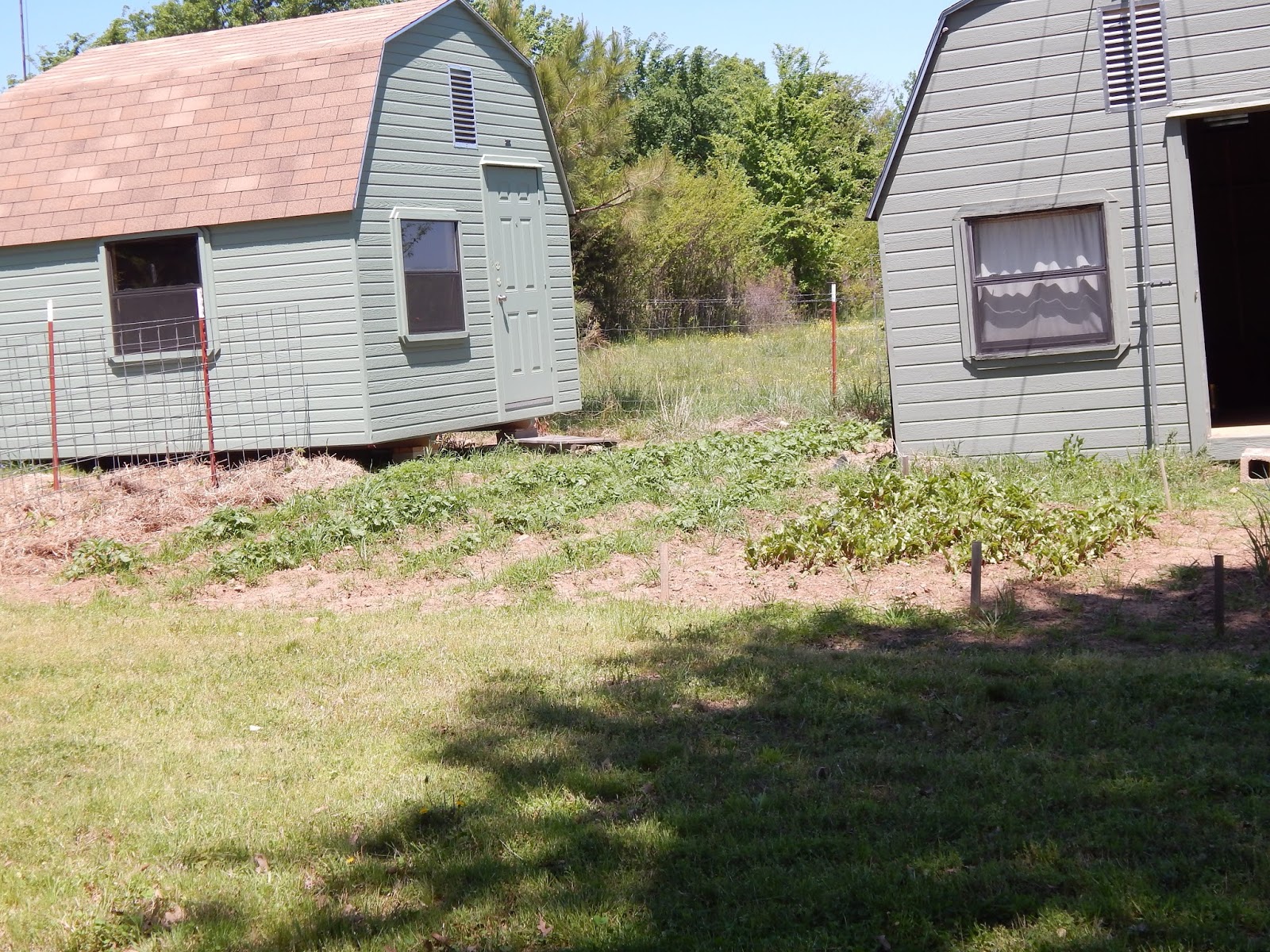
The cabbage, broccoli, beets and onions are doing very well. I need to do some more weeding and then they will all get mulched.
The potatoes are growing great again after the foliage was killed by a harder frost a few weeks ago. The grass and weeds are giving them a lot of competition, so they are in need of some attention. Hopefully, I can get to that sometime this week, then I will hill them up again.
There are two spinach plants doing well in the strawberry bed. The others didn't make it. I don't know if they were eaten or just died, but I am glad to have a few plants we will be able to harvest.
Our new food crops are hopefully on the way to producing this year's harvest for us. There are always different challenges each year that give us the opportunity to learn and develop new skills. We know you can never learn too much and will continue learning every day as if our lives depend upon it. Because it does. Until next time - Fern
I ran across this and thought some of you might find it interesting, hearing it from a different perspective. It's a man talking about how he does radio and solar power. Part of this video is a good review of what we have covered in previous articles. So after you watch it, go back and read or reread some of them. Enjoy.