The Road Home

The Road Home
There is no place like home.

Monday, August 12, 2013

Radio Communications Review, Part 1

Hello, Frank here.

I'm going to try to summarize what we have talked about in the last ten posts. The reason being, my next radio post is going to start into ham or amateur radio. So, let's go back and talk about all of the stuff I have covered so far. We have talked about the rules and regulations, and I will give you my recommendations on certain radios. Okay, let's go.

CB radio is probably the most popular radio around and more people have them than any other type. There are basically two types of CB radios - non-single side band radios and single side band (SSB) radios.
Remember, CB radio is line-of-site communications, most of the time. CB radio operates at about 27 MHz. It will also bounce off of the ionosphere similar to HF ham radios. In some circles the CB radio is called an 11 meter radio. Any CB radio will skip off of the atmosphere if the conditions are right, but an SSB (single side band) will do a better job of it and give you greater distance. So if you want to talk to your cousin Leroy two blocks down the road, and there is not a hill in the way, any CB radio will do the job. If you want to play and listen to other folks much farther away, then SSB is the preferred method. I recommend the Galaxy line of CB radios with SSB. There are other manufacturers that make a quality radio, I just think the Galaxy is more dependable and is prettier. No one likes looking at an ugly radio.

We'll talk about antennas, power supplies and coax cable later in this post. Next, let's talk about GMRS/FRS radios. These radios are also very
popular. The vast, vast majority of them are handheld radios. People use them a great deal for hunting, keeping track of the kids and just play-type radios. These are also line-of-site communication. These will not bounce off of the ionosphere so you are not going to be hearing frequencies from around the world. These radios function at about 465 MHz. Because of the higher frequency they will work better from inside a building than your lower frequency radios. The big difference between these radios, in my opinion, are the batteries or power systems inside the radios. 

While we are writing this, there is a major electrical storm in our area. All of my antennas have been disconnected and our computers are unplugged. If I were a little bit smarter, I would also unplug my power supply.

In a previous post, we talked about the difference between GMRS and FRS, they are basically the same radio. These are excellent, high quality radios with a good clear signal for line-of-site communications. Do not believe the advertisements for 10, 20, 30 miles - this is a sales gimmick. Not all of us live on a flat planet, if we did, then the advertisements
would be correct. Remember, line-of-site. All GMRS radios will communicate with other GMRS radios regardless of the manufacturer. All the channels are the same frequencies. I recommend the Midland GXT1000VP4 or GXT1050VP4. They are the same radio - one is camo and one is black. The reason for this recommendation is that you can put four AA rechargeable batteries in the radio and the batteries will recharge while in the charging cradle. Some other Midland radios look identical, but they charge slightly different and will not recharge rechargeable batteries while in the charging cradle. I have used this radio for a number of years on our little farm.

Okay. We have reviewed CB and GMRS. There is one other type of radio frequency and it is the MURS frequencies. MURS comes with five frequencies operating at about 151 MHz. It is also line-of-site communications and will work fine inside of most buildings. There is not a major manufacturer that produces a MURS handheld radio, but you can buy a commercial radio, which we will talk about in just a minute, to use on the MURS frequencies. OK, CB, GMRS and MURS are the basic frequencies for non-ham communications. All three have about the same power output. CB and MURS do not require a license, GMRS does. 

A slightly different type of radio is a commercial radio. These radios are not set for any particular frequency and they will not operate on the CB
frequencies. But they will operate on the GMRS, MURS and the VHF/UHF ham radio frequencies. You have to program these radios yourself. Most of them come with a programming cable and computer disc that you download. My recommendation is the Wouxun handheld commercial radio. Many dealers sell them. I would recommend Universal Radio. It is 100% legal to use these radios on the ham radio frequencies. It is not legal to use these radios on MURS or GMRS. We will discuss legalities and license requirements in just a minute.


Non-transmitting radios. This is a group of radios that you listen to only. We're going to talk about shortwave receivers, scanners, weather radios and there are a few others, but for the most part this covers them. Let's start with weather radios. Weather radios connect to a radio frequency
provided by the National Weather Service. Most parts of the country receive good, clear weather radio signals. Very few places don't. I would highly recommend a weather radio with S.A.M.E.  This feature will narrow down severe weather signals to the county level. If you live in an area that has the potential for tornadoes, I would highly recommend one of these for your home. My recommendation is a Midland WR300. It can be powered from a wall outlet, any 12 volt source and has a built in battery back up for when the power goes off, you can still receive signals. As I mentioned in a previous post, it is a little difficult to program. You can connect an external antenna and a flashing red beacon for those that are hearing impaired.

Scanners are another type of listen only radio. There are handheld, mobile and base scanners. The big question right now is whether it is digital or analog. Some communities are going to a digital signal similar to what
TV did nationwide a few years back. This is not a national movement. This is a local decision as to whether to go digital or stay analog. Many communities are not going digital. You will need to check with your local emergency management office. Some scanners are S.A.M.E. capable for weather alerts. New scanners will not receive telephone communications. Some will not receive the CB frequencies, but all will receive police, weather, fire, GMRS, MURS and the VHF/UHF ham frequencies. Some have external antenna capabilities. In some states it is illegal to have a scanner in your vehicle. This is your responsibility to find out the laws in your state.

I'm not going to talk much about marine band radios. Marine band is a two way radio. If you have a boat, or you live near the coast of the ocean or any large lake, or any navigable river then you can listen to marine band signals which includes the Coast Guard.
There are commercial frequencies on the marine bands. There are about 88 channels on each marine band radio. They operate at approximately 157 MHz. The commercial radio I mentioned earlier will also broadcast on these frequencies. Your scanner will also receive marine band frequencies. A little side note - your scanner will also receive railroad frequencies. If you choose to purchase a marine band radio and you choose to transmit on a marine band radio, then know which frequencies the government is using and do not use those frequencies.

Shortwave receivers receive the lower frequencies. 30 MHz down to about 1.8 MHz. These are receive radios only. Shortwave and ham band frequencies are intertwined everywhere between 30 and 1.8 MHz. Most shortwave broadcast signals are AM (amplitude modulation) radio, as is your CB radio, which falls in these frequencies. All ham radio frequencies are AM/SSB. So if you want to listen to the ham frequencies, you will need a radio that receives SSB. Most shortwave radios (SW) do not receive SSB. Some SW radios are capable of external antennas. If you are considering going into ham radio this would be the place to go ahead and buy an HF ham radio transceiver, which will transmit and receive on the SSB ham frequencies and also receive all of the AM shortwave transmissions. Shortwave radios can be as
inexpensive as $50 - $80 up to $10,000 and up. A beginner's HF ham radio that will transmit and receive starts at around $700 and goes up. You do not have to have a license to listen to any frequency on any radio. But to transmit on the ham frequencies, you will need a ham radio license. We are going to discuss ham radio in much greater detail starting with the next radio post.

Ok. So much for radios. Power supplies. If you have a handheld radio, it will probably be powered by batteries. Some come with a built-in rechargeable battery. Some operate off of AA or AAA batteries that you
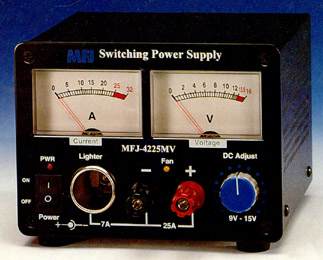
can replace with rechargeable batteries. If they will operate off of rechargeable batteries, I would recommend you go this route. All mobile radios, because of the nature of being mobile, will operate off of 12 VDC, which is actually 13.8 VDC. If you choose to use a mobile radio as a base radio, then you will need a separate power supply. Most receive radios use very, very little power. Just about any power supply will work. If you use a mobile CB as a base station then you will need a power supply that puts out 3 or 4 amps. If you're going to operate a ham radio or more equipment off of your power supply then I would recommend that you go ahead and pick up a 30 amp power supply. This will provide you with enough power to operate your radios, receivers, battery chargers, charge your cell phones and other similar items. 

Antennas. Some radios will need an external antenna. If you are
operating in a vehicle, the only radio we have discussed that will need an external antenna, is a CB radio. Most people use a magnet mount antenna. If you decide to go into ham radio, then your antennas will become more varied because different frequencies need different antennas. There is no one antenna fits-all frequencies. For your CB base station at home, you will also need an external antenna. Go to the post where we talked about CB base station antennas. Your handheld radios, like GMRS and MURS, will operate for the most part off of their attached antennas. If you choose to attach an external antenna to your scanner or weather radio, I would recommend a basic discone antenna. It is built to receive these VHF frequencies. If you choose to connect an external antenna to your shortwave receiver, then I would recommend a long wire type antenna for this purpose. In the previous post about shortwave receivers, there is information about antennas. There
may come a day when you need some coaxial cable. This is what  
connects your antenna to your radio. You will also need a plug on each end of this cable and in most cases, it will be a PL-259, or a BNC type connector. For overall general purpose use, I would recommend RG-8X cable. It is a good all purpose cable for low power, short distance runs of under 25 feet. It also works well for your receive only radios.

Licensing. There is no license required for any receive radio. If you choose to become a ham radio operator, you will need a license. More on that in the next radio post. CB and MURS do not require a license. GMRS does. As I stated in a previous post, I have never met a person with a GMRS license. Which brings us to legal regulations. If you operate any transmit radio that interferes with any other type of telecommunications signal, then you are required by law to either fix your problem or cease transmitting. This is seldom, seldom a problem with legal power transmitters. If you choose for example to increase your CB power from 4 watts to, let's say, 400 watts of power, and you cause the lady next door's TV signal to be distorted, then you are running illegal power. If your 400 watt CB radio does not bother anybody or anything, then your radio is still illegal, but for
the most part, no one will care. If you decide to buy a commercial radio, which you can, and you choose to operate it on a frequency, for example the one the local airport is using, then you will find out very quickly that being stupid does not pay. If you choose to use an unauthorized frequency that interferes with the local fire department, again you will find out that some people might not think this is cute. If you run 5000 watts of power, as an example, and you want to talk to your buddy down the road and you don't bother grandma's TV signal and you don't interfere with the local airport or fire department, then probably no one will care. If you choose to operate or modify your radio, and it is now considered illegal, this is your choice. Something I said earlier, if you are driving 36 in a 35 MPH zone, probably no one will notice or care. But....if you choose to drive 96 in a 35 MPH zone, then someone will notice and care. Again, this is your choice.

Speaking of 5000 watts. 5000 watts may be a tad bit of an exaggeration. But if you choose to pump up whatever radio you are using and you do not know what you are doing, you can fry your brain. No joke. No kidding. If you don't know what you are doing with radio frequency, then DON'T DO IT. Lot's of ham radio guys and non-ham radio guys run what is called, extra power. It's not a question of legal or illegal, it's a question of, if you don't know what you are doing, you can cause permanent damage to your cute little girl's brain. So, one more time, if you don't know what you are doing, DON'T DO IT. Safety comes first. Always.

Next time, we're going to get into ham radio. You will find the frequencies very similar to GMRS, FRS, CB and MURS because ham radio is not some miracle, mysterious thing. It's just a group of frequencies or bands or meters that we all share every day. I hope this has helped somebody, somewhere along the way to understand radio communications just a little bit better. Look through the previous radio posts. They are filled with links, dealers, manufacturers, and regulations. 

We'll talk more later. 73, Frank
 

Saturday, August 10, 2013

Dehydrating Food - For the First Time Ever!

I have never dehydrated anything before - ever. Until now. 

I have a friend that dehydrates anything and everything! When we first met she had just found a good buy on a 50 lb. bag of potatoes and she dehydrated the whole thing! I was amazed. Then, I started reading 5 Acres and a Dream and learned about dehydrating a variety of plants for goat minerals. I read about Bacon and Eggs dehydrating things all the time, even tomato skins. That was it. I decided it was time for me to learn how to do this.

So - my first experiment was to dehydrate some Anaheim peppers. We have known for years that peppers have many vitamins and minerals you don't get from other foods. I don't cook with dried peppers now, but if I dry my own, I think I will.

We have plenty of peppers in the garden to dry and I have a book about drying foods. I cut the
pepper in half, taking out the seeds. Then I sliced them into four pieces and laid them on the trays so they don't touch....


and put them in the dehydrator. We had to find somewhere for the dehydrator so we could leave it set up. The kitchen was out of the question since all available space is being used, especially during canning season. So the dehydrator gets to reside in the sewing room.

Eight hours later, and Wa-la! Dried peppers. I did it! Isn't that silly? I was hesitant to start drying things even after I got the dehydrator until my friend said, "Just put something in it. If it doesn't work out you can always throw it away and try again." How true. An experiment with about 15 peppers is not really that big of a deal, is it? 

I wish I could find a dehydrator that works off of 12 volts. Frank was able to find a 12 volt incubator for hatching chicks.       

It's funny how we let fear and uncertainty keep us from trying new things. So, if there is something you really want to try, say a prayer, then have the gumption to get with it. I did and it feels really good. My dehydrator has been drying something now for three days in a row - peppers, cucumber peels and comfrey - and I'm not sure when it will stop.

Until next time - Fern

Friday, August 9, 2013

Saving Seeds Really Pays Off

Remember when we showed the pictures of the zinnia and marigold seed heads we had picked one afternoon? After they had dried somewhat, we separated them to make sure they dry completely before we store them for next year. There are millions, well maybe not millions, but thousands of seeds. Most of these came from
volunteer plants that came up this year from the seeds we planted last year. Many of those seeds came from an end-of-the-year sale at a hardware store for 10 cents a package. 10 cents! So for 10 cents, we now have thousands of seeds that we can use for 10 years even if we never save another seed.

So, that got me to thinking. We saved three big cucumbers and kept the seeds from them. Since we don't really like cucumbers (believe it or not, I just like dill pickles) these seeds will last us forever - not counting the ones still in the original package I bought that I have been planting for three years now.

In the past few years we have saved okra, corn, zinnia, marigold and black-eyed pea seeds. If we continue to expand this process with seeds from plants we like to eat that are non-hybrid, pretty soon we will not need to buy any. Wouldn't that be great? One more small step toward independence and self-reliance. 

It is always good to have a stock of seeds on hand though. What if the weather doesn't cooperate and you need to replant? What if the bugs kill everything and you need to replant? What if you can never buy another seed and what you have is all you have? You've heard the old saying 'Never put all of your eggs in one basket'? Well, never plant all of your seeds. Never. Always have some in reserve for the unexpected. Your life may depend on it one day.

I know that sounds odd in our day of plenty, but I truly believe this will not always be the case. I am very grateful for the comfort and luxury of living in a time when failure is an option - that I can go to the store and replenish all I need and want that is within our means. We are truly blessed. 

Now, at the end of the season, wisely stock up on extra seeds - more than you think you will ever need in your lifetime. They will be worth more than silver or gold. They may feed your family, your neighbors or your community. They will be tremendous bartering commodities. Providing others with the means to provide for themselves may be one of the most
priceless gifts you will ever be able to give someone.


Until next time - Fern

Thursday, August 8, 2013

Starting the Fall Garden

Now that we completed the unscheduled plumbing repair, it is time to start planting our fall crops. This is the area where we grew potatoes in the spring.


We dug them up and tilled this space again to use for some of our fall crops. We are trying to reclaim some of this area. It has been left to the weeds for a few years and they are very happy there. It has been tilled several times this year and we plan to use a heavy mulch around the fall crops in an effort smother out more weeds.
These corn stalks will be part of the mulch back against the fence area. It will add some good organic material as well as help with weed control. Or at least that is what we hope, we will see how it goes.

Some of the seedlings we planted last week are ready to go in the garden. It doesn't take long for winter squashes, melons and greens to be ready to plant.


The broccoli, cabbage, kohlrabi, snap peas, spinach and kale will be ready to plant in a few days. Today I thinned out the seedlings. It is good to know that the 3 year old seeds I planted are still viable. 


Now that I have rolled up more pots, it's time to start more seeds.
We are growing Detroit Dark Red beets for us, but I am also trying some Sugar Beets for goat feed. They are a mangel beet that has been used for stock feed in the past. They are also good for beet sugar which we will try to make if we have a harvest. We are planting collards, turnips and parsnips, too. This is part of our effort to grow at least some of the feed for our animals. We are very interested to see how these will grow and store over the winter.

And then we are trying carrots again.We are encouraged by our spring carrot crop even though they were rather gnarled up. We tilled this end of the garden deeper (thus, finding the grey water line), so we hope our root crops do better this time.

For now, the winter squashes are planted.


The Buttercup, Cushaw and Acorn are all tucked back in this corner. Since they vine out and tend to cover a lot of ground, this corner will be filled before long.


The melons are tucked in between the new overgrown strawberry bed and the potato patch.


We are planting potatoes that we grew in the spring. Since a spring potato crop is ready to harvest in June here, the potatoes don't keep all winter very well. We have wanted to try a fall crop of potatoes for a number of years. Here it is. We hope it produces well.

This is another area that has grown an abundance of weeds for the last few years.

It is very fertile since we 'stored' a load of  barnyard there a while back. We are going to try the pumpkin patch here with heavy mulch and cross our fingers.


The mixed baby greens (on the right) were planted in the herb bed between the green tea, lemon balm and oregano. It will be nice to eat a few of these, but I plan to dry most of them for the goats.
This area in front of the winter squashes will be for the beets, carrots, parsnips and turnips. Then there is the cabbage, broccoli, kohlrabi, collards and spinach to be tucked in somewhere. Oh, and don't forget the snap peas. They will be finding a home here as well. Yes, we do an intensive garden, using as much space for production as possible. So, it's always an obstacle course to get to what we are trying to harvest.

We will keep you updated on our progress with the fall garden as we learn to grow more food - for us and our animals.

Until next time - Fern

Wednesday, August 7, 2013

What Happened To Normal?

What happened to the good old American dream of growing up, going out on your own, getting married, establishing your own household, working a good job for many years, then retiring to those 'golden years'? Where has it gone? What has happened to honesty, integrity, caring about your neighbor, honoring the family, and putting in an honest day's work for an honest day's pay? Where is patriotism and pride in our country? We have let our country change before our very eyes into something 'suddenly' unrecognizable.

Frank and I have talked about this many times. Most people in our position are slowing down and sitting back. We have never been busier, learned more, and pushed harder. Now it's - What else do I need to prepare before the collapse? It doesn't matter if you are young or old, rich or poor, when the time comes, we all need to be prepared to the best of our ability. We all need to be able to fall back on our spiritual, emotional and physical preparations in such a way that we will have some level of stability and sanity when life is no longer recognizable. 

How many people have you tried to talk to about preparing for a 'disaster/collapse' lately? Do most of them still just stare at you like you are from another planet? We heard a very interesting comment a few years back about gardening that we recall regularly. "Why would I want to do that [garden] when I can go to the store and buy it?" If you respond with something like, "What if something happens and there is no store?" The usual reaction is a symptom of the 'that won't happen here' syndrome.

There are vast portions of our current society in which we choose not to participate. Many people we have met do not understand how or why we choose to live the way we do. We're just a strange anomaly. There is no shared level of experience or purpose that we can discuss and that makes people uncomfortable.

The labeling of those who choose the more 'old fashioned' way of work, patriotism and providing for oneself is rather ominous. How did family, hard work and patriotism turn into undesirable traits? How did pride in a job well done - actually working - whether at home or at a place of employment, become a beacon for ridicule or worse? 

What happened to normal? Why do people like us cause that look of consternation? For us, it always has been so.

Until next time - Fern