The more I read about and learn about GMO corn, the more I wish we could totally eliminate it from our diet, even though I know that's close to impossible. We do have a few cans of store bought corn in the pantry, which I don't even like to eat anymore. But, for me, the biggest stumbling block we have is the feed we give our animals. So, more research and more reading.
We used to have our goat and chicken feed mixed according to our own recipe at a small, family owned feed mill. This location does not have that option, so we have been mixing our own. Wheat was one of the ingredients we used to include that has not been available here. A few days ago when we were at the feed store, I noticed a bag of wheat bran that I didn't remember seeing before. I didn't know what the nutritional value of wheat bran would be for goats, so I came home and looked it up. According to Storey's Guide to Raising Dairy Goats, wheat bran has 13.3% digestible protein and rolled oats have 10% . Hmmm....okay. The alfalfa pellets we use have 17% protein and the sweet feed has 10%.
 |
| Summer 2013 |
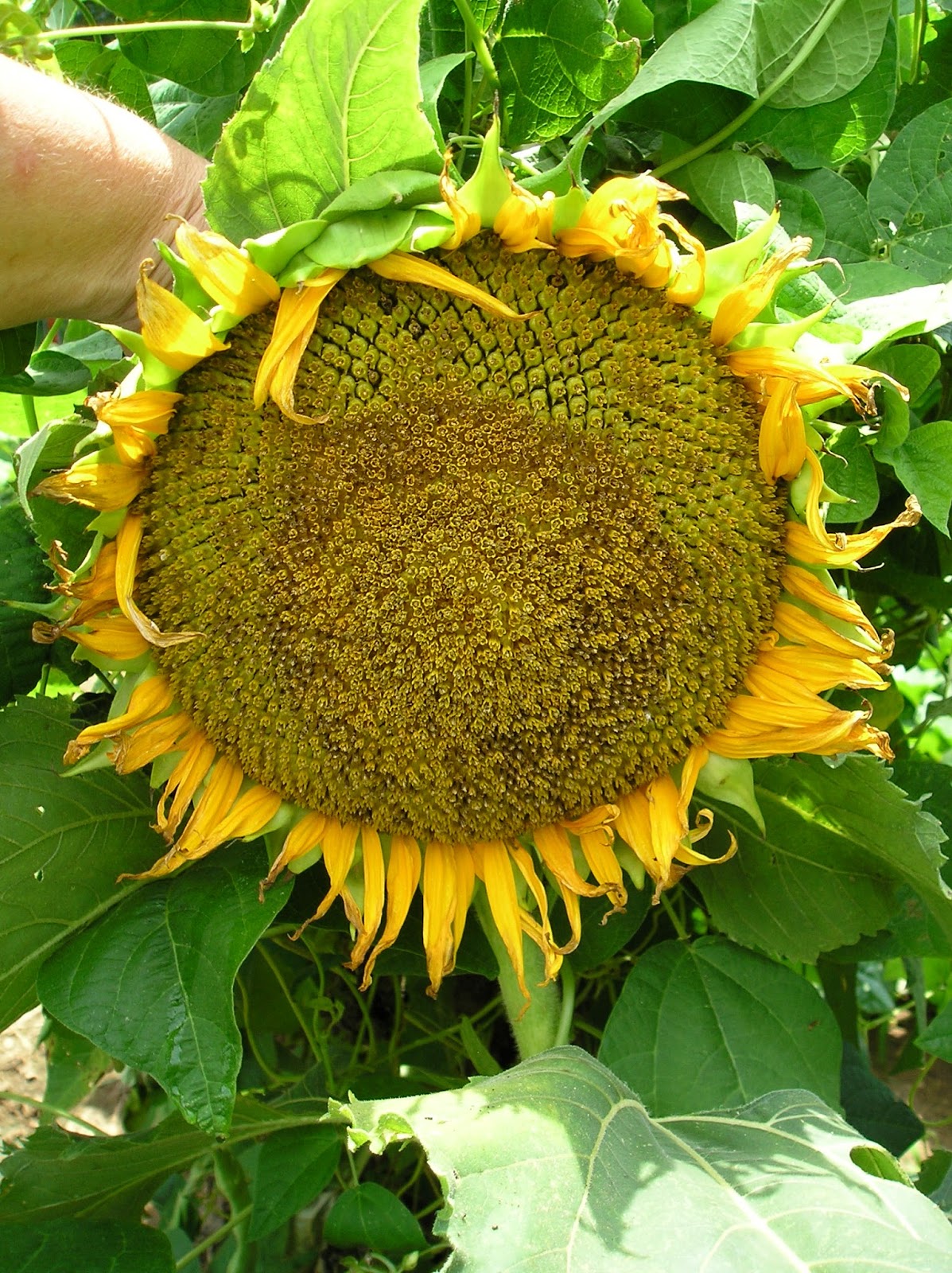
The ideal protein ratio for milking does is around 12%. So, what I am trying to figure out is a mix of these grains, minus the GMO corn chops we are currently feeding, that would give me about a 12% feed combination. Another thought I have had is sunflower seeds. Black oil sunflower seeds are very nutritious for both goats and chickens. We grew our first ever sunflowers last summer and actually had seeds to harvest. This summer I hope to grow hundreds of sunflowers all around our place with the plan to harvest them for animal feed.
So, the new feed ration we are going to try is:
- 6 parts rolled oats
- 4 parts sweet feed
- 1 part alfalfa pellets
- 1 part wheat bran
- 1 part sunflower seeds
For now, all of these ingredients will come from the feed store. This combination will give me a feed ration of about 11.5% protein. Of course, the protein content is always dependent upon growing conditions.
 |
| Summer 2013 |
I am also going to start several patches of comfrey this summer. Right now I have one plant in my herb bed. I have ordered and received 5 more roots which will begin bed number two. Then the next step will be to start comfrey seedlings.
Once I have them up and established, I will plant bed number three. Comfrey, also called knitbone, has long been used as a medicinal herb and as a supplement for livestock feed. It is very high in protein and vitamin B12.
Another crop I am going to try to get established for supplemental livestock feed is plantain. I have read about it for a number of years, but didn't really pay much attention to it. When I was ordering some more herb plants from Crimson Sage, I ran across plantain again, right after I had read another article about feeding it to chickens. I have been wondering what I could grow that would supplement our chicken's diet more naturally than grains. It would have to be something that is easy to grow, pick and dry for winter use. So I ordered some. I will let you know how it grows and how the animals like it.
 |
| Fall 2013 |
The third thing I am going to grow more of this summer is kale. I have a few rather sad looking plants that made it through our cold winter. After reading this article, I started picking off some of the bottom leaves and feeding them to the chickens. They took to them right away, but the goats didn't seem to care for them. I will try feeding them to the goats again after they have started producing newer leaves.
 |
| Summer 2013 |
We will try our hand once again at growing carrots, sugar beets
and turnips for the animals. Last summer, our fall garden didn't
produce much of anything. I got started late and the weather didn't
cooperate very well either. If we are really going into another Maunder Minimum, we will see how that affects our ability to produce plentiful gardens like we have in the past.
We may all be learning to garden a little differently if the quality of our sunlight and warmth are affected by decreasing solar activity. Another thing to learn more about so that I can adjust our growing habits to match what nature is providing.
There are many things to take into account when pondering feed rations for both animals and humans. Learn all you can, put it to good use, and hold your family close. They are the most important thing there is in your life. Don't let anyone, or anything, convince you otherwise.
Until next time - Fern
We buy commercial feed for our goats and chickens. Our goal is to grow feed for them, but we haven't made that transition yet. The feed we buy is pretty basic and we mix it ourselves.
The chickens get a mixture of two parts laying crumbles and one part sweet feed. We also give them scratch grain which includes corn, sunflower seed, milo and wheat.
We buy the feed in 50 lb. bags and unload it into trashcans for storage. The only pest problem we have this way are the fire ants. They have really become a problem in our area during the last few years.
Our recipe for the goats is eight parts chopped corn, four parts sweet feed and one part alfalfa pellets.We chose these ingredients for simplicity and nutrition. We even left the alfalfa out for a while, but discovered a good reason to include at least a little.
The first year we had goats after we moved back from Alaska we used about 1/4 alfalfa in our feed mix. That year out of about 10 kids born, 8 of them were bucks. We had never had that kind of ratio before, so I got out my books and read and read. In Pat Coleby's Natural Goat Care, I found if the ratio of feed contains too much alfalfa or similar feed, it will result in a high percentage of buck kids. So at that point we just left the alfalfa out.

A few months later when we had another batch of kids, there were more does and all was well until.......we had quite an outbreak of pink eye, which we had never had before. Standard triple antibiotic ointment will clear it up, but we couldn't figure out why we had it in the first place. So, back to the goat books I went and in Natural Goat Care I found the answer. In eliminating the alfalfa all together, we had lowered the vitamin A content of our feed ration to the point that the goats were susceptible to pink eye. We made a second adjustment to our feed ratio and we have never had pink eye again.
When we mix the feed we measure it by the scoop......
Then mix it by pouring it from one trash can to another....
a couple of times.
 Now we have feed again for a few weeks.
This is an example of something that is more work and takes more time than buying something already prepared and ready to go. We would rather grow our own feed without any chemical process involved, but we aren't to that point yet. This is the next best thing.
The same holds true for our diet - we eat as simply as we can with the most natural products. But sometimes, a bag of potato chips sure is good!
Now we have feed again for a few weeks.
This is an example of something that is more work and takes more time than buying something already prepared and ready to go. We would rather grow our own feed without any chemical process involved, but we aren't to that point yet. This is the next best thing.
The same holds true for our diet - we eat as simply as we can with the most natural products. But sometimes, a bag of potato chips sure is good!
Until next time - Fern


