We received a very interesting and informative comment yesterday that we feel is worth posting for all to read. I have said something similar to this opening statement, that I was born in the wrong century. Frank and I have long known that our varied life experiences have brought us to this place and time with a plethora of skills and perspectives that may help us as the current crises of the world unfold. It really doesn't make any difference when we were born or where we live, this is where we are and what we have to deal with. The events of the world will continue to unfold, whether we are ready or not. Please share your thoughts. Enjoy.
I feel as though I am a person born out of my time period. I am not yet
sixty but my childhood experiences include using an outhouse, drawing
water from a well, and taking baths in a tin bathtub after heating water
on a wood cook stove. My parents grew corn, peanuts, and other
vegetables in a five acre field. I grew up helping to harvest and can
what we grew. We milked cows and my mom made butter from the cream. I
was the last born of my siblings, and born late in my parents' lives.
They grew up in the Depression and married at the beginning of WW2, so I
am a tail end of the Baby Boomers.
My experiences were embarrassing as a
child but came back to help me cope many years later in the aftermath
of a hurricane that plowed through our area. We lost power for about
four weeks. I tried to do what my momma did and found that I was not
the woman she was. But I did learn some very important lessons. I
relied too heavily upon electricity and on my freezer for food storage.
I had a pressure canner and had canned some vegetables, but I still had
a lot of vegetables and meat in the freezer. Now I try to keep plenty
of jars empty for emergency canning of meat and most of my vegetables go
in jars.
I was given a dehydrator several years ago and found that
drying vegetables and sealing them with a food sealing system in jars
takes up less space that fresh.
Since I did and do most of my cooking on
an electric stove, the lack of that power has stirred me into looking
into other ways of cooking without power. I have since discovered an
interest and love for cast iron, especially Dutch ovens. My first
experiment with one was in the coals of a burned brush pile from a tree
blown down by a hurricane wind. Food burned on the bottom and was raw in
the middle. But my daughters have taken up my pursuit and they cooked
much of our Thanksgiving dinner last year in Dutch ovens outside over a
wood fire.
I liked your article because it fits my lifestyle of
gardening, canning and enjoying the fruits of my labor. I live in a
climate that allows me to grow food almost all year round, but for the
past several years, I have had an urge to save seeds from the
vegetables we grow and to try to save extra possibly for neighbors in
the future since I can't feed them all and they may need to have
something to plant. Most of us "country folk" live like city folk now
because we buy fresh seed from the feed and seed stores each year and
there are fewer and fewer of us gardening and growing our own food,
because it is quicker and easier to run by the grocery store and get
what we need or want. It is a lot of work to grow and process your own
food. I have heard comments to that effect.
After reading the Woodpile Report, I found someone giving voice to some concerns that have been in
my heart for a couple of years...namely, what would happen if we could
not grow food for a year or so because of outside circumstances. And
what would happen if the stores that sell seeds are no longer open or
stocked? About three years ago, I saw a clearance sale of end of summer
goods at a dollar store. Included in those goods, were packets of flower
and vegetable seeds. I bought quite a few for pennies a packet and so I
have been collecting these seed packets and storing them in my freezer
for my own use and for future giveaway seed. To my surprise I even found
a few heirloom seeds among them. I have other seed that I have saved
in glass jars using the food sealer system and jar attachment. I opened
a few jars of seeds this spring and was amazed that most of the seeds
were viable. Only one of the jars of seeds failed to germinate.
Anyway,
my next canning experiments are going to include oranges, lemons, and
butternut squash. By the way, have you heard of okra seed being roasted
and ground to be used to stretch coffee grounds? I have heard that
such a thing was done in the Great Depression, but I would like to know
if anyone else has knowledge of this.
Thanks for sharing your
experiences with others.
[Name removed]
Please share what you know and have experienced. We're all in this race to survive together. The finish line is simple. It's your life.
Until next time - Fern
The Road Home

There is no place like home.
Showing posts with label cooking. Show all posts
Showing posts with label cooking. Show all posts
Saturday, November 2, 2019
Monday, November 16, 2015
Fern's Farmhouse Special
This is one of those meals that needed a name, so we just made it up. Most people would think 'Food' was a strange title to a blog article, so Frank named this dish for us.

There is really not much special about this dish, it's just something I came up with since we have limited our carbohydrate intake. It's healthy, tasty and I make plenty of it. It's not particularly attractive, as in a pretty dish, but we don't care. What's neat about it is that almost all of the ingredients came from our farm or homestead. We know how the meat was raised, the milk produced, the cheese made, the vegetables grown and how all of it was processed. This is what makes this meal a 'Special'. We've almost come to take our homegrown food for granted, but not quite. Anytime the food on our table constitutes a homegrown meal in it's entirety, we take note, and enjoy every bite that much more.

Okay, on with the meal. The first ingredient is ground goat meat or chevon. About half the time I think I spell it wrong and put chevron, so if you run across that somewhere in this blog, sorry about that. I season the meat with sea salt and fresh ground peppercorns, then brown it with about half of a large onion (store bought) and any sweet peppers we have on hand. I just picked these peppers from the plant I transplanted into the greenhouse.

When the onions and peppers are starting to brown, I add two heaping spoonfuls of our canned garlic and a pint jar of our canned
 yellow squash and let it heat up and blend in with the other flavors. By the way, I strain the liquid off of the squash into the pig bucket. I do this with any liquid we aren't planning on using in cooking. I even rinse out milk and kefir jars and put this milky water in the pig bucket. I really like using these liquids to increase our meat supply instead of pouring it down the drain like I used to.

 While the squash is heating, I grated a little cheddar cheese and got out the salsa and fermented jalapenos. I haven't told you about the jalapenos yet. I fermented two quarts of jalapenos in the same kind of crock we use for sauerkraut. I inoculated the peppers with kraut juice when I started them, then left them in the crock for about three weeks. They taste great, still very tangy and stayed crunchy. Thanks to the reader that recommended we try them. I have four pint jars of peppers stored in the refrigerator now along with the usual four quarts of sauerkraut.

Now that the meat and vegetables are ready I dish them up, add some salsa, peppers and cheese.

 This type of meal has the possibility of endless variations, the only limitation is your imagination. So go create your own 'House Special' with whatever ingredients your family enjoys. After you do, see how many of those ingredients you can produce or store for the long term. The uncertain, difficult days ahead of us, will require good, healthy, home cooked meals for comfort and much needed nutrition. Practice now while you can.
Until next time - Fern

There is really not much special about this dish, it's just something I came up with since we have limited our carbohydrate intake. It's healthy, tasty and I make plenty of it. It's not particularly attractive, as in a pretty dish, but we don't care. What's neat about it is that almost all of the ingredients came from our farm or homestead. We know how the meat was raised, the milk produced, the cheese made, the vegetables grown and how all of it was processed. This is what makes this meal a 'Special'. We've almost come to take our homegrown food for granted, but not quite. Anytime the food on our table constitutes a homegrown meal in it's entirety, we take note, and enjoy every bite that much more.

Okay, on with the meal. The first ingredient is ground goat meat or chevon. About half the time I think I spell it wrong and put chevron, so if you run across that somewhere in this blog, sorry about that. I season the meat with sea salt and fresh ground peppercorns, then brown it with about half of a large onion (store bought) and any sweet peppers we have on hand. I just picked these peppers from the plant I transplanted into the greenhouse.

When the onions and peppers are starting to brown, I add two heaping spoonfuls of our canned garlic and a pint jar of our canned


Now that the meat and vegetables are ready I dish them up, add some salsa, peppers and cheese.

 This type of meal has the possibility of endless variations, the only limitation is your imagination. So go create your own 'House Special' with whatever ingredients your family enjoys. After you do, see how many of those ingredients you can produce or store for the long term. The uncertain, difficult days ahead of us, will require good, healthy, home cooked meals for comfort and much needed nutrition. Practice now while you can.
Until next time - Fern
Monday, October 26, 2015
How Many Different Ways Can You Cook?
As I pondered this question, I came up with several possibilities. Here they are in no particular order.


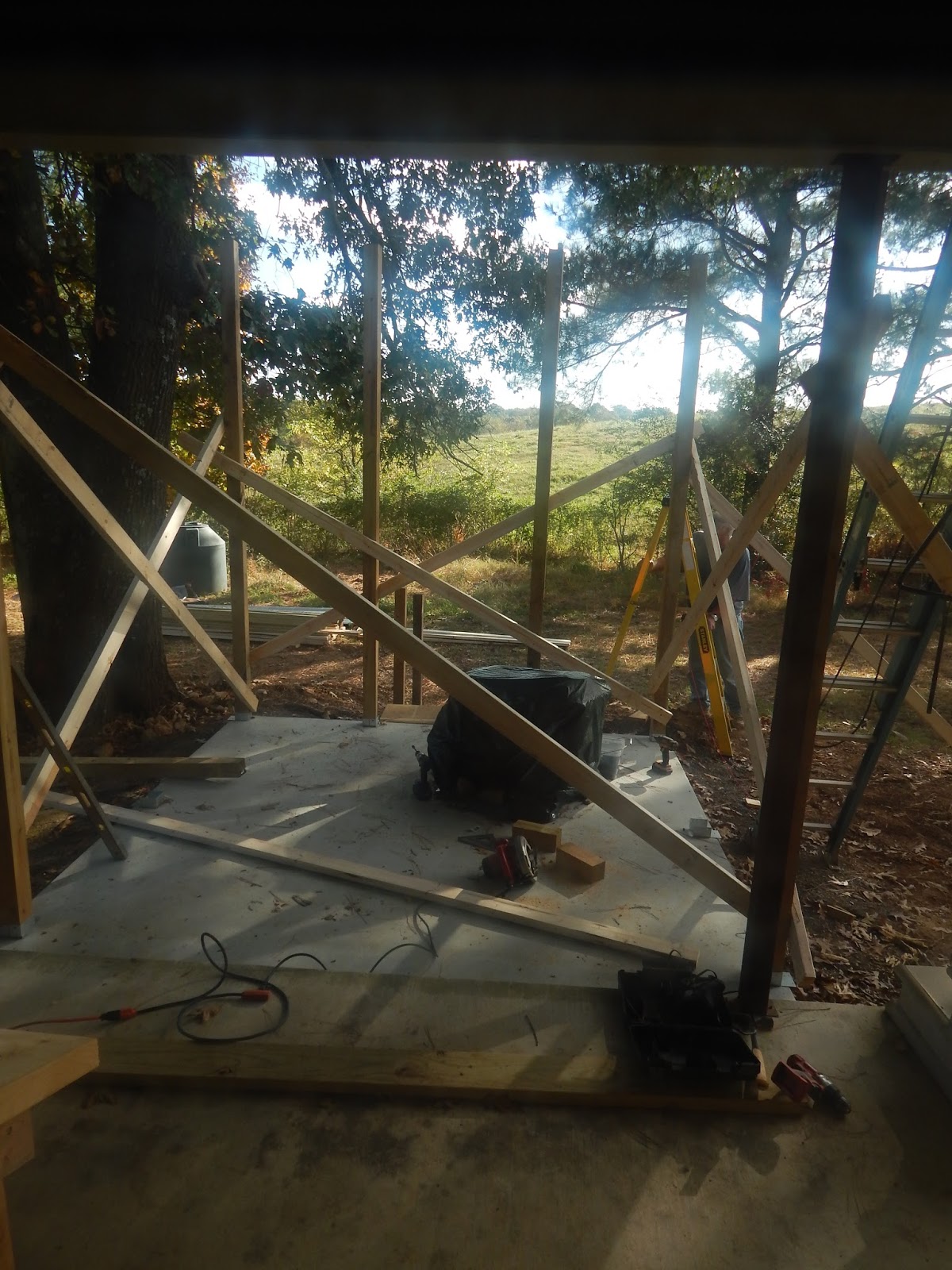
Now we come to the outdoor kitchen. We will have a wood cookstove there along with a grill/smoker.

Another addition for quick cooking and heating will be a Rocket stove. Once we have everything set up out here, I will practice with all three.


Another oven option is a Sun Oven, which we also have, but it hasn't made it's way out of the box yet. I've read about several people using them very successfully, including our friend Grace down the road, so it's time I learn how to use this one.

Of course there is always a campfire with a metal grate across it, or an open pit fire that you can hang pot over or put a rotisserie on. If you have the right cookware, you can cook all sorts of meals this way.

Another possibility is a small cast iron hibachi type of system. It's small, doesn't take a lot of fuel, and will provide a small, hot fire. Again, with some cast iron cookware, this would be an easy way to cook a quick meal.


Until next time - Fern
Saturday, September 26, 2015
That's Why They're Called Chores
A long time ago, let's see about 25 years ago, we were at a doctor's office. Frank was talking to him about the things we were doing or needed to do around the homestead we lived at then. The doctor looked at him and said, "That's why they're called chores." Chores are daily routine tasks. If we were all sitting together in a room tossing out ideas that come to mind we could make a big, long list of chores that lots of folks do every day, week or month. I was thinking about the idea of chores this morning as I, yes you guessed it, was completing some of the chores.
Now take your daily routine and throw in the need to do everything yourself, with or without the help from others, for all of your daily needs. You knew I would be talking about this, didn't you? It's what we're all trying
 to prepare for. Our daily routines, once the collapse occurs, will be filled with chores from sunup to sundown. Chores that will be required if we expect to survive. Chores that will make us wistfully wish we had a few of the conveniences that we now enjoy, things that would make our lives much easier. Like turning on the faucet and having safe drinking water at our fingertips, or hot water at the turn of a knob. We live in the lap of luxury and yet many days we will hear complaints about doing chores. I think that's what prompted the good doctor's comment. "That's why they're called chores."
 Okay, so let's use a little imagination and see if we can describe even a small portion of the chores or events that may happen in one day post TEOTWAWKI. Ready?
Wake up and get out of bed. Are you sleeping in a bed? Or were you on guard duty all night and find relief at the rising of the sun so you can go to bed?
 How about a hot cup of coffee? Do you have any coffee left? Do you have a cup to drink it out of? Did you store enough to last a while, even with rationing? Okay, do you have the type of coffee pot that can withstand the heat of a fire or the top of a wood stove or rocket stove or whatever device and fuel you have that will produce heat? Did you bring in wood last night for the fire or do you need to gather it this morning? Okay, we have coffee and heat, now we need water. Did you haul and filter the water last night so it will be ready this morning? Does it need to be boiled before it can be made
 into coffee? Where is your water coming from? Is it a public source? Do you need protection to go there and get it? How much can you haul at once? How are you going to haul it? Or are you able to reroute a water source through your existing plumbing and continue to use your kitchen faucet? That would be a luxury in a collapse situation.
 By the way, when you got up this morning, assuming you weren't on guard duty, where did you go to the bathroom? Have you been able to take care of a safe, sanitary toileting location? This isn't something people talk about much, but let's face it, everyone of us needs some hygienic way to take care of toileting. Yes, we still haven't decided on the location of our outhouse, but we will soon.
Okay, toileting taken care of, water, coffee and heat. Now I'm hungry. What's for breakfast? Are you going to cook? That brings a whole new set of thoughts and questions. Where did you get your food? Did you grow or raise it? Does it need any preparation? Are
 you going to have a piece of bread and butter and call it good? Where did you get the bread? Did you make it or barter for it? Where did you get the wheat or flour, leavening, oil or fat and salt? Do you have an abundance of those things on hand? How did you bake the bread? Do you have a functioning oven, wood stove, cast iron dutch oven or something else to bake in? Do you have the fuel it requires? Do you have the pans you need? Now for the butter. Where did it come from? Are you milking an animal that is giving you enough cream to make butter? How are you keeping the milk, cream and butter cool enough to prevent spoilage?
 You want some eggs with that bread? Do you have chickens living under the right circumstances to provide you with enough eggs for breakfast? Again, how are you going to cook them? Serve them? Do you have plates and forks? Salt and pepper? A table to eat off of?
Now it's time to clean up from breakfast. Do you have any soap or cleanser? A dishcloth and towel? A sink, basin or dishpan? Now we're back to water again. Did you heat up enough water to wash dishes while you were making coffee and cooking the eggs? What are you going to do when you run out of soap or cleanser?
Okay. Now I'm tired and we have only talked about getting out of bed, making coffee, fixing breakfast and cleaning up the dishes. That is only the very beginning of the day. Now is when the real work begins, work that will entail the basics of daily living,
 obtaining water, fuel, food and remaining safe. Everyday, day in and day out, chore after chore after chore. Like Frank said recently, there will be no commercials, no time outs, no vacations or mindless distraction staring at a big or a tiny screen. I really don't think some people will be able to handle the drastic change of life as we know it and the expectation of having to work hard everyday just to stay alive. I feel sorry for the people that can't, won't or don't give it any thought at all. There will be many people that are unable to cope with such changes. They just won't and that is very sad.

Please spend some time reviewing the list of chores you will be required to do when the SHTF, and everyday after that. There will be many things we haven't thought of, even though we feel like we have been preparing for this all of our lives. I know there will and have tried to prepare myself for that. Even if there are things we haven't acquired or prepared for, we need to be prepared mentally for that shortfall and not let it devastate us or stop us in our tracks. We will do the best we can with what we have, that is all we can do. And it will be enough.
Until next time - Fern
- Make coffee and fix breakfast
- Feed the cats, chickens, pigs, dog, goats
- Milk the does
- Strain and cool the milk

- Clean up the chore related stuff, like buckets and such
- Grind wheat and make a batch of sourdough bread; left to rise
- Wash the dishes
- Frank stripped the bed and started a load of laundry before he left this morning, so I put them in the dryer. Later the bed will need to be made and the clothes folded and put away.
- Now for a different kind of chore, a project chore. Remove the barrels from the greenhouse, rinse out and hose off each one, let it drip dry, then towel dry. Sweep the floor and plywood pieces before replacing the barrels on a square of plywood and replacing the table top board. Repeat until all were finished.
- Some of these chores are repeated throughout the day, like fixing meals
- Evening animal chores include everything listed above, except add watering all the animals to it. This time Frank goes with me.
- Wash the eggs, put the milk away

- Strain and feed kefir
- Bake bread and eat a sample. The eating isn't much of a chore.
- Get the coffee pot ready for tomorrow
- Some days include gardening, mowing and all kinds of other things


Now take your daily routine and throw in the need to do everything yourself, with or without the help from others, for all of your daily needs. You knew I would be talking about this, didn't you? It's what we're all trying


Wake up and get out of bed. Are you sleeping in a bed? Or were you on guard duty all night and find relief at the rising of the sun so you can go to bed?


Okay, toileting taken care of, water, coffee and heat. Now I'm hungry. What's for breakfast? Are you going to cook? That brings a whole new set of thoughts and questions. Where did you get your food? Did you grow or raise it? Does it need any preparation? Are


Now it's time to clean up from breakfast. Do you have any soap or cleanser? A dishcloth and towel? A sink, basin or dishpan? Now we're back to water again. Did you heat up enough water to wash dishes while you were making coffee and cooking the eggs? What are you going to do when you run out of soap or cleanser?
Okay. Now I'm tired and we have only talked about getting out of bed, making coffee, fixing breakfast and cleaning up the dishes. That is only the very beginning of the day. Now is when the real work begins, work that will entail the basics of daily living,


Please spend some time reviewing the list of chores you will be required to do when the SHTF, and everyday after that. There will be many things we haven't thought of, even though we feel like we have been preparing for this all of our lives. I know there will and have tried to prepare myself for that. Even if there are things we haven't acquired or prepared for, we need to be prepared mentally for that shortfall and not let it devastate us or stop us in our tracks. We will do the best we can with what we have, that is all we can do. And it will be enough.
Until next time - Fern
Subscribe to:
Posts (Atom)