The Road Home

The Road Home
There is no place like home.
Showing posts with label marjoram. Show all posts

Monday, June 3, 2019

What's Growin' in the Garden 2

Interesting that I was thinking of doing a garden update today since we had rain forecast. I have some pictures from May 25th and was going to add a few more today. Well, it is raining. We had and inch of rain in five minutes, then ended up with 2" in about 30 minutes and it arrived with 25MPH winds. Here are some pictures from the porch.

Our creek has extended into the backyard.


North side of the house, water running, now the corn is facing west laying over.


Our new creek through the turnip bed.

Lots of water - this is normally dry

I won't know if there is any permanent damage for a few days and will let you know about that in the next update. Message for me - always plan for the unexpected. Always.....always.

Here are a few comparisons from the last article. Then pictures and comments about what's growing out there - or was - or maybe is still growing. Time will tell.
 
April 22nd

May 25th

We are still using coffee grounds for acidity around some plants, these were for the blueberries. The eggs shells have made their way around the base of all squashes and tomatoes, so these were given to the peppers.


Pinto beans

The pinto beans are doing well and I have learned something. They vine like pole beans. I thought they were a bush bean, but they look just like the Missouri Wonders, except they don't have a trellis to grow on. Another thing we've noticed is that some of them appear to have the same type of curly top problem some of the tomatoes have. Because of that I think the person that commented about the soil being too fertile is probably right. Some of the beans look great and some of them are wrinkled up. Another good learning experience.


Missouri Wonder green beans next to the pinto beans

While we are in this corner of the garden, here are the two apple trees. In the past we have harvested about 20 apples altogether in the seven or eight years these trees have been here. This year there are many apples. We hope they remain on the trees long enough to ripen and harvest. I'm wondering if I will have enough to can a few which leads me to pondering the best way to do that without any added sugar or other ingredients. Any ideas?


Comfrey by the apples. The chickens get a handful each morning.


Sunflowers are planted at the end of each trellis and here and there in a couple of other places.


 I told you about the potatoes Frank bought for me in the last article. Well, right after we planted them it rained and rained and rained. Four plants survived the wet soil. They look healthy and vigorous, though, so we will see what kind of harvest we get.


We have had a few meals of the first small yellow crook neck squash. There is nothing like those first few meals, they always taste so good. Soon we will be overrun with too many, but that's not such a bad problem to have. We can always share with the chickens. We lost a few winter squash and one yellow squash plant to vine borers before I got the wood ashes around the base of the plants. I'll put some more out after this rainy week passes.


The carrots, and all of the surrounding weeds and crabgrass, are doing very well. I started the carrot seedlings in pot makers again this year which makes all the difference. They get a good head start and produce much better than direct seeding.

 
Our winter squash this year is Thelma Sanders which is a type of acorn squash, along with some seeds we saved last year. They are a mixture of five different winter squashes we grew last summer. We'll see what they produce.

 
There are a few pots of nasturtiums, marjoram and basil here and there throughout the garden.
 
The Japanese beetles really like the amaranth. Even so, it is growing well.


 The beets are doing well this year due to being seedlings in pot makers just like the carrots. I hope to can some this year.


The okra has not liked the cool, rainy weather. It is very slowly coming along.


The corn is doing okay. The 2008 Painted Mountain seed germinated very well, much to our surprise. It has tasseled first when the open pollinated sweet corn has barely begun. We hoped to cross pollinate them, but that won't be happening since the timing is off. And now, after the rain and wind, we'll have to see if any makes at all.


Our experimental patch of sorghum is coming up. It will be very interesting to see how it does, along with the amaranth. We're curious about the harvest, the labor involved and how we can add these to our diet. Learning, just can't do without it. There is always something to learn.

That small patch of dirt back there is the sorghum.


I planted some lettuce in pots on the porch to see if we can have some through most of the summer. Another experiment. This pot has a marigold coming up in it along with the Romaine.


What is surprising is how much the garden has grown in the last week since these pictures were taken. We've had sunshine and many things are really taking off. I realized when looking through these pictures that there aren't any of the tomatoes, but they're out there, along both sides of the carrots.
 
Well, that's it for now. We hear thunder not too far off and there is more rain on the way. Just hope it doesn't have any hail or high winds with it this time.

How are things growing in your neck of the woods?

Until next time - Fern

P.S. We have a question. Do any of you have experience with a corded electric tiller? We are reviewing this one. Please tell us what you think or if you have other recommendations. I have a Mantis and it works fine, but it just won't till. It is a cultivator, not a tiller. I need something vastly smaller than the tractor with the tiller attachment to help take care of some of these weeds. Please tell us what you think. Your thoughts are appreciated.

Friday, May 1, 2015

Picking Wormer....From The Yard

As spring has come on, I've been thinking more and more about being able to grow natural wormer for our goats. For now, we still administer Fenbendazole (Safeguard) and Cydectin, and since it's been an exceptionally wet spring, we have prime conditions for a heavy worm infestation. We allow a five day withdrawal period before we keep any milk for human consumption, but we do continue to milk, then feed it to the cats, dog and chickens. I didn't want to experiment with all natural wormers only to have the goats become ill from worms, so this year we're doing both.


The Complete Herbal Handbook for Farm and Stable by Juliette di Bairacli Levy is an amazing source of information if you want to learn how to treat most farm animal ailments naturally. I have spent much time reading and re-reading about many different herbs and plants, especially pertaining to worms. I would highly recommend this book if you are interested in herbal remedies for farm animals. As I read through this book, I began making lists of plants that are good for goats. 

This little notebook contains the beginnings of my research, with ideas for several categories including: plants for feed, plants for overall health, plants for worms and plants to increase milk production.


Now as I head out in the morning to do the chores, not only do I take a bucket to pick slugs and weeds from the garden for the chickens, I take a bucket for some goat pickings as well. The amount and variety of things I pick has grown since I took this picture, but it gives you an idea. Here is a tour of my morning wanderings as I pick for the goats.


I usually start off with comfrey, with anywhere from three to five leaves per goat each day. I am having to limit how much I pick for now until the plants are really at full production. Because of that, the chickens don't get comfrey very often for now. Comfrey is a highly nutritious fodder plant for animals of all kinds.

 
Once the cabbage plants got big enough, I started picking leaves from the Michilli cabbage for the goats. It's a very good source of sulfur and other vitamins. It turns out cabbage is good for lice, as well. Each time I introduce something new, it may take the goats a day or two to get used to it, cabbage was one of those things, but now they really like it.

I have also started including a few mustard leaves in the last few days, which helps to expel worms. Some of the goats seem to really like them, but some of them don't. It's always interesting to see how they will react.

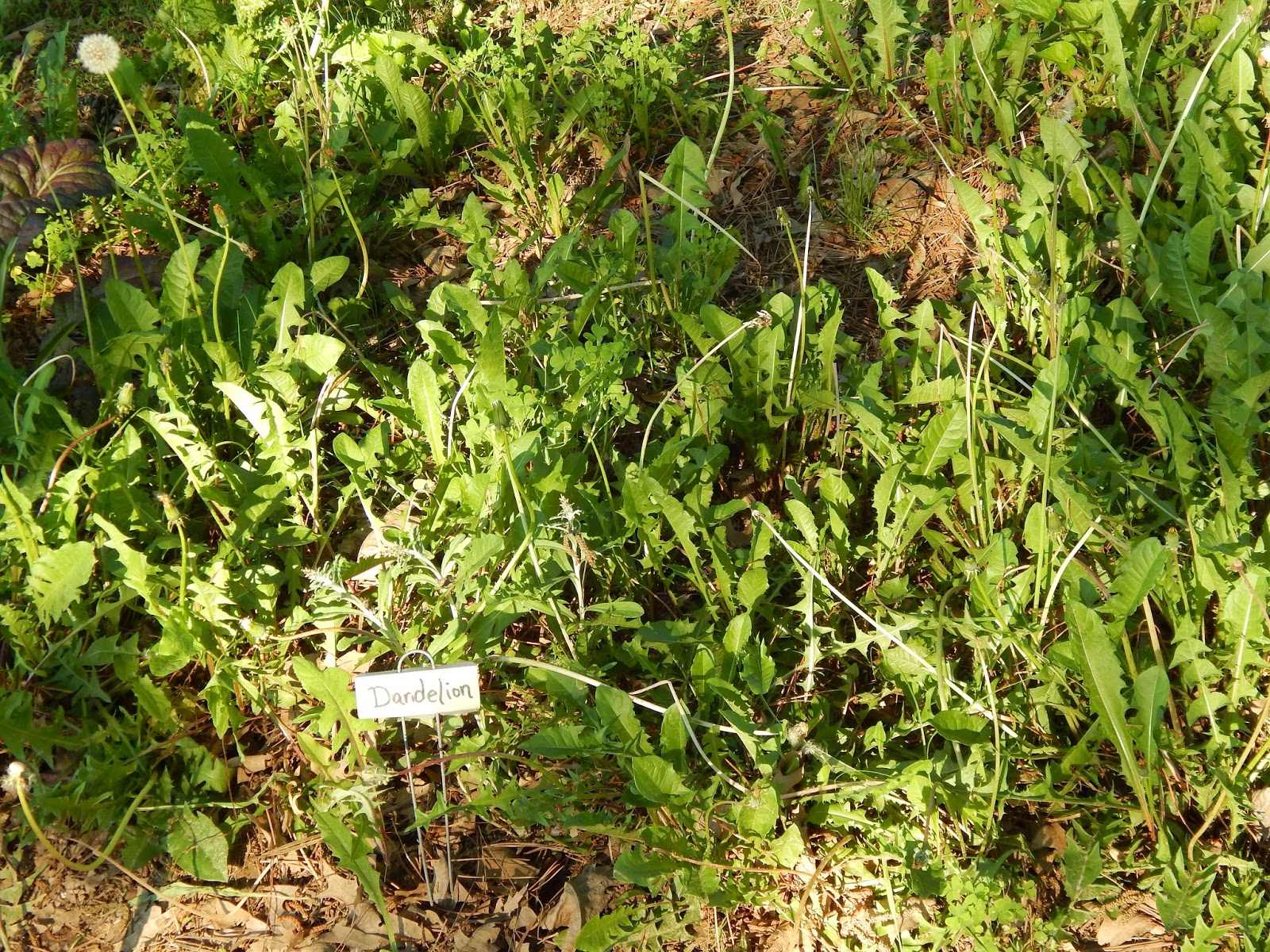
 Next to the mustard is the dandelion patch. I always try to have at least a handful of leaves for each animal. Dandelion leaves are good for overall health as well as expelling worms.


I usually alternate between lemon balm and marjoram, which are both good for overall health. I want the plants to continue developing well for our own use, so the goats only get a few sprigs. They probably wouldn't eat much more than that anyway. It's part of the browsing nature of a goat.

 
Next comes garlic leaves which are high in sulfur and is an effective worm deterent. The goats won't eat much, but they will eat some. I have started to include just a little each day. Behind the garlic is a patch of honeysuckle.


I have a couple of healthy chive plants that I have started picking small handfuls from as well. They are also effective against worms.


Honeysuckle

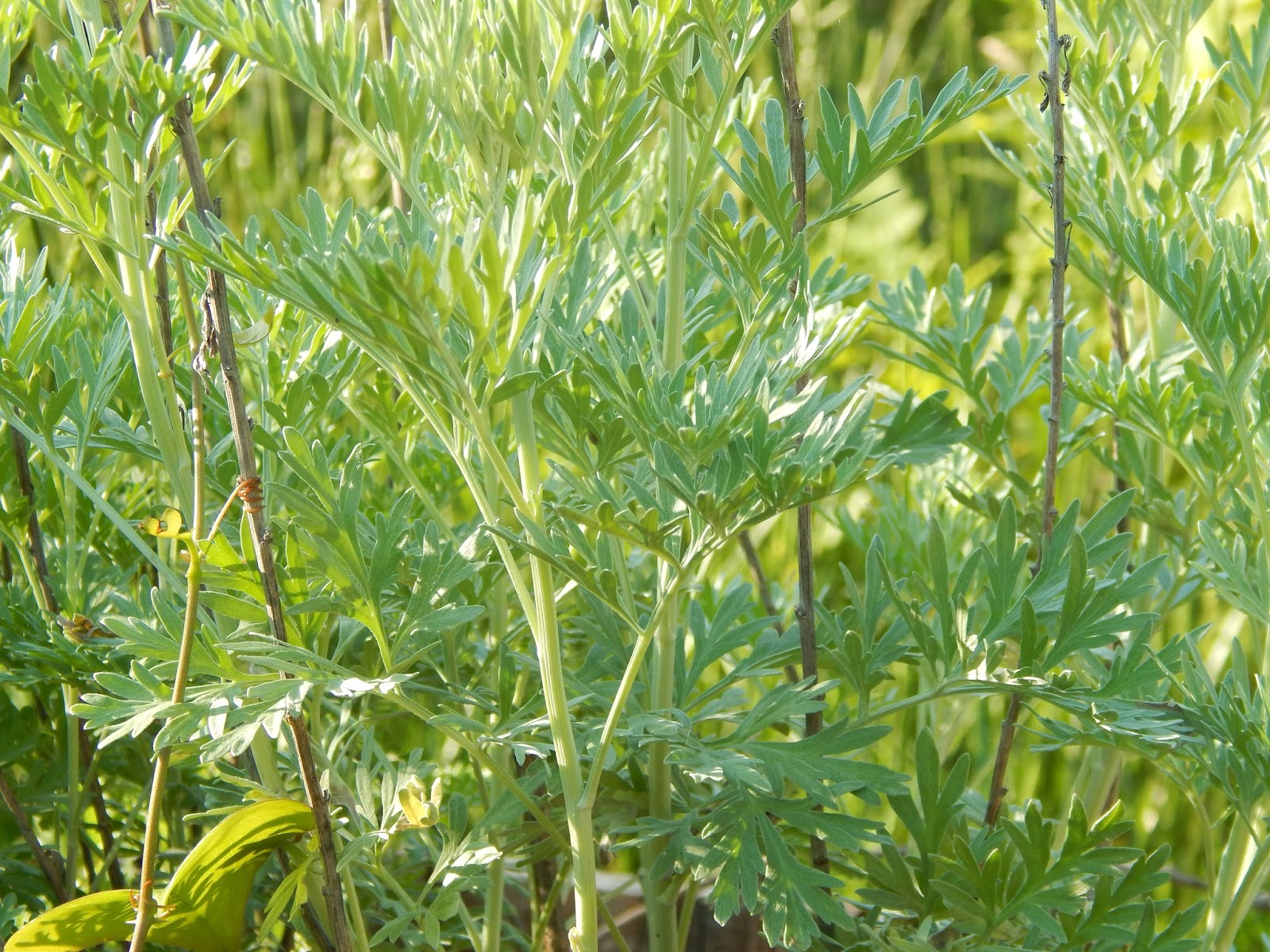
On Saturdays, I also pick a big handful of honeysuckle along with around four or five wormwood leaves for each goat. These two plants are especially good for expelling worms. One thing I have observed that I find to be very interesting is how the goats choose to consume them, or not. I have found that if I walk out into the barn with a large handful of honeysuckle vines, the does will gather around and heartily begin to strip the leaves from the vines. Until they are finished. Not until the leaves are gone, but until they are finished. My theory is, once a goat has eaten enough of a certain plant, they stop. Too much is not a good thing. And enough for one goat, may not be enough for another. They each stop eating the honeysuckle at their own timing. And the wormwood? Sometimes they will eat it and sometimes they won't. Last week I wormed One Stripe and Copper with the commercial wormers on a Monday. Saturday when I brought up the honeysuckle and wormwood, neither one of them would eat them, even though they always did on the preceding days I had brought them. As I wondered why, I realized that they didn't need the plants because I had just recently wormed them. Interesting, huh? Since tomorrow is Saturday, one week later, it will be interesting to see if they will eat these two plants tomorrow.


I started this wormwood from seed several years ago in this large wooden barrel. Now that I know it will continue to grow and have started using it, it's time to move it back into the fringes of the herb bed. Many other plants don't get along with wormwood too well, so it will be out on the edge of the bed next to the camphor wormwood I planted last year. It really does smell like camphor, and I haven't quite decided what I would like to make out of it. I don't use the camphor for the goats, though.


Since I recently read that blackberry leaves are good for goat feed, I stop at this patch of wild berries on the way to the barn and add a good handful of leaves to my bucket. 

Last week when the vet came to disbud our youngest baby goats, we found out they had lice. As far as I know, we have never had a lice problem on our goats before. The vet said our extremely wet spring has created prime conditions for lice. I got out my Herbal Handbook again and looked up lice. It turns out that sulfur is a good natural remedy and you can add a teaspoon of sulfur to the goat feed. Well, that wouldn't work for the young babies that needed treating, so we put a little Sevin dust on them, and the teenage goats that are being weaned. But I needed a natural remedy for the does I am milking. It turns out garlic and cabbage contain sulfur. I was already feeding the cabbage leaves, so I increased the amount each doe was getting. That's when I added in the garlic leaves. They ate more of them the first day, but since then, they will only eat a limited amount. But so far, I haven't seen any lice on the does, so I hope this works.

So what do I do with all of these leaves? I dump my bucket on top of the big round bale of hay by the milk stand and sort everything out. I want to make sure each doe gets a portion of the harvest I have brought. And I only do this for the does I am milking, not the babies or the billy and wethers. As each doe comes to the milk stand, I give them their grain ration, then pile all of the leaves I have brought right on top of it. At first they seemed to be a little irritated with me, but now they just dig around the leaves, eat their grain, then usually have the leaves for desert. It's rather comical. But if I took all of these leaves out to the feeder and spread them out for the goats to eat, they would just turn up their noses and go graze in the pasture. I'm not sure why they will eat them from the stand, but not from the feeder. It's like it's a treat or something.


I am hoping that feeding the goats plants that we have growing here will eventually be enough to keep them healthy and somewhat worm free. I don't want to experiment to the detriment of their health, but I do want to try to eliminate the commercial wormers. I know there are companies that sell a natural wormer, but if I am going to change over to natural, I would like to see if growing our own plants will work. Only time will tell. It may take a year or more to really see what the outcome will be. I'll let you know.

For the off season when the plants aren't growing, I plan to dry the herbs. But, with nature, worms generally aren't a problem in the winter months since the worms go dormant, some in the ground, some in the goat. There are other techniques for controlling worms, pasture rotation, short or tall grass and others. 

This brings us to another question. If the time comes when we are dependent upon ourselves, and we get worms, will these remedies work on us as well? Many of these plants are a common part of our diet and I have read that wormwood can be used with humans. But that is a whole different research project. Just food, pun intended, for thought.

Until next time - Fern